Anthropic's Bold Super Bowl Bet: Drawing a Line in the Sand Against AI Advertising
The battle for the future of artificial intelligence took an unexpected turn toward primetime television this week, as Anthropic launched a provocative Super Bowl advertising campaign that simultaneously mocked the concept of advertisements within AI conversations and reinforced the company's formal commitment to keeping its Claude assistant completely ad-free. The move represents one of the most direct and public confrontations between major AI competitors to date, specifically targeting OpenAI's recent strategic shift toward introducing advertising into ChatGPT's ecosystem.
In a carefully orchestrated announcement that paired televised spots with a detailed blog post, Anthropic made its position unmistakably clear. The company formally pledged that Claude would remain free from advertising, arguing that incorporating ads would be fundamentally "incompatible" with the AI assistant's core mission of serving user interests above all else. This wasn't merely a passive policy statement—it was an active, expensive declaration of principles broadcast to millions of viewers during one of television's most-watched events.
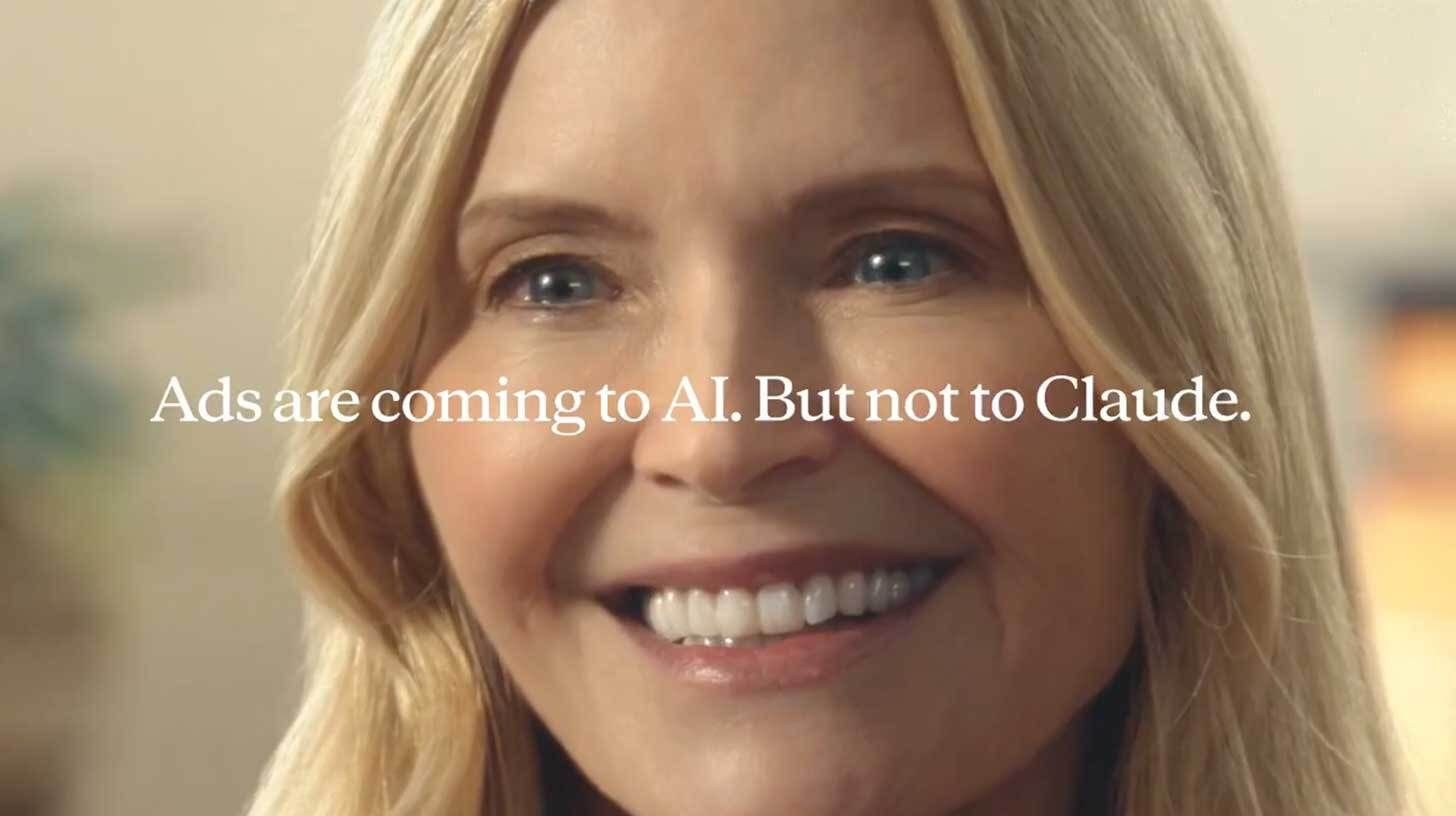
The campaign's creative execution proved equally pointed. Centered around the deliberately provocative tagline "Ads are coming to AI. But not to Claude," the advertisements presented satirical scenarios showing how commercial interruptions could corrupt helpful AI interactions. These parodies depicted users attempting to engage in serious conversations with AI assistants, only to have their experiences disrupted by jarring product placements and sponsored content—visual metaphors for what Anthropic suggests awaits users of ad-supported platforms.
The messaging struck a nerve at OpenAI headquarters, prompting immediate and forceful responses from the company's leadership. Chief Marketing Officer Kate Rouch took to X to deliver a counterargument that framed the debate around accessibility and reach rather than advertising ethics. Rouch contended that OpenAI's decision to offer free, ad-supported access to ChatGPT ultimately serves a broader social good than Anthropic's premium-only subscription model, which by design reaches only a fraction of potential users who can afford monthly fees.
Sam Altman, OpenAI's CEO, escalated the rhetoric further, dismissing Anthropic's campaign as "clearly dishonest" while offering assurances that his company would never implement intrusive advertising formats. Altman pivoted quickly to economic critique, characterizing Claude as "an expensive product for rich people" and implicitly positioning OpenAI's freemium approach as more democratic and inclusive.
The exchange highlights a genuinely consequential strategic divergence in how AI companies envision sustainable business models for increasingly powerful technologies. Anthropic's position rests on the conviction that advertising creates inevitable conflicts of interest, potentially influencing AI responses to favor commercial partners or optimize for engagement metrics rather than pure utility. By charging subscription fees, the company argues, it maintains alignment with user needs rather than advertiser demands.
OpenAI's counterposition acknowledges these tensions but prioritizes mass accessibility. The company clearly believes that advertising revenue, despite its complications, enables providing sophisticated AI capabilities to users who couldn't otherwise afford them—a consideration that carries significant weight when the user base difference between free and paid services numbers in the hundreds of millions.
The Super Bowl timing amplified these stakes considerably. By investing millions in television advertising to promote an anti-advertising message, Anthropic demonstrated both serious financial resources and genuine conviction. The campaign transforms what could have been a technical policy difference into a mainstream consumer choice, inviting everyday users to consider whether they prefer their AI relationships mediated by subscription fees or commercial sponsorship.
Ultimately, this confrontation illuminates deeper questions about AI's societal role that extend beyond any single company's strategy. As these systems become increasingly integrated into daily life, the funding mechanisms supporting them will inevitably shape their behavior and availability. Anthropic has wagered that a critical mass of users will prioritize ad-free experiences enough to pay directly; OpenAI is betting that scale and accessibility will prove more valuable than purity of purpose.
The market will render its verdict through user choices and subscription numbers. For now, both companies have articulated coherent visions—leaving consumers to decide which trade-offs they prefer in their increasingly essential relationships with artificial intelligence.
Your one-stop shop for automation insights and news on artificial intelligence is EngineAi.
Did you like this article? Check out more of our knowledgeable resources:
Watch this space for weekly updates on digital transformation, process automation, and machine learning. Let us assist you in bringing the future into your company right now