In a decision that reverberates across creative industries, technology sectors, and legal frameworks worldwide, the U.S. Supreme Court has declined to hear Thaler v. Copyright Office—the most significant case yet addressing whether artificial intelligence-generated art can receive federal copyright protection. By letting stand lower court rulings affirming that only humans can be "authors" under U.S. copyright law, the Court has effectively postponed a definitive resolution to one of the defining intellectual property questions of the AI era.
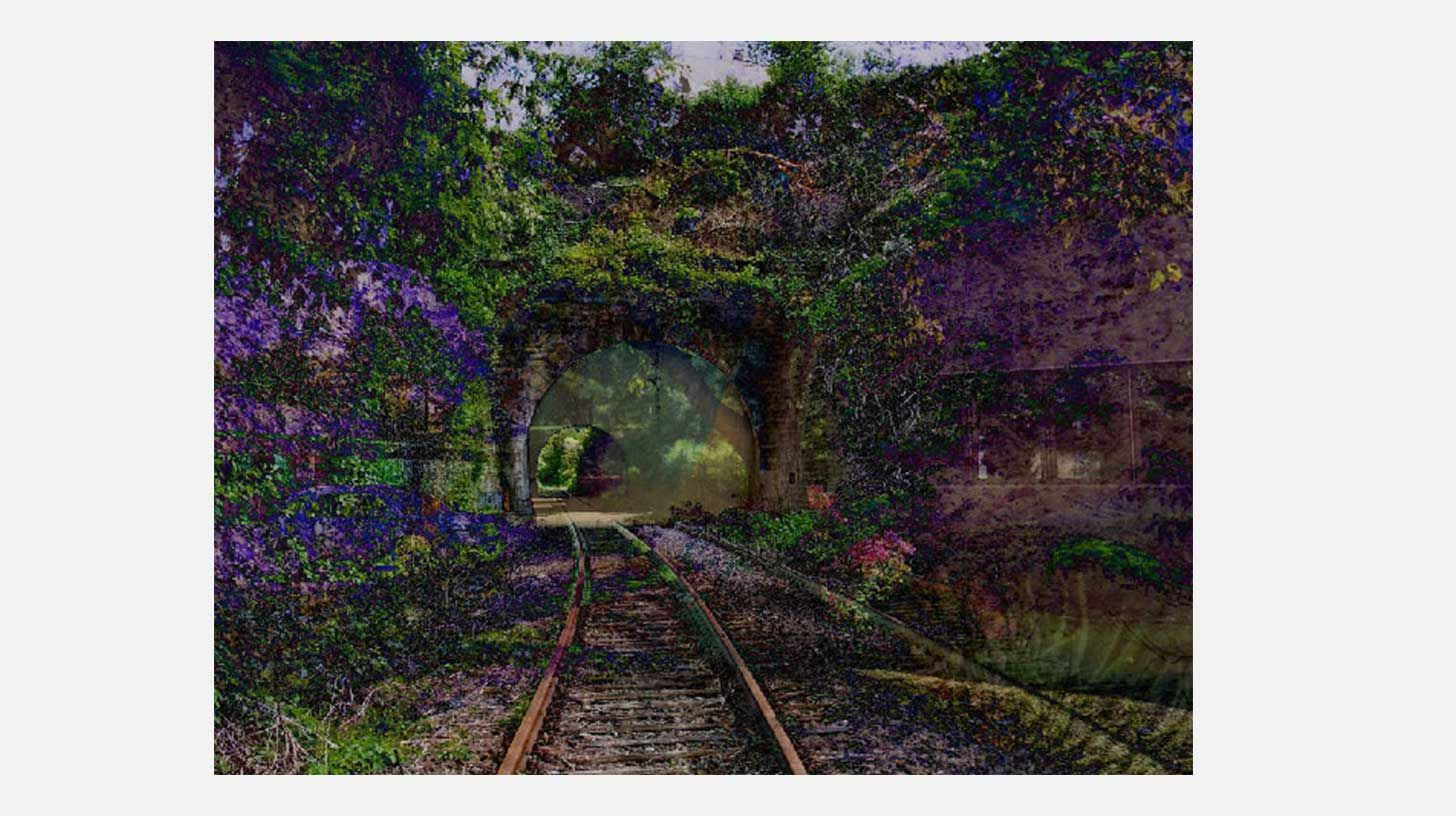
The case centers on Stephen Thaler, a computer scientist and AI researcher from St. Charles, Missouri, who in 2018 sought copyright registration for a visual artwork titled "A Recent Entrance to Paradise." Thaler asserted that the piece—an evocative image depicting train tracks disappearing into a luminous portal, framed by surreal green and purple botanical forms—was autonomously generated by his AI system, DABUS (Device for the Autonomous Bootstrapping of Unified Sentience). The U.S. Copyright Office denied the application, establishing a precedent that creative works must have human authors to qualify for protection. That decision was subsequently upheld by both a federal district judge in 2023 and the U.S. Court of Appeals for the District of Columbia Circuit in 2025.
With the Supreme Court's refusal to grant certiorari on March 2, 2026, the legal landscape for AI-generated content remains anchored to a foundational principle: copyright law, as currently interpreted, protects human creativity—not machine output. Yet as generative AI tools flood markets and creative workflows, the tension between technological capability and legal doctrine has never been more acute.
The Legal Journey: From Application to Supreme Court Denial
The Original Claim and Copyright Office Rejection
Stephen Thaler's 2018 copyright application marked one of the first formal attempts to secure intellectual property rights for a work created without direct human authorship. In his submission, Thaler explicitly listed DABUS as the sole author of "A Recent Entrance to Paradise," arguing that the AI system had independently conceived and executed the artistic composition.
The U.S. Copyright Office rejected the application in 2022, citing longstanding precedent and statutory interpretation. In its decision, the Office emphasized that "the copyright law only protects 'the fruits of intellectual labor' that 'are founded in the creative powers of the [human] mind.'" Because the work lacked a human creator, it fell outside the scope of protectable subject matter under the Copyright Act of 1976.
District Court Affirmation: Human Authorship as a "Bedrock Requirement"
Thaler appealed the decision to the U.S. District Court for the District of Columbia. In a 2023 ruling, Judge Beryl A. Howell upheld the Copyright Office's determination, writing that "human authorship is a bedrock requirement of copyright." The opinion drew upon historical context, statutory language, and prior case law to conclude that Congress, when drafting copyright legislation, intended to incentivize and reward human creative effort—not the output of autonomous systems.
Judge Howell acknowledged the rapid evolution of AI technology but stressed that any expansion of copyright eligibility to non-human authors would require legislative action, not judicial reinterpretation. "While the advancement of AI may challenge traditional notions of authorship," she wrote, "it is not the role of the courts to rewrite statutes to accommodate emerging technologies."
DC Circuit Court Upholds the Standard
Thaler's legal team appealed to the U.S. Court of Appeals for the District of Columbia Circuit. In a 2025 decision, a three-judge panel unanimously affirmed the lower court's ruling. The appellate opinion reinforced that the term "author" in the Copyright Act presupposes a human creator, noting that multiple provisions of the statute—such as those addressing inheritance of rights, termination of transfers, and moral rights—only make sense when applied to natural persons.
Critically, however, the DC Circuit included language that left a narrow pathway open for AI-assisted works. The court observed that Thaler could have sought copyright protection by listing himself as the author, provided he could demonstrate sufficient creative contribution to the final work. This distinction—between works generated by AI versus works created with the assistance of AI—has become a focal point for legal scholars, creators, and industry stakeholders navigating the new frontier of generative technology.
The Supreme Court's Silence Speaks Volumes
Thaler's petition to the Supreme Court argued that the issue was of "paramount importance" given the explosive growth of generative AI across art, music, literature, and software development. His legal team warned that delaying resolution would create uncertainty, stifle innovation, and allow the Copyright Office to entrench a restrictive interpretation during a critical period of technological adoption.
The Trump administration's Department of Justice filed an amicus brief urging the Court to deny certiorari. The brief asserted that "the Copyright Act does not define the term 'author,' but multiple provisions make clear that the term refers to a human rather than a machine." It further argued that Congress—not the judiciary—is the appropriate body to address potential updates to copyright law in light of AI advancements.
On March 2, 2026, the Supreme Court declined to hear the appeal without comment. The denial leaves the DC Circuit's ruling intact and maintains the status quo: under current U.S. law, AI systems cannot be authors, and works lacking human authorship cannot receive copyright protection.
Why This Ruling Matters: Implications for Creators, Companies, and Culture
The Immediate Impact on AI-Generated Content
For individual creators and small studios experimenting with generative AI tools like Midjourney, DALL-E 3, or Stable Diffusion, the ruling clarifies a critical boundary: content produced autonomously by AI—without meaningful human creative input—cannot be copyrighted. This means such works enter the public domain upon creation, free for anyone to use, modify, or distribute without permission or attribution.
However, the ruling does not prohibit copyright protection for works where humans use AI as a tool. If a creator employs AI to generate initial concepts, then substantially modifies, curates, arranges, or integrates those outputs into a larger original composition, the resulting work may still qualify for protection—provided the human contribution meets the threshold of originality and authorship required by law.
Industry Uncertainty and Strategic Risk
For major entertainment studios, game developers, advertising agencies, and publishing houses investing heavily in AI-driven content pipelines, the ruling introduces strategic uncertainty. Companies must now carefully document human creative contributions to AI-assisted projects to preserve copyright eligibility. Failure to do so could result in valuable assets being deemed unprotectable, exposing them to unauthorized use by competitors.
Legal teams are already developing new contractual frameworks and internal guidelines to address AI authorship questions. These include:
Clear definitions of "human creative contribution" in employment and contractor agreements
Documentation protocols for AI-assisted creative workflows
Disclosure requirements for AI use in copyright registration applications
Risk assessments for projects relying heavily on generative outputs
The Global Dimension: Diverging Approaches to AI and IP
While the U.S. maintains a human-centric copyright framework, other jurisdictions are exploring alternative models. The European Union's AI Act and proposed copyright directives acknowledge AI-generated content but stop short of granting machine authorship. The United Kingdom's Copyright, Designs and Patents Act 1988 contains a unique provision allowing copyright for computer-generated works where "the author shall be taken to be the person by whom the arrangements necessary for the creation of the work are undertaken"—a standard that could accommodate certain AI use cases.
China, Japan, and South Korea are also actively debating AI and intellectual property policy, with some proposals suggesting sui generis protections for AI outputs. The lack of international harmonization creates complexity for global content distribution and licensing, particularly for platforms operating across multiple legal regimes.
The Broader Context: AI, Creativity, and the Future of Authorship
Redefining "Creativity" in the Age of Machines
At its core, the Thaler case forces a confrontation with fundamental questions: What is creativity? Can a machine be creative? And if so, should the law recognize and protect that creativity?
Philosophers and cognitive scientists have long debated whether creativity requires consciousness, intentionality, or subjective experience—qualities arguably absent in current AI systems. Yet from a functional perspective, modern generative models can produce novel, valuable, and aesthetically compelling outputs that rival human-created works. This tension between philosophical definitions and practical outcomes lies at the heart of the copyright debate.
The Economic Stakes: Incentives, Investment, and Innovation
Copyright law exists not merely to reward creators but to incentivize the production and dissemination of creative works for public benefit. By granting limited monopolies, the law aims to ensure that creators can recoup investments and earn returns, thereby encouraging continued innovation.
If AI-generated works cannot be copyrighted, critics argue that companies may underinvest in developing advanced creative AI systems, fearing that outputs will be freely appropriable. Conversely, proponents of the human-authorship rule contend that extending copyright to machines could concentrate ownership in the hands of those who control AI infrastructure, potentially stifling competition and limiting public access to cultural works.
The Role of Congress: Waiting for Legislative Clarity
With the Supreme Court declining to intervene, attention now shifts to Congress. Several lawmakers have expressed interest in updating copyright law to address AI, but consensus remains elusive. Key questions include:
Should a new category of protection be created for AI-generated works?
How should "human authorship" be defined in an era of deep collaboration between people and machines?
What safeguards are needed to prevent abuse, such as mass registration of AI outputs to block competition?
How can the law balance innovation incentives with public domain preservation?
Until legislative action occurs, courts and the Copyright Office will continue to apply existing statutes to novel fact patterns—a process that inevitably produces uncertainty and inconsistent outcomes.
Practical Guidance for Creators and Businesses
For Individual Artists and Freelancers
Document Your Creative Process: When using AI tools, maintain records of your prompts, iterations, selections, and modifications. This documentation can help demonstrate your human authorship if copyright registration is later challenged.
Focus on Transformative Use: Merely prompting an AI and accepting its output is unlikely to qualify for copyright. Instead, use AI as a starting point for substantial human-driven refinement, composition, or integration.
Understand Platform Policies: Many stock image sites, publishing platforms, and content marketplaces have their own rules regarding AI-generated content. Review these policies before submitting work.
Consider Alternative Protections: While copyright may not protect purely AI-generated works, other legal mechanisms—such as contracts, trademarks, or trade secrets—may offer limited safeguards for specific uses.
For Companies and Institutions
Develop AI Usage Policies: Create clear internal guidelines governing when and how AI tools may be used in creative workflows, with emphasis on preserving copyright eligibility.
Train Creative Teams: Ensure that designers, writers, and developers understand the legal distinctions between AI-assisted and AI-generated content, and how to document their contributions appropriately.
Audit Existing Content: Review portfolios of AI-influenced works to assess copyright status and potential exposure. Prioritize registration for works with strong human authorship claims.
Engage in Policy Advocacy: Participate in industry coalitions and public comment processes to help shape future copyright reforms that balance innovation with protection.
Looking Ahead: What Comes After Thaler?
The Supreme Court's denial in Thaler v. Copyright Office is not the end of the conversation—it is a pause. As generative AI capabilities accelerate and permeate every creative domain, pressure for legal clarity will only intensify. Several developments warrant close watching:
New Test Cases: Expect additional litigation targeting edge cases, such as works with minimal human input, collaborative human-AI creations, or AI models trained on copyrighted materials.
Copyright Office Guidance: The Office may issue updated policy statements or registration practices to address AI-related applications, potentially creating de facto standards ahead of legislation.
International Harmonization Efforts: Organizations like WIPO may facilitate dialogue among nations to reduce conflicts and promote interoperable approaches to AI and intellectual property.
Technological Solutions: Blockchain-based provenance tracking, watermarking standards, and metadata protocols could emerge as complementary tools to legal frameworks, helping creators assert ownership and users verify origins.
Conclusion: Navigating the Gray Zones of AI Creativity
The Supreme Court's decision to let lower court rulings stand in the Thaler case reaffirms a foundational principle: under current U.S. law, copyright protection requires human authorship. Yet this clarity exists alongside profound uncertainty about how that principle applies to an era where the line between human and machine creativity grows increasingly blurred.
For now, creators and companies must operate within this gray zone—leveraging AI's transformative potential while meticulously documenting human contributions to preserve intellectual property rights. At the same time, stakeholders across the creative ecosystem should engage thoughtfully in the policy debates that will shape the next chapter of copyright law.
One thing is certain: as AI continues to redefine the boundaries of art, music, literature, and design, the question of who—or what—can be an author will remain at the forefront of legal, ethical, and cultural discourse. The Supreme Court may have declined to answer that question today, but the conversation is far from over.
Your one-stop shop for automation insights and news on artificial intelligence is EngineAi.
Did you like this article? Check out more of our knowledgeable resources:
Watch this space for weekly updates on digital transformation, process automation, and machine learning. Let us assist you in bringing the future into your company right now