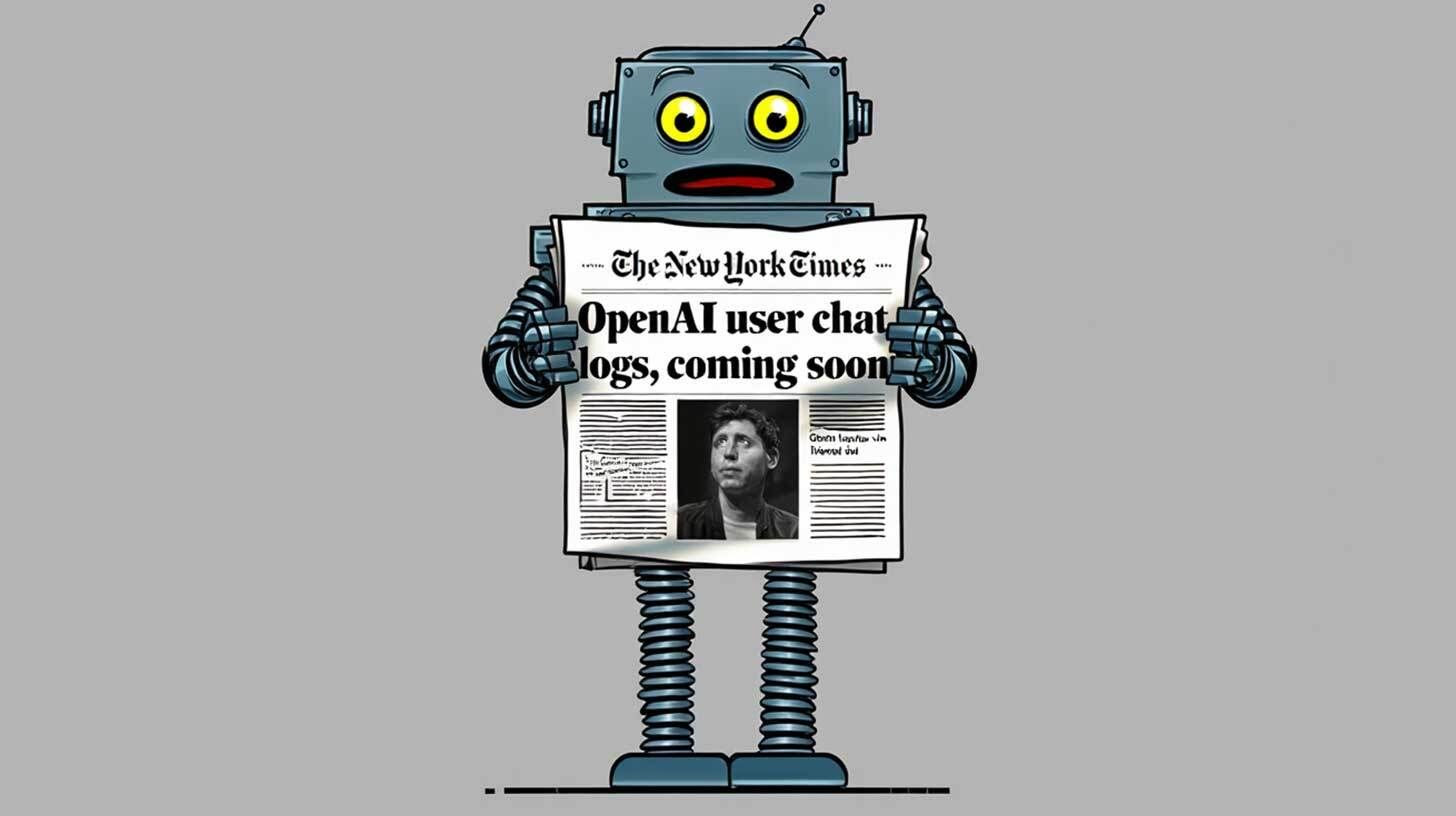
OpenAI claims that this is a "invasion of user privacy."
The specifics:
Because OAI's de-identification procedure already safeguards users' privacy, a judge decided that the sought conversation logs were appropriate discovery information.
In order to search for possible copyright breaches, the NYT first requested 1.4 billion talks before reducing it to a random sample of 20 million from December 2022 to November 2024.
In addition to releasing a blog post outlining its position on user privacy and the "baseless lawsuit," OpenAI hopes to get the injunction revoked in a letter to the court.
OpenAI called the request a "speculative fishing expedition," arguing that "99.99" of the transcripts have nothing to do with the copyright allegations.
Although OAI is still fighting, it appears that the court has reached a decision.
However, framing the problem as a breach of user privacy is a useful strategy to win over customers.
Even if the NYT will eventually have access to these anonymised conversations, "AI confidentiality" seems ready to gain more attention.
Your one-stop shop for automation insights and news on artificial intelligence is EngineAi.
Did you like this article? Check out more of our knowledgeable resources:
📰 In-depth analysis and up-to-date AI news .
🤝 Visit to learn about our goal and knowledgeable staff.
📬 Use this link to share your project or schedule a free consultation.
Watch this space for weekly updates on digital transformation, process automation, and machine learning. Let us assist you in bringing the future into your company right now.
Did you like this article? Check out more of our knowledgeable resources:
📰 In-depth analysis and up-to-date AI news .
🤝 Visit to learn about our goal and knowledgeable staff.
📬 Use this link to share your project or schedule a free consultation.
Watch this space for weekly updates on digital transformation, process automation, and machine learning. Let us assist you in bringing the future into your company right now.