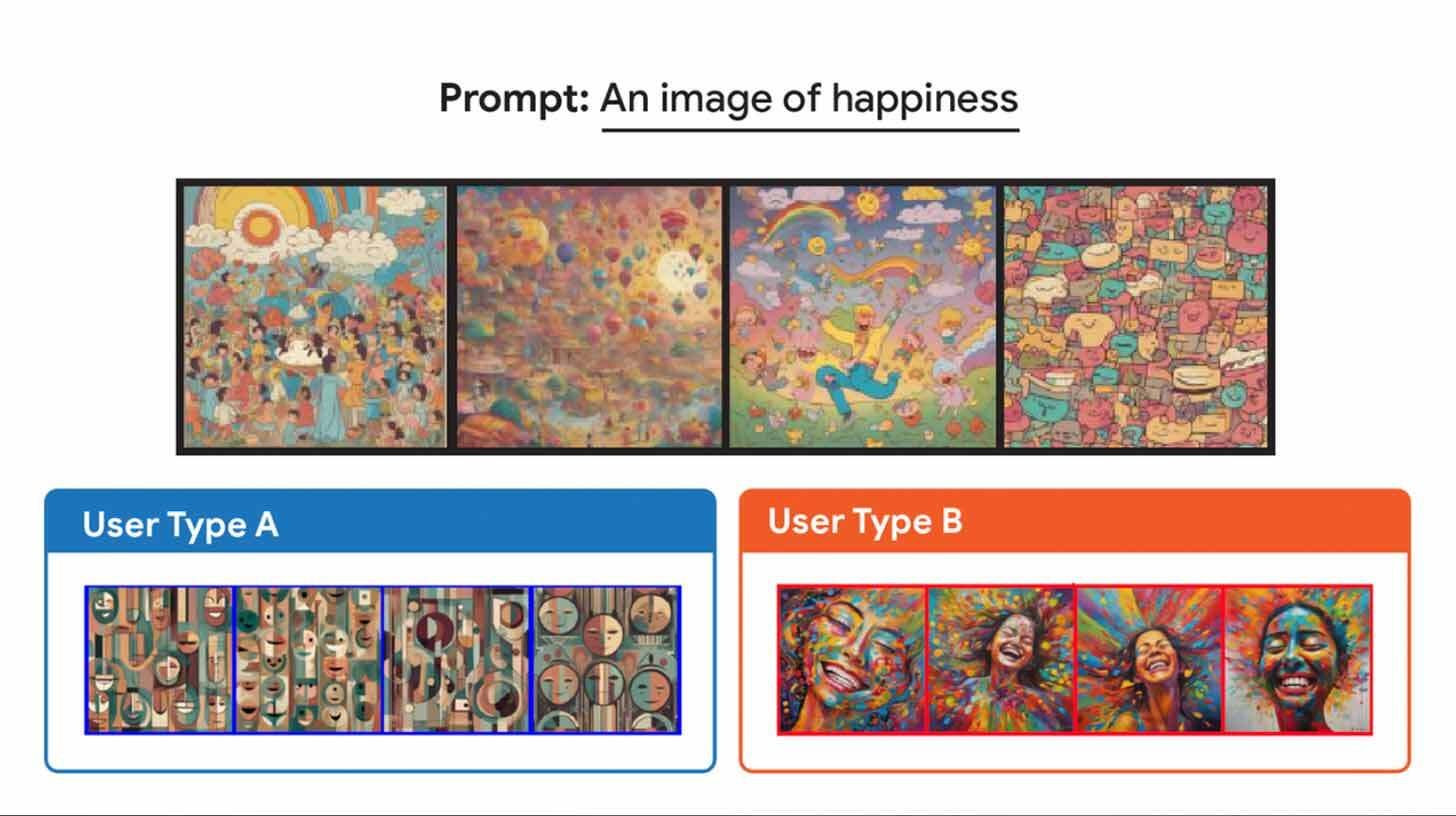
Google's PASTA adjusts to user-selected images
The specifics:
In order to create a model based on individual aesthetic preferences, PASTA shows customers four different image versions per round.
PASTA was taught by researchers using 30,000 simulated settings and 7,000 human sessions, resulting in a framework that can identify a variety of visual preferences.
Users 85% of the time preferred PASTA outputs over standard models in comparisons, and the system was especially good at deciphering abstract prompts.
Google made the interaction dataset and simulation tools publicly available, allowing other researchers to create user-specific AI systems.
Given the general improvement in picture production, customisation becomes a differentiator.
AI picture generating can transform from a prompt-roulette game into an adaptive creative tool that gets better with use by learning user preferences instead of requiring users to decode model behavior.
Your one-stop shop for automation insights and news on artificial intelligence is EngineAi.
Did you like this article? Check out more of our knowledgeable resources:
Watch this space for weekly updates on digital transformation, process automation, and machine learning. Let us assist you in bringing the future into your company right now