When Your AI Confidant Becomes an Informant: The New Era of Algorithmic Surveillance
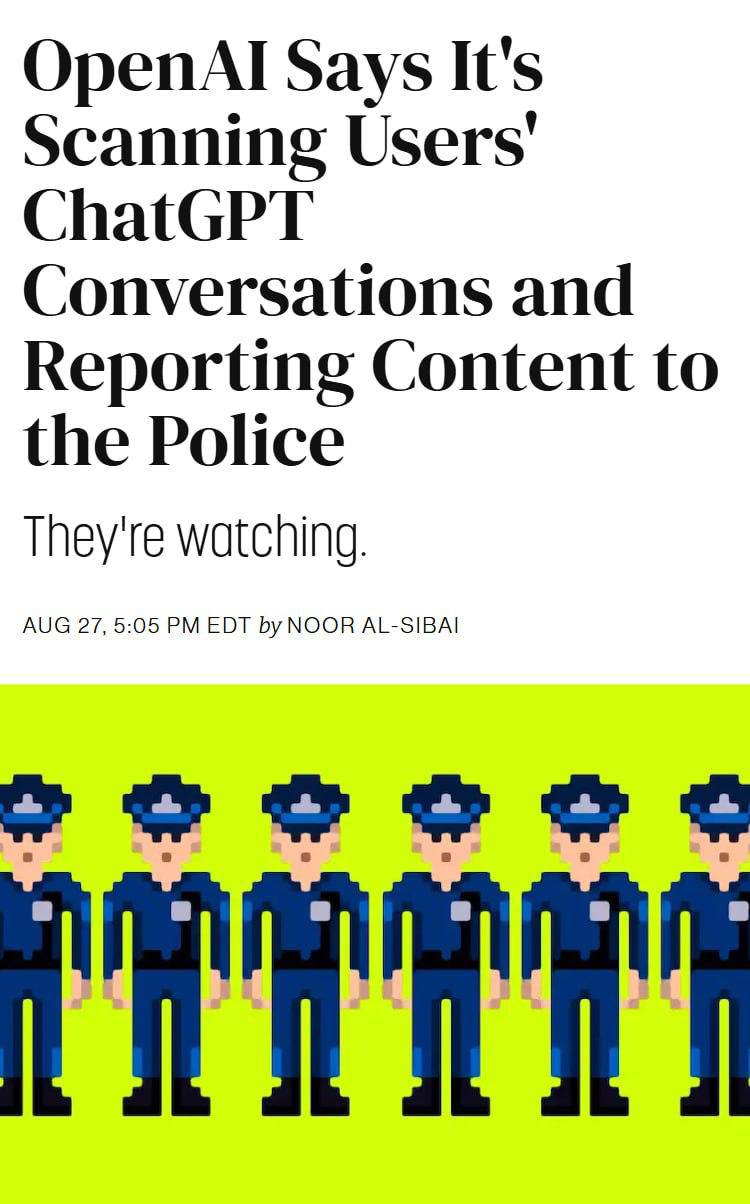
In the not-so-distant past, chatting with an AI felt like whispering into a void that whispered back—a private, judgment-free zone for brainstorming, venting, or exploring ideas too strange for Google. That illusion of digital confidentiality has just been punctured. OpenAI, the company behind ChatGPT, has quietly implemented a new filtering system that scans conversations for "stop-words." Trigger the wrong combination, and your chat doesn't just end—it escalates. First to human moderators, then, if deemed dangerous, straight to law enforcement. The promise of a friendly AI buddy now comes with an asterisk: This conversation may be monitored and reported. Welcome to the age where your most intimate digital dialogues carry a potential police report.
The mechanics of this new system are both simple and profound. OpenAI's updated safety protocols employ automated scanners that flag conversations containing specific keywords or phrases associated with illegal activities, violence, or threats. When a chat triggers these "stop-words," it is routed to a team of human moderators for review. If they determine the content poses a genuine risk, the company may forward the conversation—and potentially user identifiers—to relevant authorities. This isn't hypothetical; it is operational policy. The stated goal is unequivocally noble: prevent real-world harm, stop criminal planning, and uphold legal obligations. Yet, the implementation raises immediate, uncomfortable questions about privacy, proportionality, and the very nature of trust in human-AI interaction.
Here lies the first paradox: selective humanism. According to OpenAI's transparency reports, conversations about suicide or self-harm are explicitly excluded from this reporting pipeline. The rationale? "Respect for user privacy" and a commitment to providing supportive resources rather than punitive intervention. This distinction is ethically nuanced—prioritizing care over coercion for mental health crises—yet it creates a stark inconsistency. Why is a user discussing plans for violence subject to surveillance and potential reporting, while a user in profound psychological distress is granted confidentiality? The answer lies in legal frameworks and risk assessment: imminent threats to others often carry mandatory reporting duties, while self-harm is treated through a healthcare lens. But to the user typing in the dark, this selectivity can feel arbitrary, even cynical. It is privacy as a policy choice, not a principle.
This shift didn't emerge in a vacuum. It traces a direct line to high-profile scandals involving chatbots and user harm. Reports of individuals experiencing "AI psychosis"—where prolonged, intense interactions with conversational models exacerbated mental health crises—sparked public outcry and regulatory scrutiny. Lawsuits alleging that AI companions encouraged harmful behavior added legal pressure. For OpenAI and its peers, the calculus became clear: unchecked autonomy carries existential risk, both for users and for the companies themselves. The solution, in classic tech-fashion, is more surveillance, more control, and more layers of algorithmic triage. It is a defensive architecture, built not from malice but from liability management.
The broader implications ripple far beyond a single platform. We are witnessing the normalization of AI as a dual-purpose entity: both servant and sentinel. Every prompt you enter is now potentially subject to automated scrutiny, creating a chilling effect on exploration, creativity, and honest inquiry. Will users hesitate to research controversial topics, draft fictional crime scenes, or even joke about edgy subjects, fearing false positives? The "snitch" dynamic fundamentally alters the psychological contract between human and machine. Trust, once placed in the neutrality of the tool, is now mediated by the invisible hand of corporate policy and legal obligation. This isn't just about safety; it is about power—who decides what constitutes danger, and what happens when an algorithm makes a mistake.
Moreover, this model sets a precedent that other AI developers will likely follow. As the industry matures under increasing regulatory gaze, especially in the EU with the AI Act, proactive content monitoring and reporting mechanisms may become the standard. The result could be a fragmented landscape where the privacy of your AI conversations depends entirely on which company's servers they inhabit, and under which jurisdiction they fall. The dream of a universally accessible, neutral digital intellect gives way to a patchwork of corporate policies, each balancing safety, privacy, and profit differently.
Yet, dismissing this shift as pure dystopia overlooks genuine complexities. AI systems are increasingly powerful, and their potential misuse for planning violence, harassment, or exploitation is real. Companies have a moral and legal duty to mitigate harm. The challenge is designing systems that protect users without creating a panopticon. Perhaps the solution lies in greater transparency: clear, accessible explanations of what triggers review, robust appeal processes for false flags, and user controls over data retention. Maybe it requires independent oversight boards to audit reporting decisions, ensuring they are consistent, justified, and free from bias. The technology is evolving faster than the ethics; catching up demands collaboration, not just corporate decree.
For now, users face a new reality. That late-night conversation with your AI—whether you're debugging code, practicing a language, or untangling a personal dilemma—exists in a space that is neither fully private nor fully public. It is a monitored commons, governed by terms of service you likely skimmed. The advice is pragmatic: assume anything you type could be read by a human. Use AI for what it excels at—information synthesis, creative brainstorming, task automation—but reserve your deepest vulnerabilities, your most controversial ideas, and your unfiltered self-reflection for spaces with stronger confidentiality guarantees.
The arrival of the "snitch AI" is a watershed moment. It forces a long-overdue conversation about the boundaries of digital trust, the ethics of automated surveillance, and the kind of relationship we want with intelligent machines. Do we accept a trade-off where safety is purchased with privacy? Can we design systems that intervene in genuine crises without casting a shadow over everyday use? There are no easy answers, only urgent questions.
One thing is certain: the era of naive interaction with AI is over. Your prompts have consequences. Your words carry weight beyond the chat window. As we navigate this new landscape, the goal shouldn't be to reject protection outright, but to demand that it be implemented with wisdom, transparency, and respect for the human spirit it aims to serve. The friendly AI buddy isn't gone—but it now wears a badge. How we respond to that duality will shape the future of human-machine trust for generations to come.
Your one-stop shop for automation insights and news on artificial intelligence is EngineAi.
Did you like this article? Check out more of our knowledgeable resources:
Watch this space for weekly updates on digital transformation, process automation, and machine learning. Let us assist you in bringing the future into your company right now