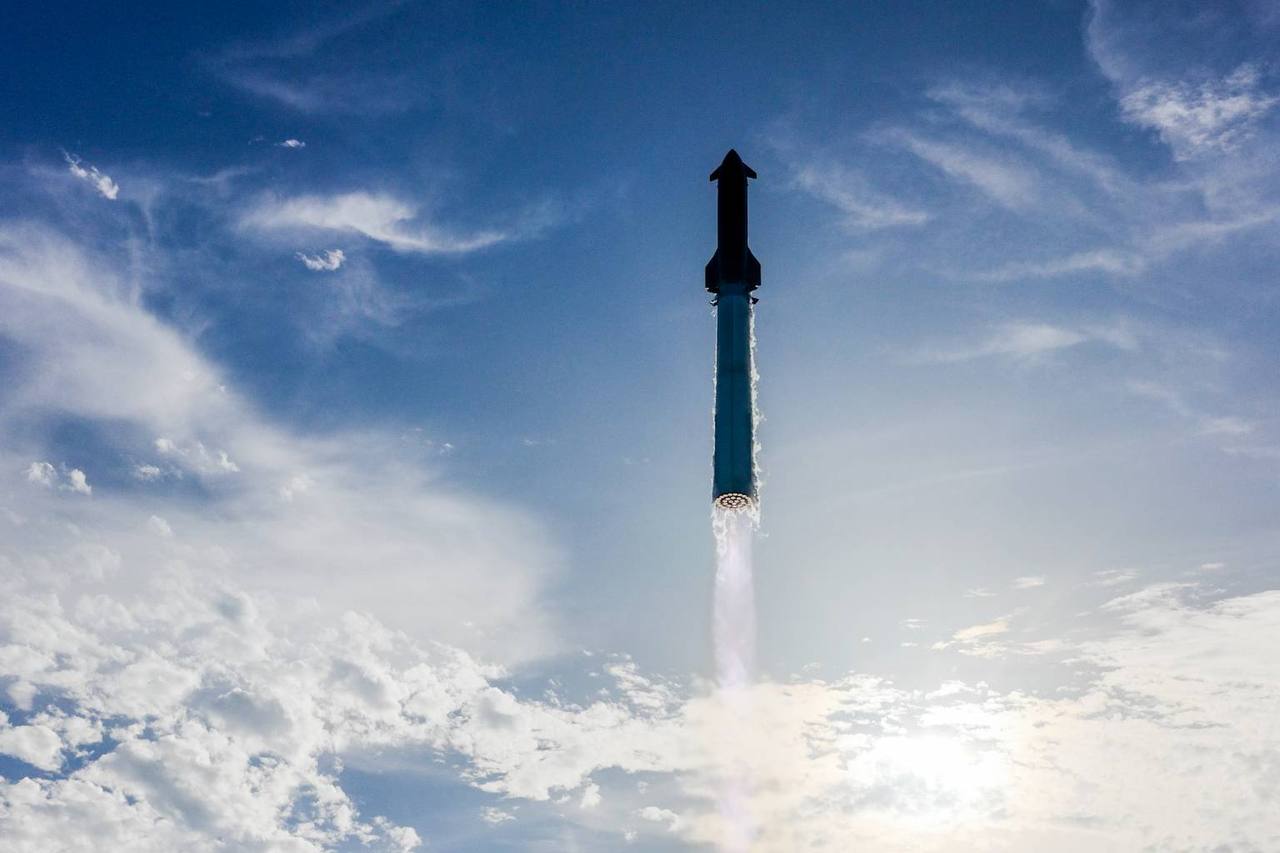
The Double Victory: How SpaceX's Perfect Dual Landing Paved the Way for Artemis and Mars
In the high-stakes theater of modern spaceflight, success is rarely measured in single achievements. It is measured in momentum. And on a recent day that will be etched into aerospace history, SpaceX didn't just check a box—they delivered a masterclass in iterative progress, achieving a perfect double that reverberated from low-Earth orbit to the lunar surface and beyond. Starship Flight 10 soared for a full hour, deployed eight simulated satellites, and executed a controlled splashdown, while simultaneously, a Falcon 9 booster notched its 400th successful droneship landing after deploying 28 Starlink satellites. This wasn't just a good day at the office; it was a declaration that the rhythm of reusable, rapid-launch spaceflight is no longer a vision—it is the new operational tempo.
The Starship Flight 10 mission embodied the SpaceX philosophy in its purest form: test boldly, learn relentlessly, and refine in public. For sixty minutes, the massive stainless-steel vehicle climbed through the atmosphere, pushed through the stresses of ascent, and demonstrated precise control in the vacuum of space. The deployment of eight mass-simulator satellites proved that the vehicle can not only reach orbit but also perform the complex maneuvers required for payload delivery—a critical milestone for future missions carrying everything from Starlink Gen2 satellites to lunar landers for NASA. Then came the most dramatic phase: reentry. Telemetry showed the characteristic glow of plasma heating, with visible scorching on the heat shield tiles and control surfaces. Hardware was singed, but control was maintained. The vehicle navigated the fiery descent, reoriented for its landing burn, and splashed down gracefully in the Indian Ocean. It was a textbook example of the old adage "boom first, win later." The goal wasn't pristine hardware; it was pristine data. And on that count, Flight 10 delivered in abundance.
While Starship stole the spotlight, the Falcon 9 booster landing provided a powerful counterpoint: the quiet reliability of a workhorse that has redefined orbital access. This particular booster, completing its 400th successful droneship landing, represents the culmination of over a decade of incremental innovation. After launching 28 Starlink satellites into low-Earth orbit, the first stage executed its boost-back burn, reentered the atmosphere with pinpoint accuracy, and touched down on the autonomous spaceport drone ship—yet again. This milestone isn't just a number; it is a testament to the economic and operational revolution SpaceX ignited. Each landing is a booster saved, a cost reduced, and a launch cadence accelerated. The juxtaposition was profound: the cutting-edge, still-evolving Starship sharing the sky with the battle-tested, routine marvel of Falcon 9. Together, they illustrate a dual-track strategy that is propelling humanity deeper into space.
The immediate ripple effect of this dual success was felt at NASA. With Starship demonstrating increasingly reliable performance—including orbital deployment, controlled reentry, and splashdown—the agency has received the technical confidence needed to move forward with Artemis III. The mission, which aims to return humans to the lunar surface for the first time since 1972, relies on a modified Starship as the lunar lander. Every successful test flight de-risks that ambitious partnership. NASA's "all-clear" isn't a formality; it is a green light built on data, on demonstrated capability, and on the growing certainty that SpaceX can deliver the transportation architecture required for sustainable lunar exploration. Artemis III is no longer a hopeful timeline; it is a project with momentum.
Looking ahead, the cadence is just as significant as the achievements themselves. SpaceX's next Starship test flight is anticipated in about eight weeks—a pace that would have been unthinkable for traditional aerospace programs. This rapid iteration cycle, fueled by reusable hardware, streamlined manufacturing, and a culture that embraces intelligent failure, compresses years of development into months. Each flight builds on the last, refining everything from heat shield materials to landing algorithms. At this tempo, the learning curve isn't just steep; it is vertical. And with each refinement, the vehicle edges closer to the full reusability that promises to slash the cost of access to space by orders of magnitude.
This acceleration makes once-outlandish timelines feel tangible. Mars 2026, a target Elon Musk has floated for an uncrewed Starship mission to the Red Planet, no longer sounds like science fiction. The technical hurdles remain immense—life support, radiation shielding, in-situ resource utilization, and the sheer distance of a six-month transit are not trivial challenges. But the foundational capabilities are being proven now: launching massive payloads, operating in deep space, reentering at interplanetary velocities, and landing precisely. Every Starship test flight is a dress rehearsal for Mars. The progress on display suggests that the 2026 window, while aggressive, is within the realm of possibility. It transforms Mars from a distant dream into a near-term engineering problem.
Beyond the headlines, this dual victory underscores a broader shift in how humanity approaches space. We are moving from an era of occasional, government-led expeditions to one of frequent, commercially enabled expansion. SpaceX's model—build, fly, learn, repeat—is creating a new paradigm where space infrastructure can be developed with the agility of software. This has implications far beyond exploration: it enables larger satellite constellations, more responsive Earth observation, and new possibilities for space-based manufacturing and research. The economic and scientific potential is staggering, and it is being unlocked not by giant leaps, but by consistent, rapid steps.
Of course, challenges remain. Regulatory approvals, environmental considerations, and the inherent risks of pushing technological boundaries will continue to shape the path forward. But the trajectory is clear. The perfect double achieved by SpaceX is more than a pair of successful missions; it is a signal that the infrastructure for a multi-planetary future is being built in real-time, in public view, and at a pace that demands we recalibrate our expectations.
As the smoke clears from the latest splashdown and the drone ship secures another booster, the message is unmistakable: the future of spaceflight is not a distant promise. It is here, iterating weekly, landing repeatedly, and aiming ever higher. Artemis has its path. Mars has its timeline. And humanity has a proven partner in turning the boldest visions into routine operations. The sky is no longer the limit; it is just the beginning.
Your one-stop shop for automation insights and news on artificial intelligence is EngineAi.
Did you like this article? Check out more of our knowledgeable resources:
Watch this space for weekly updates on digital transformation, process automation, and machine learning. Let us assist you in bringing the future into your company right now