The Self in the Machine: How OpenAI's Cameos and Sora 2 Are Redefining Digital Identity and Storytelling
In the evolution of social media, each major shift has been defined by a new form of expression: text gave way to images, images to video, video to live streaming. Now, we stand at the threshold of the next transformation: the era of synthetic selfhood. OpenAI's release of Sora 2—their most advanced video generation model yet—paired with the launch of "Cameos," a social app that allows users to create, remix, and insert themselves into AI-generated videos, represents more than a product update. It is a provocative reimagining of what it means to be present in digital space. When your likeness can be captured, animated, and placed into any scenario imaginable, the boundary between creator and creation, between reality and simulation, begins to dissolve. This isn't just a new app; it is a new ontology for the internet age.
The technical leap embodied by Sora 2 is substantial. Unlike earlier video models that struggled with coherence beyond a few seconds, Sora 2 generates outputs of 5–10 seconds that can manage intricate scene changes while maintaining physical plausibility. Objects obey gravity, lighting remains consistent, and motion flows naturally—a significant advance over the uncanny, glitchy outputs that characterized earlier generative video. Even more transformative is the integration of synchronized audio: the model can now produce not just visuals, but corresponding sound effects, ambient noise, and even dialogue that blends seamlessly with the on-screen action. This multimodal capability turns Sora 2 from a video generator into a scene director, capable of orchestrating sight and sound in service of narrative. For creators, this means the ability to prototype complex sequences without cameras, actors, or budgets; for audiences, it means content that feels immersive rather than illustrative.
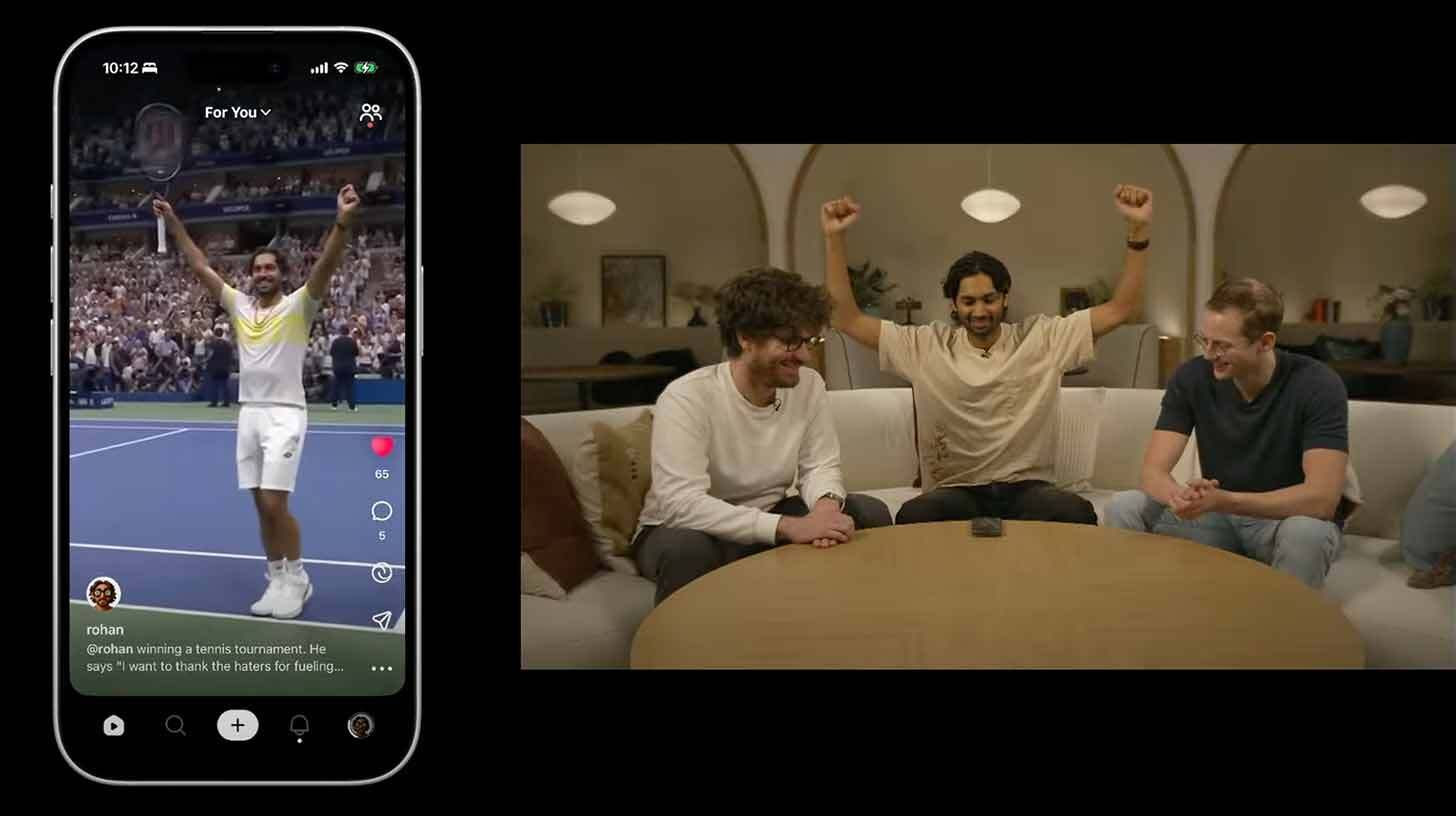
At the heart of the Cameos app is a feature that personalizes this power: the ability to capture your likeness and apply it across AI-generated settings. Users can record a short reference video or upload photos, and Sora 2 will animate that likeness within any prompt-defined scenario. Want to see yourself giving a TED Talk on Mars? Dancing in a 1920s speakeasy? Starring in a noir detective short? The barrier between imagination and instantiation collapses. Moreover, Cameos is built for remixing: users can take each other's creations, insert their own likeness, add new audio, or alter the narrative, fostering a participatory culture where content is never final, only iterative. This is social media reimagined not as a broadcast platform, but as a collaborative canvas.
The accessibility model reflects a strategic balance between democratization and monetization. In the United States and Canada, the app is available for free with usage restrictions—likely limits on generation frequency, resolution, or watermarking—to lower the barrier to entry while managing compute costs. Pro subscribers gain access to Sora 2 Pro, a higher-fidelity model with longer outputs, faster generation, and fewer restrictions. API access, promised soon, will enable third-party developers to integrate Sora 2 into their own applications, potentially spawning an ecosystem of tools for education, entertainment, marketing, and beyond. This tiered approach mirrors successful platforms before it: hook users with free access, convert power users to paid tiers, and empower developers to expand the platform's reach.
The creative possibilities are exhilarating. Educators could generate historical reenactments with student likenesses to enhance engagement. Filmmakers could pre-visualize scenes with themselves as stand-ins. Activists could craft compelling narratives that place viewers inside the stories they tell. For everyday users, Cameos offers a new form of self-expression: not just sharing what you did, but imagining who you could be. The memetic potential is enormous—a single compelling Cameo could spawn thousands of remixes, each adding a new layer of meaning, humor, or commentary. In this sense, Cameos isn't just a social app; it is a viral engine, designed to propagate creativity through networked participation.
Yet, the very features that make Cameos compelling also raise profound questions. The uncanny valley—the discomfort we feel when something appears almost, but not quite, human—remains a challenge. Despite Sora 2's advances, AI-generated likenesses can still exhibit subtle artifacts: slightly off lip-sync, unnatural eye movement, or expressions that don't fully match emotional context. For a platform built on personal identity, these imperfections matter. They can undermine immersion, trigger unease, or even be exploited to create misleading representations. Moreover, the ease of likeness insertion raises ethical concerns: what prevents someone from using another person's captured likeness without consent? OpenAI has implemented verification and notification systems, but enforcement at scale is notoriously difficult. The risk of misuse—harassment, impersonation, misinformation—is real and demands ongoing vigilance.
The novelty factor is another hurdle. Many AI-powered social features have launched with fanfare only to fade as the initial wonder wears off. Will users continue to engage with Cameos after they've seen themselves in a dozen AI-generated scenarios? Or will the experience feel repetitive, gimmicky, or ultimately unsatisfying compared to the authenticity of human-created content? Longevity will depend on whether Cameos can evolve from a toy into a tool—from a platform for novelty clips to a space for meaningful creation. This requires more than technical capability; it demands cultural resonance. The most enduring social platforms tap into fundamental human needs: connection, recognition, storytelling. Cameos must prove it can do more than amaze; it must prove it can matter.
For the broader content ecosystem, the implications are significant. If AI-generated video becomes cheap, fast, and personalized, what happens to traditional content production? Will brands shift from hiring actors to generating synthetic spokespeople? Will influencers compete with AI versions of themselves that can produce content 24/7? These are not dystopian fantasies; they are logical extensions of current trends. The democratization of high-quality video creation could empower independent creators while disrupting established industries. The key will be ensuring that this transition enhances rather than erodes creative livelihoods—perhaps by positioning AI as a collaborative tool that amplifies human artistry rather than replacing it.
Looking ahead, the roadmap for Cameos and Sora 2 hints at even more ambitious capabilities. Imagine a future where the app integrates with AR glasses, allowing your AI likeness to appear in real-world contexts; or where it connects with language models to generate dynamic, interactive narratives that respond to viewer input. The convergence of video, audio, identity, and interactivity could enable forms of storytelling that are deeply personal, endlessly adaptable, and profoundly immersive. But realizing this vision will require not just technical innovation, but thoughtful governance: clear policies around consent, transparent labeling of AI-generated content, and mechanisms for users to control how their likeness is used.
The cultural moment is ripe for this experiment. We live in an era of digital identity curation, where people already craft idealized versions of themselves for social media. Cameos takes this impulse to its logical extreme: why curate a highlight reel when you can generate an entire alternate reality? For some, this will be liberating—a chance to explore identities, scenarios, and narratives without the constraints of physical reality. For others, it will be unsettling—a further step toward a world where authenticity is optional and representation is infinitely malleable.
OpenAI's launch of Sora 2 and Cameos is more than a product release; it is a statement about the future of human expression. It declares that the tools of creation should be accessible to all, that identity can be a medium for art, and that storytelling need not be bound by the limits of the physical world. But it also invites scrutiny: How do we ensure that these powerful tools are used responsibly? How do we preserve trust in a media landscape where seeing is no longer believing? How do we balance creative freedom with ethical guardrails?
The synthetic self is here. The technology is astonishing. The possibilities are boundless. But the question remains: what kind of digital culture do we want to build with these tools? Cameos offers a glimpse of one possible future—one where everyone can be the star of their own AI-generated story. Whether that future enriches or erodes our shared sense of reality depends not on the model, but on us.
The camera is code. The stage is infinite. And the script is still being written.
Your one-stop shop for automation insights and news on artificial intelligence is EngineAi.
Did you like this article? Check out more of our knowledgeable resources:
Watch this space for weekly updates on digital transformation, process automation, and machine learning. Let us assist you in bringing the future into your company right now