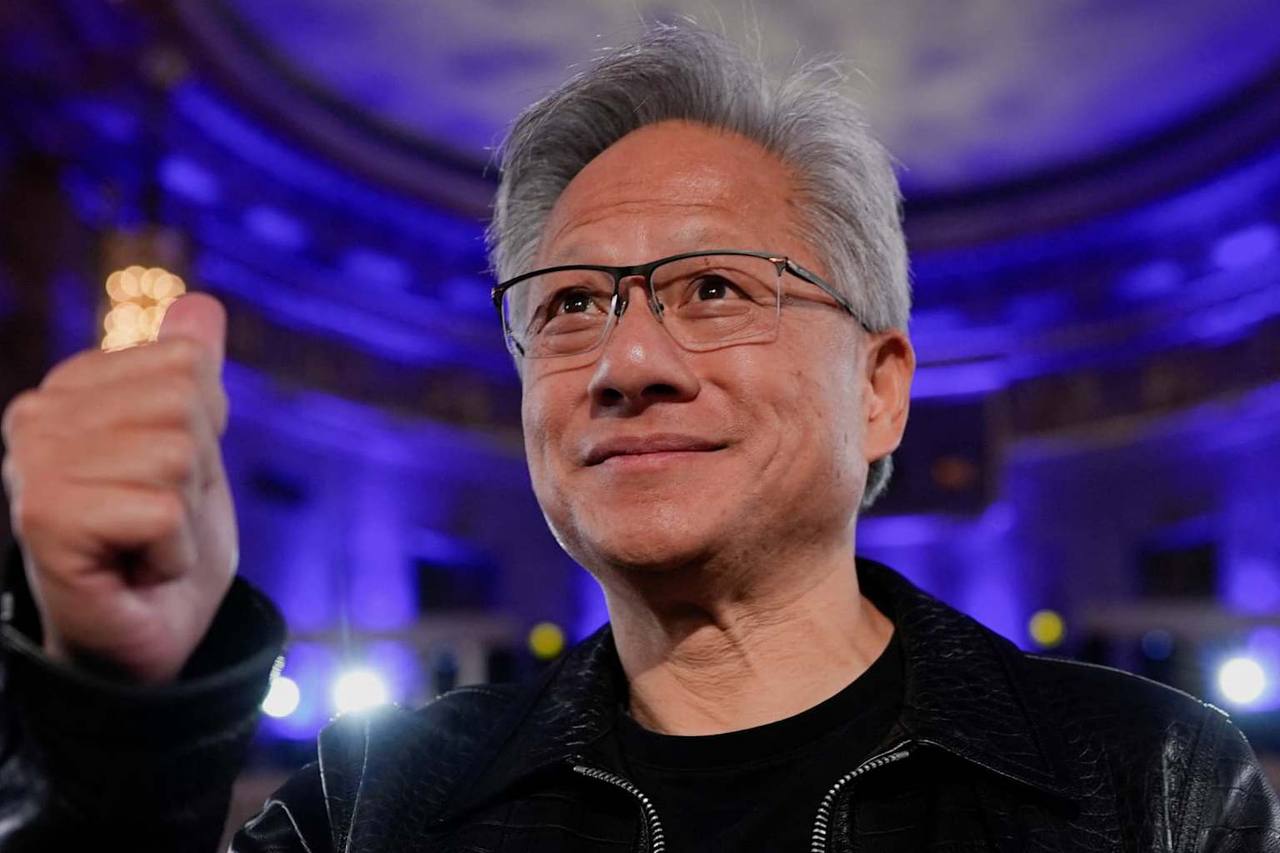
The Hundred-Billion-Dollar Bet: How Nvidia's OpenAI Investment is Building the Engine of Superintelligence
In the annals of technological history, certain partnerships redefine entire industries. The alliance between Ford and Edison electrified manufacturing. The collaboration between NASA and IBM put humans on the moon. Today, Nvidia and OpenAI are attempting something of comparable scale: the construction of what Jensen Huang calls "the largest AI infrastructure project in history." With up to $100 billion in committed investment, the chip giant and the AI pioneer are not just partnering—they are fusing their destinies to build the physical foundation for the next era of intelligence. This is not a venture capital round; it is an industrial mobilization. And its implications will ripple through every corner of the global economy.
The Scale: Gigawatts, Not Just Chips
The numbers alone are staggering. Nvidia plans to power OpenAI's AI infrastructure with 10 gigawatts of computing systems—the equivalent of millions of cutting-edge GPUs. To put that in perspective, 10 GW is roughly the power output of ten large nuclear reactors, or the electricity consumption of a major metropolitan area. This is not incremental scaling; it is a quantum leap in compute capacity, designed to train and operate models of a complexity that today's systems cannot fathom.
The investment will be deployed gradually, tied to each gigawatt of infrastructure brought online. Nvidia will provide not just chips, but comprehensive support for data center design, power procurement, and networking architecture. The first gigawatt is anticipated to be operational by the second half of 2026, leveraging Nvidia's next-generation Vera Rubin platform. This timeline is aggressive but deliberate: it aligns with the anticipated maturation of more advanced model architectures and the growing demand for agentic, multimodal, and autonomous AI systems.
The Strategic Rationale: Why This Partnership, Why Now?
For OpenAI, the partnership solves the most pressing constraint on its roadmap: access to reliable, massive-scale compute. Training frontier models has become a resource-intensive endeavor, requiring not just advanced semiconductors but also stable power, sophisticated cooling, and high-bandwidth interconnects. By aligning with Nvidia as its "preferred strategic compute and networking partner," OpenAI secures a dedicated pipeline of the world's most advanced AI hardware, insulated from supply chain volatility and competitive bidding. This is particularly critical as the company pursues artificial general intelligence (AGI), a goal that demands computational resources far beyond today's standards.
For Nvidia, the deal represents the ultimate validation of its strategic pivot from gaming GPUs to AI infrastructure. By locking in OpenAI as a long-term anchor client, Nvidia ensures sustained demand for its most advanced products, justifying the enormous R&D investments required to stay ahead of competitors like AMD, Intel, and emerging custom silicon efforts. The partnership also deepens Nvidia's integration into the AI software stack; by co-designing systems optimized for OpenAI's workloads, the company can refine its architectures for real-world AGI training, creating a feedback loop that strengthens its technological moat.
Sam Altman's endorsement—"There's no partner other than Nvidia who could pull this off at such speed and scale"—underscores the uniqueness of this alignment. Nvidia's combination of hardware leadership, software ecosystem (CUDA), and manufacturing relationships is unmatched. For OpenAI, betting on Nvidia is not just a procurement decision; it is a strategic commitment to the platform most likely to enable its most ambitious goals.
The Financial Dynamics: Valuation, Losses, and the Path to Profitability
OpenAI's valuation trajectory reflects the market's confidence in this strategy. From $29 billion in 2023 to an estimated $300–500 billion today, the company has experienced one of the most rapid appreciations in tech history. Yet, this growth comes with significant costs: OpenAI is projected to incur a $44 billion cumulative loss by 2028 as it invests heavily in talent, compute, and research.
The counterbalance is an equally ambitious revenue target: $100 billion by 2029. Achieving this will require more than just model improvements; it will demand successful commercialization across multiple vectors:
Enterprise APIs: Scaling usage of GPT, Sora, and future models among businesses
Consumer subscriptions: Growing ChatGPT Plus, Pro, and potential new tiers
Agentic platforms: Monetizing autonomous AI workflows for productivity, customer service, and creative tasks
Licensing and partnerships: Revenue from co-developed solutions with enterprises and governments
Jensen Huang's "double exponential" thesis captures the core growth dynamic: exploding user adoption multiplied by exploding compute demand per user. As AI systems become more capable, they attract more users; as users rely on AI for more tasks, they consume more compute. This virtuous cycle, if sustained, could propel OpenAI toward the multi-trillion-dollar valuation Huang envisions.
The Competitive Landscape: A New Axis of Power
This partnership reshapes the competitive dynamics of the AI industry. By vertically integrating model development and infrastructure at unprecedented scale, OpenAI and Nvidia create a formidable barrier to entry. Competitors face a stark choice: match this level of investment (requiring tens of billions in capital and years of execution) or differentiate in niches where scale is less decisive.
Microsoft, OpenAI's longstanding partner, remains a critical stakeholder but now shares the infrastructure stage with Nvidia. Google, Anthropic, Meta, and emerging players must decide whether to compete on scale, specialize in vertical applications, or pursue alternative technical approaches (e.g., more efficient models, novel architectures). The risk is a bifurcated market: a few well-resourced leaders controlling frontier capabilities, and a long tail of specialized players serving narrower use cases.
For enterprises, this consolidation has mixed implications. On one hand, partnering with a scaled provider like OpenAI/Nvidia offers reliability, performance, and a clear roadmap. On the other, dependence on a single ecosystem creates vendor lock-in and reduces negotiating leverage. Smart organizations will diversify their AI portfolios while deepening integration with primary partners—a balancing act that requires strategic foresight.
Risks and Challenges: The Path Is Not Straight
Despite the optimism, significant risks remain:
Execution risk: Building 10 GW of AI infrastructure on schedule requires flawless coordination across semiconductor manufacturing, construction, power procurement, and software integration. Any delay cascades through the roadmap.
Demand risk: The $100 billion revenue target assumes continued exponential growth in AI adoption. If user growth plateaus, if enterprise adoption slows, or if regulatory constraints tighten, the financial model could unravel.
Technological risk: AGI remains an unsolved challenge. If progress stalls, or if alternative approaches (e.g., smaller, more efficient models) prove more viable, the bet on massive scale could prove misaligned.
Regulatory risk: Concentration of AI capability in a single partnership may attract antitrust scrutiny, data governance requirements, or international restrictions that limit growth or flexibility.
Ethical and safety risk: As systems become more powerful, the consequences of failure grow. A single high-profile incident—bias, misuse, or unintended behavior—could trigger backlash that constrains deployment.
Nvidia and OpenAI are aware of these challenges. Their strategy appears to be moving fast while building guardrails: investing in safety research, engaging with policymakers, and designing systems with oversight mechanisms. But the tension between speed and caution will only intensify as capabilities advance.
The Broader Implications: AI as Industrial Infrastructure
Beyond the immediate business dynamics, this partnership signals a deeper shift: AI is becoming industrial infrastructure. Just as the electrical grid, the internet, and cloud computing transformed economies by providing ubiquitous, scalable utility, AI compute is emerging as a foundational layer for the 21st century.
This reconceptualization has profound implications:
For governments: AI infrastructure is now a strategic asset, akin to energy or telecommunications. Policy decisions about investment, regulation, and access will shape national competitiveness.
For the economy: Sectors from healthcare to manufacturing to creative industries will be reshaped by access to scalable intelligence. The organizations that leverage AI most effectively will gain decisive advantages.
For society: The concentration of AI capability raises questions about equity, accountability, and control. Ensuring that the benefits of this infrastructure are broadly shared will require intentional governance.
The Human Element: Talent, Culture, and Leadership
Behind the billions and gigawatts are people: the engineers, researchers, and operators who will build and run this infrastructure. Nvidia and OpenAI are competing not just for compute, but for talent. The ability to attract, retain, and empower world-class teams may prove as decisive as the hardware itself.
Culture matters too. OpenAI's mission-driven ethos and Nvidia's engineering excellence must align to execute a project of this magnitude. The partnership will succeed not just through technical prowess, but through shared vision, transparent communication, and resilient collaboration.
Conclusion: Buckle Up, Indeed
Jensen Huang's "buckle up" warning is apt. The convergence of OpenAI's ambition and Nvidia's infrastructure is about to accelerate the AI revolution in ways that are difficult to fully anticipate. The next few years will test whether this partnership can deliver on its promise: transforming massive investment into transformative capability, and transformative capability into sustainable value.
For the industry, the message is clear: the era of AI as a software experiment is ending. The era of AI as industrial infrastructure has begun. The companies that thrive will be those that can operate at scale, govern responsibly, and innovate continuously.
For the world, the stakes are higher still. The decisions made now about how AI infrastructure is built, who controls it, and how its benefits are distributed will shape the trajectory of technology—and society—for decades.
The hundred-billion-dollar bet is placed. The infrastructure is being built. The models are evolving. The question is no longer whether AI will transform the world, but how quickly, and to what end.
Your one-stop shop for automation insights and news on artificial intelligence is EngineAi.
Did you like this article? Check out more of our knowledgeable resources:
Watch this space for weekly updates on digital transformation, process automation, and machine learning. Let us assist you in bringing the future into your company right now