Mapping the Cure: How Harvard's PDGrapher is Rewriting the Rules of Drug Discovery
For decades, the quest to cure complex diseases has resembled a game of whack-a-mole. Scientists identify a faulty gene or protein, design a drug to target it, and watch as the disease—adaptive, resilient, and cunning—finds another pathway to thrive. This one-target-at-a-time approach has delivered breakthroughs, but it has also led to countless dead ends, expensive clinical trial failures, and treatments that offer temporary relief rather than lasting cures. Now, researchers at Harvard Medical School have unveiled a new paradigm: PDGrapher, a free AI model that doesn't just look for a single weak point in disease, but maps the entire battlefield. By identifying gene and medication combinations that can restore healthy cells to diseased ones, PDGrapher represents a fundamental shift in how we discover therapies—one that could accelerate cures for cancer, Parkinson's, Alzheimer's, and beyond.
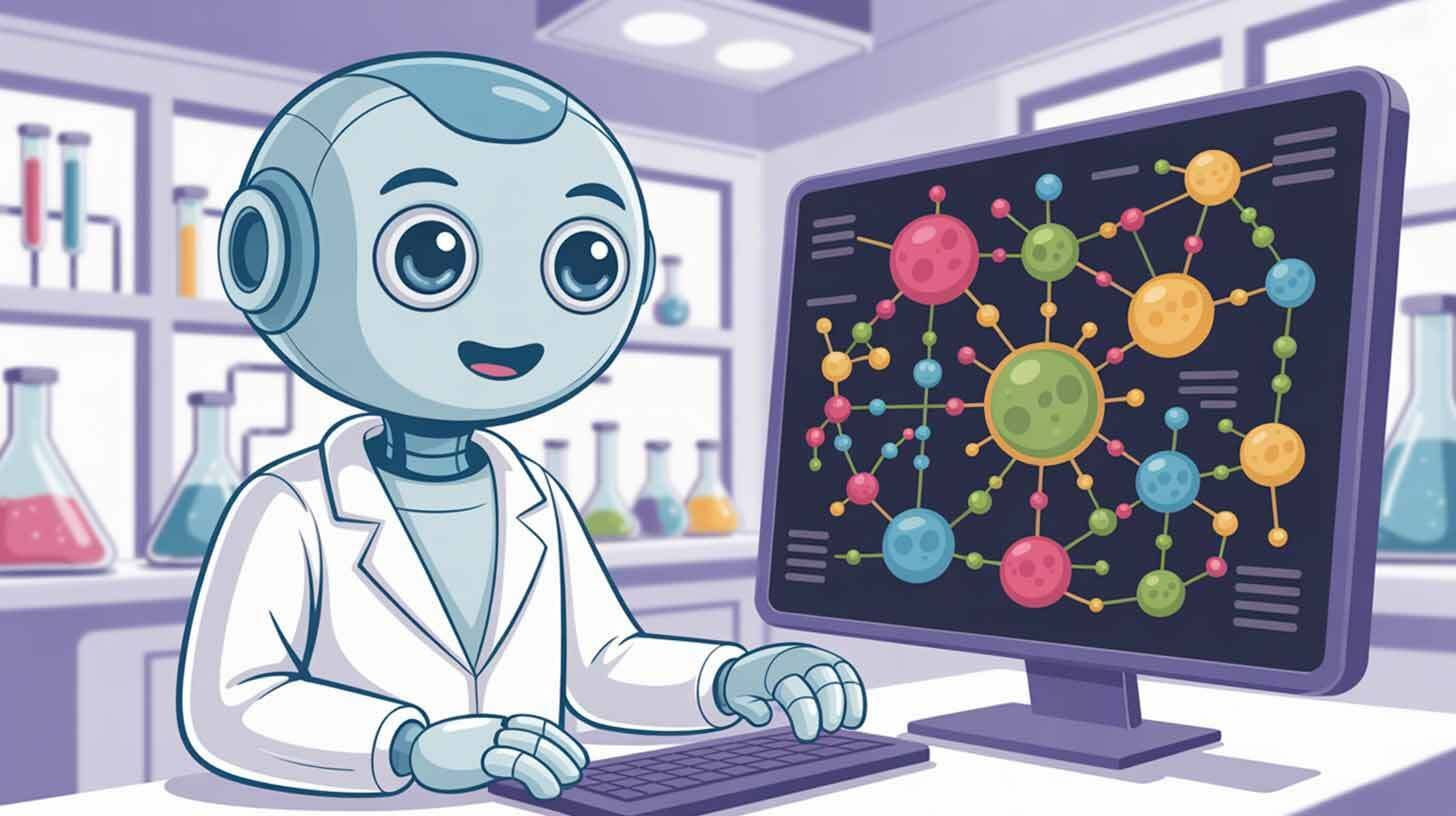
The innovation at the heart of PDGrapher is its holistic perspective. Unlike standard drug discovery approaches that evaluate one drug target in isolation, PDGrapher analyzes how genes, proteins, and biological signals interact within complex networks. Diseases like cancer or neurodegenerative disorders are not caused by a single broken component; they emerge from cascading failures across interconnected systems. PDGrapher models these interactions as a dynamic graph, where nodes represent biological entities and edges represent their relationships. By simulating how interventions ripple through this network, the AI can identify combinations of genes and medications that, together, can steer diseased cells back toward health. It is systems biology powered by machine learning—a tool that thinks in networks, not silos.
The performance metrics are compelling. When evaluated across 19 different cancer types, PDGrapher performed 35% better than comparable AI systems in predicting effective therapeutic combinations. Even more striking, it provided answers 25 times faster. In an industry where drug discovery can take over a decade and cost billions, this acceleration is not just impressive—it is transformative. Speed matters not only for efficiency but for patients: every month saved in the lab is a month gained for those waiting for treatment. And because PDGrapher is freely available, it democratizes access to this cutting-edge capability, allowing researchers worldwide to build upon its foundation without prohibitive licensing barriers.
Validation is where PDGrapher moves from promise to proof. The research team confirmed the model's accuracy by tasking it with identifying known lung cancer medications—a test it passed with precision. More importantly, PDGrapher also surfaced prospective novel targets that had not been previously considered, suggesting new avenues for investigation. This dual capability—confirming established knowledge while generating fresh hypotheses—is the hallmark of a truly useful scientific tool. It doesn't replace human expertise; it amplifies it, giving researchers a powerful lens through which to view biological complexity and prioritize the most promising leads.
The implications extend far beyond oncology. Through collaborations with Massachusetts General Hospital, Harvard scientists are already applying PDGrapher to discover cures for brain disorders like Parkinson's and Alzheimer's. These conditions have proven exceptionally resistant to traditional drug development, in part because the brain's intricate networks defy reductionist approaches. A medication that targets a single protein may alleviate one symptom while leaving the underlying disease process untouched. PDGrapher's network-based methodology is uniquely suited to this challenge.
By identifying multiple pressure points within the biological systems driving neurodegeneration, it could enable combination therapies that address root causes rather than just symptoms. This is precision medicine at its most ambitious: not just matching the right drug to the right patient, but designing the right combination of interventions for the right disease network.
The economic stakes are equally profound. The pharmaceutical industry spends an estimated $2.6 billion to bring a single new drug to market, with a high attrition rate in late-stage trials. Many of these failures stem from targets that looked promising in isolation but proved ineffective or unsafe in the complex reality of human biology. By identifying multi-target combinations with higher likelihoods of success, PDGrapher could dramatically reduce the number of fruitless trials, potentially saving billions of dollars in wasted R&D investment. These resources could then be redirected toward exploring more innovative therapies, expanding access to treatments, or lowering costs for patients. In an era of rising healthcare expenditures, efficiency in discovery is not just a scientific goal—it is a moral imperative.
PDGrapher also addresses a deeper philosophical shift in medicine: the recognition that complexity is not noise to be ignored, but signal to be understood. For too long, drug development has been constrained by the tools available—assays that measure one variable at a time, models that simplify biology to fit experimental convenience. AI models like PDGrapher invert this relationship. They embrace complexity as the essential feature of life, using computational power to find patterns and interventions that would be invisible to traditional methods. This is not just a new tool; it is a new way of thinking about disease and treatment.
Of course, the path from algorithm to pharmacy remains long. PDGrapher's predictions must be validated in cell cultures, animal models, and ultimately human trials. Biological networks are context-dependent, varying across tissues, individuals, and disease stages. The AI's recommendations will need to be refined with clinical insight and real-world data. But the foundation is now in place: a scalable, open-source framework for exploring therapeutic combinations at a pace and depth previously unimaginable.
For patients and families awaiting breakthroughs, PDGrapher offers something rare in modern medicine: hope grounded in evidence. It suggests that the diseases we have struggled to conquer are not invincible—they are simply complex, and complexity can be mapped, modeled, and ultimately mastered. For researchers, it provides a powerful new lens through which to view the machinery of life. For the healthcare system, it promises a future where treatments are more effective, more efficient, and more equitable.
The release of PDGrapher as a free tool underscores a growing movement in scientific innovation: the belief that the most powerful advances are those shared openly, allowing the global research community to collaborate, iterate, and accelerate progress together. In an era where proprietary silos can slow discovery, this commitment to openness is both strategic and ethical.
Harvard's PDGrapher is more than an AI model; it is a manifesto for a new era of medicine—one that sees disease not as a single villain to be defeated, but as a network to be rewired. By mapping the connections that sustain illness and identifying the combinations that restore health, it offers a path toward cures that have eluded us for generations. The map is now available. The journey toward healing just got a whole lot clearer.
Your one-stop shop for automation insights and news on artificial intelligence is EngineAi.
Did you like this article? Check out more of our knowledgeable resources:
Watch this space for weekly updates on digital transformation, process automation, and machine learning. Let us assist you in bringing the future into your company right now