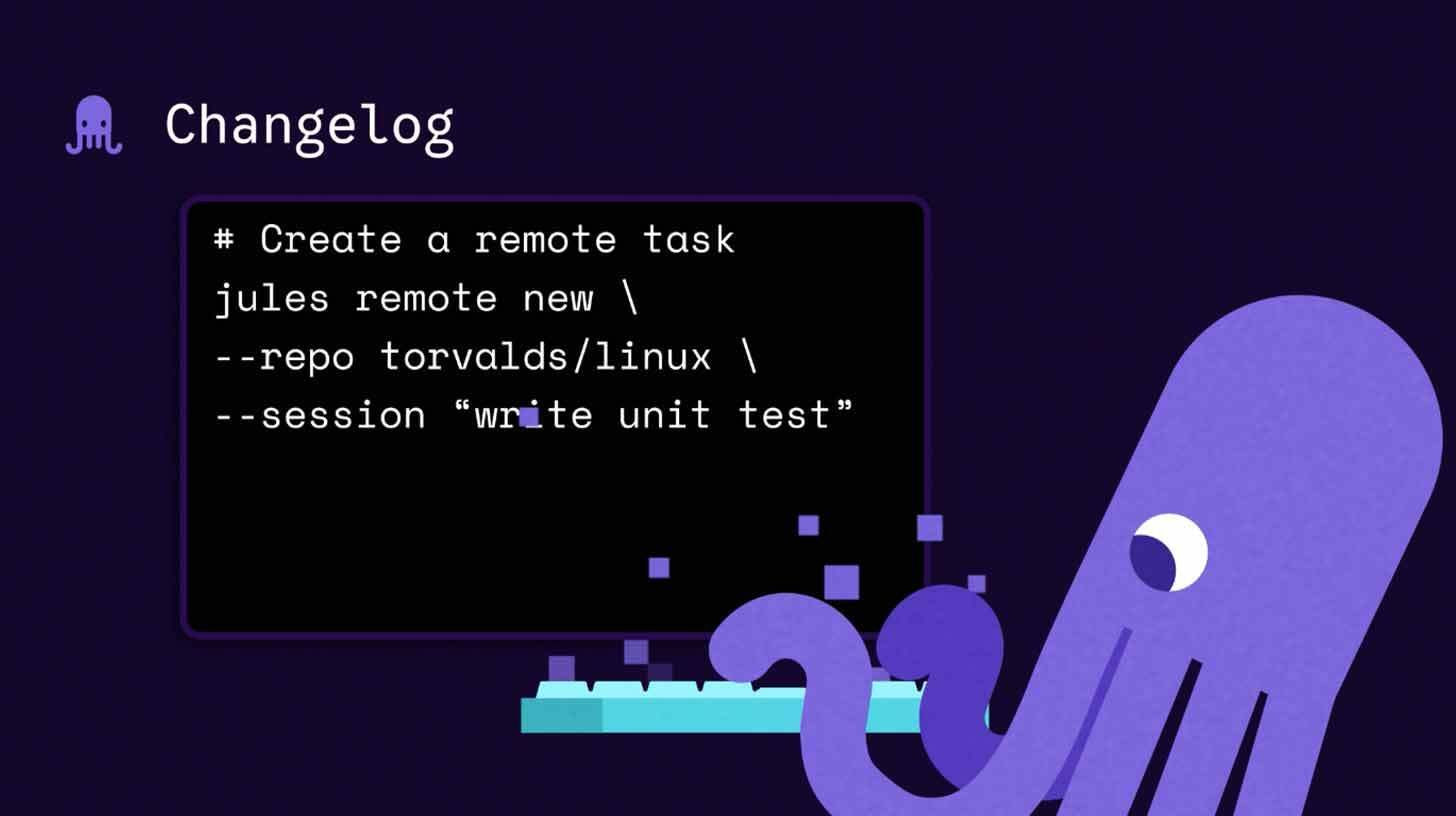
The Terminal Reclaimed: How Google's Jules CLI is Redefining the AI Developer Workflow
For decades, the terminal has been the native habitat of the software developer. It is where code is compiled, tests are run, servers are deployed, and logs are scrutinized. Yet, the first wave of AI coding assistants forced developers out of this comfort zone and into browser windows—chat interfaces that disrupted flow, required context switching, and fragmented the workflow. Now, Google is bringing AI back to where it belongs. With the release of a new command-line interface (CLI) and public API for its autonomous coding agent, Jules Tools, Google is enabling developers to initiate tasks and track progress directly from their terminals. This isn't just a usability tweak; it is a strategic realignment of AI assistance with the actual rhythms of software engineering. In an industry where context switching is the enemy of productivity, Jules' return to the command line could be the key to unlocking genuine adoption.
The Workflow Revolution: Keeping Developers in the Flow
The primary value proposition of the Jules CLI is the preservation of flow state. Every time a developer alt-tabs from their IDE or terminal to a browser-based chatbot, cognitive momentum is lost. They must reorient, copy-paste context, and then switch back to apply the solution. By controlling Jules with typed commands in terminal windows, Google eliminates this friction. Developers can create coding assignments, automate repetitive work, and monitor progress without leaving their main workspace.
Moreover, Jules manages duties in the background on Google's server. This offloads computational heavy lifting from the local machine and allows developers to continue working while the agent executes tasks. This asynchronous model is critical for autonomous agents: if the AI is going to refactor code, run tests, or debug errors, it should do so without blocking the developer's immediate input. The terminal becomes a command center rather than a waiting room.
Enterprise Integration: Security, Slack, and State
While the CLI appeals to individual developers, the public API and core connections signal Google's ambition to embed Jules into enterprise infrastructure. The ability to integrate the assistant with development workflows and office apps like Slack transforms Jules from a personal productivity tool into a collaborative agent. Imagine a Slack channel where a team member triggers a Jules task to generate documentation, and the bot posts the progress updates directly to the thread. This level of integration reduces communication overhead and keeps AI-assisted work visible to stakeholders.
Crucially, Google has addressed two of the biggest barriers to enterprise AI adoption: security and personalization. The new mechanisms for controlling access to credentials during automated work ensure that Jules cannot inadvertently expose secrets or overwrite protected assets. For security-conscious organizations, this guardrail is non-negotiable. Additionally, the assistant now retains programmer preferences and previous corrections. This statefulness means Jules learns from its mistakes and adapts to individual coding styles over time. An agent that remembers you prefer TypeScript over JavaScript, or that you always write unit tests before implementation, is exponentially more useful than one that requires re-instruction every session.
The Competitive Landscape: Catching Up to Stand Out
The timing of this release is significant. Jules has been quiet since its launch about a year ago, even though the AI coding industry has expanded rapidly in that time. Competitors like OpenAI's Codex and Anthropic's Claude Code have captured significant mindshare, integrating deeply with IDEs and offering sophisticated autonomous capabilities. In this crowded market, a CLI and API might seem like incremental features. However, they represent a differentiation strategy based on workflow integration rather than just model intelligence.
While competitors focus on chat-based interfaces or IDE plugins, Google is betting on the terminal—the lowest common denominator in development environments. This approach appeals to power users who prefer keyboard-driven workflows and scriptable interfaces. The public API also opens the door for custom integrations that competitors may not support, allowing enterprises to build Jules-powered tools tailored to their specific pipelines.
Yet, the competition is fierce. OpenAI and Anthropic have strong developer communities and robust ecosystems. For Jules to gain traction, it must prove not just that it can code, but that it can code within the workflow better than the alternatives. The CLI is a strong start, but it must be paired with reliability, speed, and accurate autonomous execution. If Jules can demonstrate that it reduces time-to-completion for complex tasks without requiring constant supervision, it can carve out a significant niche.
Strategic Implications: The Agent Economy
The release of the Jules CLI and API reflects a broader shift in the AI industry: the move from chatbots to agents. A chatbot waits for prompts; an agent executes tasks. By giving developers programmatic control over Jules, Google is enabling the creation of agent-driven workflows. This could lead to a new category of "AI scripts"—automations that trigger Jules to perform multi-step engineering tasks based on events like code commits, pull requests, or scheduled maintenance windows.
For Google, this is also a play for cloud infrastructure loyalty. Since Jules manages duties on Google's servers, increased usage drives demand for Google Cloud resources. It creates a sticky ecosystem where developers rely on Google's compute power for their AI-assisted workflows. This vertical integration—model, agent, infrastructure—mirrors the strategy of competitors but leverages Google's existing cloud dominance.
The Challenge of Trust and Adoption
Despite the technical merits, adoption will hinge on trust. Autonomous coding agents have the power to introduce bugs, delete files, or expose vulnerabilities if not properly constrained. The credential control mechanisms are a good start, but developers will need transparency into what Jules is doing in the background. Clear logging, undo capabilities, and sandboxed execution environments will be essential to build confidence.
Additionally, Jules must overcome the inertia of established tools. Developers are creatures of habit. Convincing them to switch from a familiar AI assistant to Jules requires a compelling value proposition. The CLI reduces friction, but the underlying model must be competitive in terms of code quality, reasoning, and context understanding. If Jules can match or exceed the performance of Claude Code or Codex while offering a superior workflow experience, adoption will follow.
Conclusion: The Terminal as the Future Interface
Google's update to Jules Tools is more than a feature release; it is a statement about where AI development is heading. The future of AI assistance is not in a chat window; it is in the workflow. By returning to the terminal, providing API access, and prioritizing security and statefulness, Google is acknowledging that developers want agents that work with their tools, not alongside them.
The quiet year since Jules' launch may have allowed Google to refine these integrations without the pressure of immediate scrutiny. Now, as the AI coding industry matures, the differentiator will not just be intelligence, but integration. Jules has the potential to lead this charge—if it can execute as well in the terminal as it does in the lab.
The command line is back. The agent is ready. The question is: will developers invite Jules into their workflow?
For Google, the terminal is no longer just a tool. It is the battlefield.
Your one-stop shop for automation insights and news on artificial intelligence is EngineAi.
Did you like this article? Check out more of our knowledgeable resources:
Watch this space for weekly updates on digital transformation, process automation, and machine learning. Let us assist you in bringing the future into your company right now