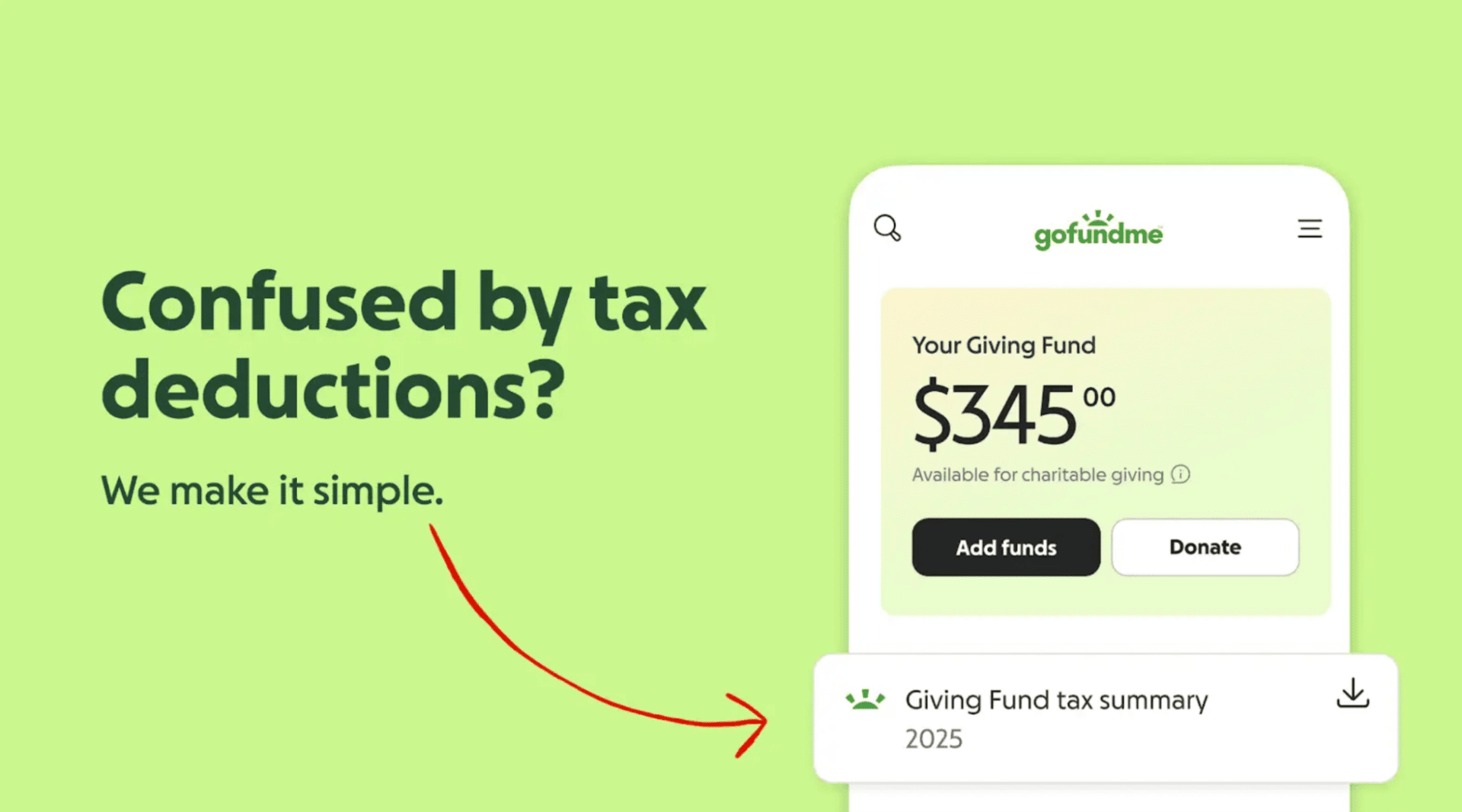
The Strategic Gift: How GoFundMe's Giving Funds is Redefining Charitable Giving for the Modern Donor
In an era where philanthropy is increasingly personalized, immediate, and impact-driven, the traditional models of charitable giving often feel misaligned with how people actually want to make a difference. Enter GoFundMe's Giving Funds—a new product that allows donors to lock in tax deductions now while retaining the flexibility to decide where to direct gifts later. This isn't just another donation feature; it is a strategic reimagining of the donor journey, blending the tax advantages of a donor-advised fund (DAF) with the accessibility and immediacy that GoFundMe has made its hallmark. For a platform known for grassroots fundraising, this move signals a maturation: from facilitating emergency appeals to enabling thoughtful, strategic philanthropy.
What Is Giving Funds? The Mechanics of Flexible Giving
At its core, Giving Funds is GoFundMe's entry into the donor-advised fund space—a financial vehicle that has long been the domain of wealth advisors and high-net-worth individuals, now democratized for everyday donors. The workflow is elegantly simple:
Contribute now: A donor adds funds to their Giving Fund, receiving an immediate tax deduction for the contribution.
Invest for growth: Funds can be invested to potentially increase their impact over time (a feature traditionally reserved for larger DAFs).
Grant later: The donor retains the flexibility to recommend grants to any of over 1.4 million verified charities—at their own pace, on their own timeline.
This decoupling of the tax event from the granting decision is powerful. It allows donors to:
Capture tax benefits in high-income years while taking time to research causes
Respond to emerging crises without waiting for year-end tax planning
Build a giving strategy that evolves with their values and interests
The product removes traditional DAF barriers: no minimums to start, no complex setup, and fees that are transparent and competitive. For donors who have ever felt rushed to "use it or lose it" on charitable deductions, Giving Funds offers a new rhythm: give now, decide later.
Strategic Positioning: Why GoFundMe, Why Now?
GoFundMe's entry into the DAF space is not accidental; it is a logical extension of its platform strategy. For over a decade, GoFundMe has built trust as the go-to destination for personal fundraising—medical emergencies, community projects, memorial campaigns.
But individual campaigns, while impactful, are often reactive. Giving Funds enables proactive philanthropy: a way for donors to build a reservoir of charitable capital that can be deployed strategically over time.
This move also addresses a key friction in the donor journey. Many people want to give more, but hesitate due to:
Decision paralysis: Too many causes, too little time to research
Timing misalignment: Wanting to deduct in December but needing more time to choose recipients
Administrative burden: Managing receipts, tracking grants, and navigating tax forms
Giving Funds simplifies each of these pain points. One contribution, one receipt, one dashboard for managing grants. By integrating with its existing ecosystem of 1.4 million charities, GoFundMe reduces the search cost of finding worthy recipients while maintaining donor choice.
The Broader Context: Philanthropy in the Age of Personalization
Giving Funds arrives at a moment of significant shift in charitable giving. Donors—especially younger generations—increasingly expect:
Transparency: Clear visibility into how funds are used and what impact they create
Agency: The ability to direct gifts to specific causes, not just general funds
Immediacy: The capacity to respond to crises in real time
Personalization: Giving that reflects individual values, not institutional priorities
Traditional foundations and community trusts have struggled to meet these expectations at scale. GoFundMe's platform-native approach—built on mobile-first design, social sharing, and real-time updates—positions Giving Funds to deliver a more responsive, engaging donor experience.
Moreover, the product aligns with broader trends in financial technology: the unbundling and rebundling of financial services. Just as fintech startups have democratized investing, banking, and insurance, GoFundMe is democratizing strategic philanthropy. By removing minimums and simplifying setup, it opens donor-advised giving to a demographic that previously found it inaccessible.
Competitive Landscape: Differentiation in a Crowded Field
The DAF market is not empty. Fidelity Charitable, Vanguard Charitable, and Schwab Charitable dominate the high-net-worth segment. Community foundations serve local donors. Newer entrants like DonorBox and Benevity target specific niches. GoFundMe's differentiation lies in three areas:
1. Brand Trust and Reach
GoFundMe has raised over $15 billion for individuals and causes worldwide. Its brand is synonymous with compassionate giving. This trust is a powerful asset in attracting donors who may be intimidated by traditional financial institutions.
2. Integrated Discovery
Unlike standalone DAFs, Giving Funds is embedded within a platform where donors can discover campaigns, read stories, and see impact in real time. This creates a seamless journey from inspiration to contribution to granting.
3. Accessibility
By eliminating minimums and simplifying the user experience, GoFundMe targets the "mass affluent" and everyday donors—a segment often overlooked by traditional DAF providers.
Potential Challenges: Trust, Transparency, and Impact Measurement
Despite its promise, Giving Funds faces several hurdles:
Regulatory Scrutiny
DAFs are under increasing policy scrutiny. Critics argue they allow donors to claim deductions without ensuring funds reach operating charities in a timely manner. GoFundMe will need to demonstrate that Giving Funds accelerates, rather than delays, charitable distribution.
Impact Measurement
Donors increasingly want to know not just where their money went, but what it achieved. GoFundMe will need to invest in impact reporting tools that go beyond transaction receipts to show outcomes—something that requires deep partnerships with nonprofit recipients.
Fee Transparency
While GoFundMe emphasizes competitive fees, the DAF model inherently involves administrative costs. Clear communication about fee structures—and how they compare to alternatives—will be essential to maintain trust.
Charity Vetting
With 1.4 million organizations in its network, ensuring that all recipients meet quality and legitimacy standards is an ongoing challenge. A single high-profile scandal involving a grantee could damage donor confidence in the entire platform.
Strategic Implications: For Donors, Nonprofits, and the Sector
For Donors
Giving Funds offers unprecedented flexibility. It transforms charitable giving from a year-end transaction into a continuous practice. Donors can build a giving strategy that evolves with their lives, respond to opportunities as they arise, and potentially grow their impact through investment returns.
For Nonprofits
The product could create a more predictable funding stream. Donors with Giving Funds may be more likely to give repeatedly, and the investment feature could increase grant sizes over time. However, nonprofits may need to adapt to a world where donors have more options—and more power to direct funds.
For the Philanthropic Sector
GoFundMe's entry could accelerate the democratization of strategic giving. If successful, it may pressure traditional DAF providers to lower barriers and improve user experience. It could also spur innovation in impact measurement, donor engagement, and charitable discovery.
The Path Forward: Building a Sustainable Giving Ecosystem
For Giving Funds to achieve its potential, GoFundMe must focus on three priorities:
Education: Many donors are unfamiliar with DAFs. Clear, accessible content explaining how Giving Funds works—and why it might be right for them—will be critical to adoption.
Partnership: Deepening relationships with nonprofit recipients will enable better impact reporting, streamlined grant distribution, and co-created giving campaigns.
Innovation: Continuing to iterate on the product—adding features like recurring grants, matching gift integration, or social giving circles—will keep the experience fresh and engaging.
Conclusion: Giving, Reimagined
GoFundMe's Giving Funds is more than a new product; it is a statement about the future of philanthropy. It declares that strategic giving should not be reserved for the wealthy, that tax planning and compassion can coexist, and that the act of charity can be as dynamic as the causes it supports.
For donors, it offers a new way to align financial planning with personal values. For nonprofits, it promises a more engaged, flexible funding source. For the sector, it challenges traditional models to become more accessible, transparent, and responsive.
The holiday season is often framed as a time of giving. Giving Funds reframes that impulse: not as a momentary gesture, but as the beginning of a sustained practice. Lock in your deduction now. Take your time choosing where to make a difference. Let your generosity grow—both in impact and in intention.
The question is no longer whether you want to give. It is how wisely you can give. GoFundMe's Giving Funds offers a path to do both.
Give now. Decide later. Impact forever.
The future of philanthropy is flexible. And it starts with a single, strategic contribution.
Your one-stop shop for automation insights and news on artificial intelligence is EngineAi.
Did you like this article? Check out more of our knowledgeable resources:
Watch this space for weekly updates on digital transformation, process automation, and machine learning. Let us assist you in bringing the future into your company right now