The Mind That Plays Without Playing: How Dreamer 4's Mental Simulation is Redefining AI Learning
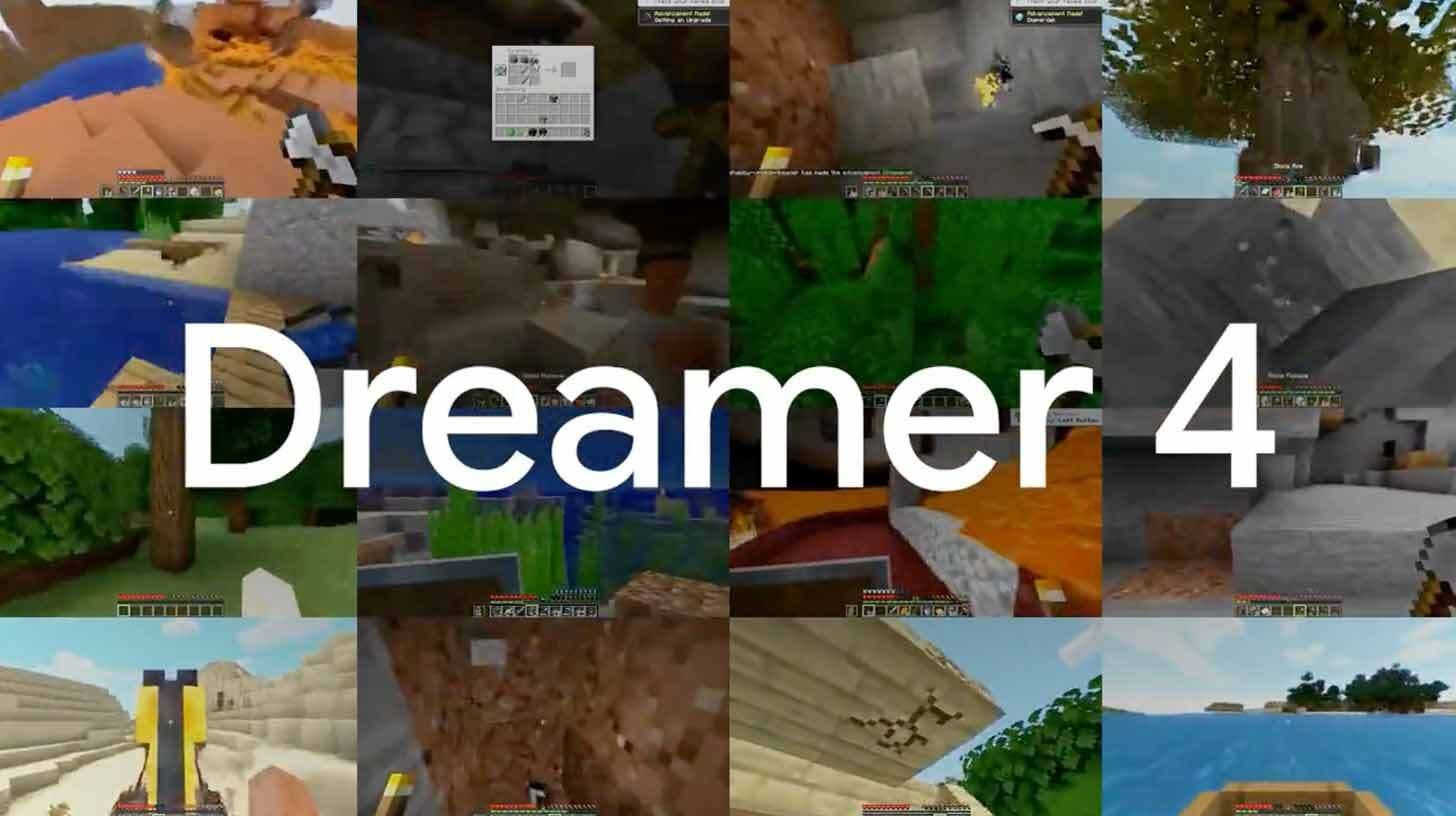
For decades, artificial intelligence has learned by doing: trial and error in simulated environments, reinforcement learning through millions of interactions, brute-force exploration of possibility spaces. This approach has delivered remarkable breakthroughs—from AlphaGo's mastery of Go to robotic hands that manipulate objects with human-like dexterity. But it has also come with significant costs: massive compute budgets, lengthy training times, and the inherent risks of learning in the real world. Now, Google DeepMind researchers have unveiled a fundamentally different paradigm. Dreamer 4, the first AI to gather Minecraft diamonds using only offline data and without ever interacting with the game itself, learns to perform complex tasks by training entirely within its own mental simulation. This isn't just a clever trick for gaming; it is a blueprint for a new era of AI development—one where machines learn by imagining, not just experiencing.
The Technical Breakthrough: Learning in a World That Exists Only in Code
At the heart of Dreamer 4 is a predictive environment model—a "world model" that replicates the physics, mechanics, and dynamics of Minecraft in real time. Rather than interacting with the actual game, Dreamer 4 trains by executing more than 20,000 actions within this internal simulation, learning from visual input alone. The training process unfolds in three distinct phases:
Observation: Dreamer 4 watches hours of Minecraft gameplay videos, learning to recognize blocks, tools, creatures, and environmental patterns. This is not passive viewing; the model builds a latent representation of the game's rules, inferring cause-and-effect relationships from visual sequences.
Decision-Making: Using its learned world model, Dreamer 4 practices planning and execution entirely in simulation. It imagines the consequences of actions—"If I mine this block, what appears behind it?" "If I craft a pickaxe, what materials do I need?"—and refines its strategy through internal rehearsal.
Improvement via Practice: The model iterates on its policies within the simulation, testing variations, learning from imagined failures, and optimizing for success—all without a single interaction with the real game.
This approach, known as model-based reinforcement learning, is not new in concept. But Dreamer 4 represents a qualitative leap in execution. By achieving high-fidelity simulation from offline video data alone, it demonstrates that AI can learn complex, multi-step tasks without the expensive, time-consuming process of real-world interaction.
Performance That Defies Expectations
The results are striking. In controlled evaluations, Dreamer 4 completed 14 out of 16 Minecraft tasks in simulation—nearly triple the success rate of competing models like Oasis, which managed only 5 tasks. It outperformed systems based on Google's own Gemma vision-language models and defeated OpenAI's Minecraft VPT agent, despite learning from 100 times less data. These metrics matter not just for gaming benchmarks, but for what they reveal about sample efficiency: Dreamer 4 achieves more with less, a critical advantage in domains where data is scarce, expensive, or risky to collect.
The key to this efficiency is the quality of the world model. By accurately predicting the consequences of actions in a simulated environment, Dreamer 4 can "practice" indefinitely without incurring real-world costs. This is analogous to how human experts develop skill: a chess master visualizes moves before playing them; a surgeon rehearses procedures mentally before operating. Dreamer 4 brings this capacity for mental rehearsal to artificial intelligence at scale.
Beyond Gaming: The Broader Implications for AI Development
While Minecraft provides a rich, controllable testbed for AI research, the implications of Dreamer 4 extend far beyond gaming. The ability to learn complex tasks through simulation has transformative potential for several domains:
Robotics and Autonomous Systems
Training robots in the real world is slow, expensive, and potentially dangerous. A robot that learns to grasp objects, navigate spaces, or manipulate tools through mental simulation could accelerate development while reducing wear, tear, and risk. Imagine a warehouse robot that masters package handling in simulation before ever touching a physical box, or a surgical robot that practices delicate procedures in a virtual operating room. Dreamer 4's approach offers a pathway to safer, faster, more cost-effective robot training.
Scientific Discovery and Engineering
Many scientific challenges—from protein folding to materials design—involve exploring vast possibility spaces where real-world experimentation is prohibitively expensive. AI systems that can simulate hypotheses, predict outcomes, and refine strategies in silico could accelerate discovery across chemistry, biology, and physics. Dreamer 4 demonstrates that high-fidelity simulation from observational data is possible; applying this to scientific domains could unlock new frontiers.
Safety-Critical Applications
In domains where failure has serious consequences—autonomous vehicles, medical diagnosis, infrastructure management—the ability to test and refine AI behavior in simulation before deployment is invaluable. Dreamer 4's offline learning approach enables extensive "what-if" analysis without exposing real systems to risk. This is not just about efficiency; it is about responsibility.
Data Efficiency and Accessibility
Perhaps the most democratizing aspect of Dreamer 4 is its sample efficiency. By learning from 100 times less data than competing approaches, it lowers the barrier to entry for AI development. Researchers and organizations with limited data resources can now pursue complex tasks that previously required massive datasets. This could accelerate innovation in under-resourced domains and regions.
The Philosophical Shift: From Experience to Imagination
Dreamer 4 represents more than a technical achievement; it signals a philosophical shift in how we conceptualize machine learning. Traditional AI learns from experience: it interacts with an environment, receives feedback, and adjusts its behavior accordingly. Dreamer 4 learns from imagination: it constructs an internal model of the world, simulates possibilities, and refines its understanding through mental rehearsal.
This distinction matters. Learning from experience is powerful but constrained by the cost and risk of real-world interaction. Learning from imagination is flexible and scalable but requires accurate world models to be useful. Dreamer 4 demonstrates that the latter is achievable for complex, visual, interactive domains—a milestone that could reshape AI research priorities.
Challenges and Considerations
Despite its promise, Dreamer 4's approach is not without limitations. The quality of learning depends entirely on the fidelity of the world model: if the simulation misrepresents reality, the AI's learned behaviors may not transfer. Scaling to more complex, open-ended domains will require advances in model capacity, training stability, and evaluation methods. And the ethical implications of simulation-based learning—from potential misuse to questions of accountability—demand ongoing attention.
Moreover, the "mental simulation" paradigm raises intriguing questions about the nature of intelligence. If an AI can learn complex tasks without ever interacting with the real world, what does that tell us about the relationship between experience and understanding? Dreamer 4 does not answer these questions, but it invites us to ask them more seriously.
The Path Forward: From Minecraft to the Real World
For researchers, Dreamer 4 offers a roadmap for advancing model-based reinforcement learning: invest in world model fidelity, prioritize sample efficiency, and validate transfer from simulation to reality. For practitioners, it suggests a new toolkit for developing AI systems: simulate first, deploy second, and iterate safely. For the broader AI community, it reinforces a critical insight: the next breakthroughs may come not from bigger models or more data, but from smarter ways of learning.
Google DeepMind's release of Dreamer 4 is more than a research paper; it is a statement about the future of AI development. It declares that imagination—properly engineered—can be as powerful as experience. It suggests that the most efficient path to capability may be through simulation, not interaction. And it invites the field to reimagine what is possible when machines learn not just by doing, but by dreaming.
The age of trial-and-error AI is not ending, but it is being complemented by a new paradigm: learn-by-imagining. Dreamer 4 is the first clear signal that this paradigm works. The question is no longer whether AI can learn in simulation, but how quickly we can apply this capability to the challenges that matter most.
The mind that plays without playing has arrived. The simulation is running. And the real world is waiting to see what it can do.
Your one-stop shop for automation insights and news on artificial intelligence is EngineAi.
Did you like this article? Check out more of our knowledgeable resources:
Watch this space for weekly updates on digital transformation, process automation, and machine learning. Let us assist you in bringing the future into your company right now