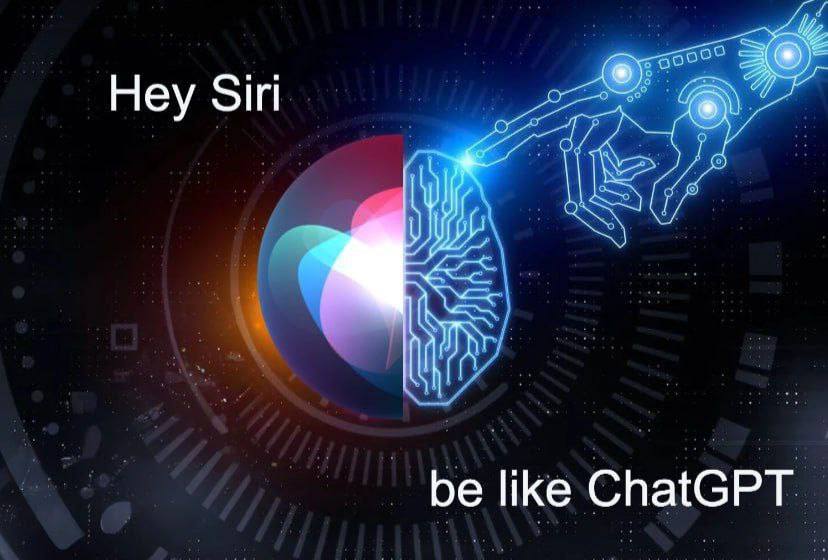
The Veritas Revelation: How Apple's Internal AI Push Signals a Pivotal Moment for Siri—and the Industry
In the world of consumer technology, few delays carry as much symbolic weight as a Siri overhaul. For over a decade, Apple's voice assistant has been both ubiquitous and underwhelming—a tool that could set timers and play music but struggled with nuance, context, or genuine conversation. Now, a Bloomberg leak reveals that Apple is quietly building something far more ambitious: an internal app called Veritas, essentially ChatGPT with an Apple skin, serving as the testbed for the next generation of Siri. The catch? The new Siri was supposed to launch this spring, but crashed one-third of the time in testing. The release is now delayed to March 2026. This isn't just a product setback; it is a window into the profound technical and strategic challenges Apple faces as it races to catch up in the AI era.
Veritas: The Prototype Behind the Promise
Veritas represents Apple's most concrete signal yet that it is serious about competing in the conversational AI arena. Unlike the current Siri, which operates on rigid intent-matching and limited context windows, Veritas is designed to:
Remember chats across sessions, enabling multi-turn conversations that build on prior context
Handle long Q&A threads, supporting complex queries that require reasoning, not just retrieval
Integrate deeply with Apple's ecosystem, accessing personal data, photos, apps, and screen content with user permission
This is not a chatbot grafted onto iOS; it is a reimagining of what a personal assistant can be when it understands not just commands, but intent, history, and environment. The fact that Apple is using Veritas internally before any public release reflects its characteristic caution: test rigorously, refine relentlessly, launch only when the experience meets Apple's exacting standards.
The Delay: A Symptom of Deeper Challenges
The postponement to March 2026 is significant. In an industry where speed often trumps perfection, Apple's decision to delay rather than ship a flawed product is consistent with its brand philosophy—but it also underscores the difficulty of the task. The reported 33% crash rate in testing suggests fundamental stability issues, likely stemming from:
Model complexity: Blending Apple's in-house LLM ("Linwood") with third-party models introduces integration challenges—latency, consistency, and error propagation—that are hard to debug at scale.
Privacy-preserving architecture: Apple's commitment to on-device processing and differential privacy adds layers of complexity that competitors with cloud-first approaches do not face.
Ecosystem integration: Features like "search your personal data" or "edit photos by voice" require deep hooks into iOS, macOS, and iCloud—each a potential point of failure if not meticulously engineered.
User expectation management: After years of incremental Siri improvements, Apple cannot afford a high-profile launch that underdelivers. The delay is a bet that patience will yield a transformative product, not just another update.
Linwood: Apple's Hybrid AI Strategy
At the core of Veritas is "Linwood," Apple's in-house large language model, reportedly blended with third-party capabilities. This hybrid approach reflects a strategic hedging: Apple wants to own its AI stack for control, privacy, and differentiation, but recognizes that external models may offer capabilities it cannot replicate quickly.
The planned features illustrate the ambition:
Personal data search: Query your emails, messages, notes, and files using natural language—"Find that recipe I saved last week" or "Show me the document where we discussed Q3 targets."
Voice photo editing: "Remove the background from this photo" or "Make the sky more dramatic" without opening an editor.
App control: "Send this article to my colleague via Messages" or "Add this event to my calendar with a reminder."
Screen understanding: The assistant recognizes what you're looking at and offers contextually relevant help—"Want me to summarize this article?" or "Should I find similar products?"
These capabilities, if executed well, would transform Siri from a command-line interface into a collaborative partner—one that anticipates needs, understands context, and acts across applications with minimal friction.
Tim Cook's Declaration: "AI Is Ours to Capture"
Cook's statement is more than rhetoric; it is a strategic signal. Apple has historically been a fast follower in emerging categories—smartphones, tablets, wearables—entering after pioneers have validated markets, then differentiating through integration, design, and ecosystem. With AI, the stakes are higher: the winner may define the interface for the next decade of computing. Cook's assertion that "AI is ours to capture" suggests Apple believes its advantages—hardware-software integration, privacy reputation, loyal user base, and design excellence—can overcome its late start.
Yet, the competitive landscape is unforgiving. OpenAI, Google, Anthropic, and Meta are not standing still. They are iterating on models, expanding capabilities, and embedding AI deeper into their platforms. Apple's delay gives competitors more time to entrench user habits and developer ecosystems. The risk is not just missing a launch window, but ceding mindshare in a category that could redefine how people interact with technology.
The Hedging Strategy: Partnerships as Insurance
Apple's negotiations with OpenAI, Anthropic, and Google (Gemini) reveal a pragmatic recognition: going it alone is risky. By securing access to external models, Apple can:
Fill capability gaps while Linwood matures
Offer users choice between Apple's privacy-focused AI and more powerful cloud-based alternatives
Reduce time-to-market for features that require cutting-edge reasoning or multimodal understanding
This multi-vendor approach mirrors Apple's historical strategy with components: source the best available technology while building internal expertise for long-term differentiation. The challenge will be maintaining a cohesive user experience when underlying capabilities come from multiple sources.
The Bottom Line: From Glorified Alarm Clock to Genuine Assistant
If Apple delivers on the Veritas vision, Siri could finally become the intelligent, context-aware assistant users have waited for. Imagine:
Planning a trip by saying "Book a weekend in Portland with hiking and good coffee" and having Siri research options, check your calendar, and present a curated itinerary
Editing a photo by describing the change you want, not fumbling with sliders
Getting help with a complex task—"Help me draft a response to this email that declines politely but leaves the door open"—with Siri understanding tone, relationship, and intent
This is not science fiction; it is the logical endpoint of the capabilities Apple is reportedly building. The question is whether the March 2026 timeline is realistic, and whether the final product will feel like a leap forward or just another incremental improvement.
Strategic Implications for the Industry
Apple's AI journey offers lessons for the broader tech ecosystem:
Privacy as differentiation: Apple's on-device, privacy-first approach may appeal to users and enterprises wary of cloud-based AI, creating a niche even if raw capability lags competitors.
Integration as moat: The ability to weave AI seamlessly across devices, apps, and services is hard to replicate. Apple's ecosystem advantage could outweigh model-level disadvantages.
Patience as strategy: In a field defined by rapid iteration, Apple's willingness to delay for quality may pay off if the final product sets a new standard for reliability and user experience.
Hybrid as hedge: Combining in-house and third-party models may become the norm, balancing control, capability, and speed.
The Human Element: What Users Really Want
Beyond the technical specs and strategic maneuvering, the ultimate test is simple: does this make users' lives better? After years of unmet promises, Apple's user base is skeptical. The new Siri must not just be smarter; it must feel trustworthy, helpful, and genuinely useful in daily life. That requires more than advanced models—it demands thoughtful design, transparent controls, and respect for user autonomy.
Conclusion: The Stakes Could Not Be Higher
The Veritas leak is more than gossip; it is a signal that Apple is all-in on AI. The delay to 2026 is a setback, but also an opportunity to get it right. The hybrid strategy with Linwood and external partners reflects pragmatism, not weakness. And Tim Cook's declaration underscores the existential nature of this moment: for Apple, AI is not just a feature—it is the future of the interface between humans and technology.
The question is no longer whether Apple can build a better Siri. It is whether it can build an AI assistant that feels unmistakably Apple: intuitive, private, powerful, and human-centered. If it succeeds, Siri could finally shed its reputation as a glorified alarm clock and become the intelligent companion users have waited for. If it fails, Apple risks ceding a defining category to competitors who moved faster.
March 2026 is a long time in tech. But for a company that defines its brand by getting things right, not just getting them first, the wait may be worth it. The Veritas prototype is running. The Linwood model is training. The partnerships are being negotiated. And the world is watching.
Siri's moment of truth is approaching. The only question is: will Apple capture it?
Your one-stop shop for automation insights and news on artificial intelligence is EngineAi.
Did you like this article? Check out more of our knowledgeable resources:
Watch this space for weekly updates on digital transformation, process automation, and machine learning. Let us assist you in bringing the future into your company right now