The Incremental Intelligence: How Amazon's Alexa+ Hardware Push Reflects the State of AI in Consumer Devices
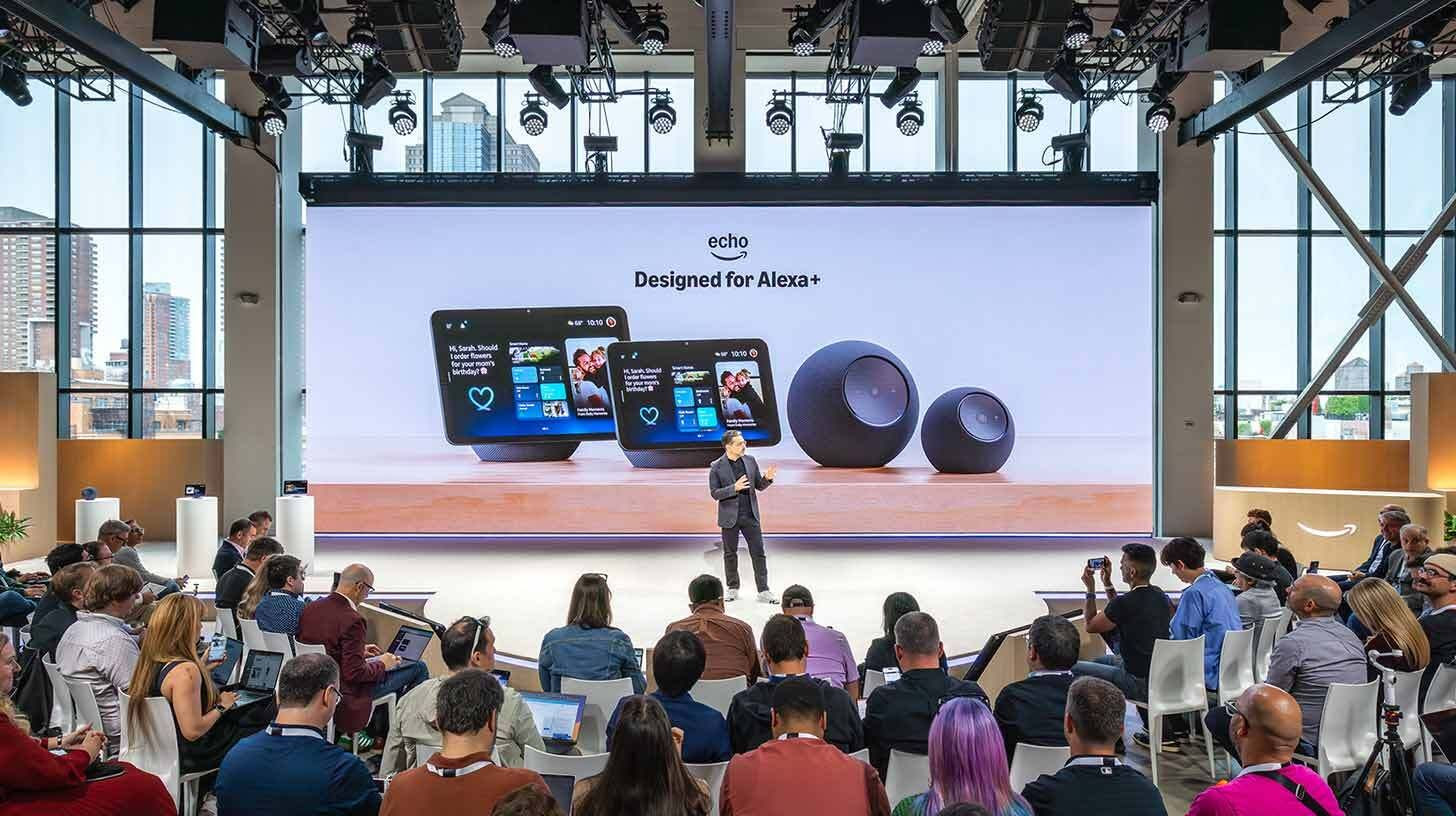
In the high-stakes race to embed artificial intelligence into everyday life, Amazon has made its latest move: a coordinated refresh of its hardware ecosystem, all optimized for Alexa+, the company's upgraded AI assistant. New Echo devices with enhanced sensors and on-device AI chips, Ring cameras with pet-finding and facial recognition, Kindles with AI-powered note-taking, and Fire TVs with intelligent recommendations—this is not a single product launch, but a platform-wide evolution. Yet, despite the breadth of the announcement, a subtle tension underlies the rollout: these are meaningful improvements, but not the breakthrough many hoped for. In an industry moving at breakneck speed, Amazon's strategy feels less like a leap forward and more like a steady march—a reminder that even giants must navigate the gap between incremental innovation and transformative change.
The Alexa+ Upgrade: From Command to Conversation
At the core of this hardware refresh is Alexa+, Amazon's most capable assistant yet. The improvements are tangible: more natural, multi-turn conversations; the ability to handle reservations, smart home control, and complex web tasks autonomously; and enhanced contextual awareness that reduces the need for repetitive prompts. This is Alexa evolving from a voice-activated remote control into a proactive, agentic partner—one that can plan, execute, and follow through without constant supervision.
The hardware is designed to enable this shift. New Echo devices feature enhanced speech detection sensors that can identify individuals and adapt to acoustic environments, improving accuracy in noisy households. More significantly, they include dedicated AI chips that process certain queries on-device, reducing latency, preserving privacy, and enabling functionality even when internet connectivity is limited. This edge-AI approach reflects a broader industry trend: as models become more efficient, the value of cloud-only inference diminishes. By bringing intelligence closer to the user, Amazon is betting that responsiveness and reliability will matter as much as raw capability.
Ring, Kindle, Fire TV: AI as a Unifying Layer
The Alexa+ upgrade extends beyond Echo speakers, weaving intelligence into Amazon's broader product ecosystem:
Ring AI gains practical, consumer-focused features: Search Party uses computer vision to help locate misplaced pets by scanning recent footage;
Familiar Faces identifies known visitors and sends personalized alerts;
Alexa+ Greetings transforms the doorbell into a virtual concierge, offering customized welcome messages and package instructions.
These are not gimmicks; they address real pain points for homeowners, turning security cameras into proactive household assistants.
Kindle introduces AI-powered note-taking, allowing readers to summarize chapters, extract key quotes, or generate study guides with a tap. For students, researchers, or avid readers, this transforms the e-reader from a passive consumption device into an active learning tool. The integration feels natural because it augments, rather than disrupts, the core reading experience.
Fire TV receives intelligent search that understands natural language queries ("show me sci-fi movies from the 90s with strong female leads"), expanded smart home integrations for controlling lights or thermostats from the couch, and Alexa+ guidance for movie recommendations that explain why a title matches your preferences. This turns the streaming interface from a grid of thumbnails into a conversational discovery engine.
What unites these updates is a philosophy of ambient intelligence: AI that works in the background, anticipating needs and simplifying tasks without demanding constant attention. This is Amazon's vision of the smart home—not a collection of disconnected gadgets, but a cohesive ecosystem where intelligence flows seamlessly between devices.
The Strategic Context: Incrementalism in an Era of Breakthroughs
Yet, for all their polish, these announcements raise a broader question: in a year defined by frontier model releases, agentic AI frameworks, and autonomous reasoning breakthroughs, do incremental hardware updates feel sufficient? The answer depends on expectations.
For Amazon's existing customer base—millions of households already invested in the Echo/Ring/Fire ecosystem—these improvements are welcome and practical. They enhance daily life without requiring behavioral change or new learning curves. For the company, this strategy makes sense: leverage installed base, deepen engagement, and create switching costs through ecosystem lock-in. This is classic Amazon: iterate, integrate, and scale.
But for observers watching the AI hardware race unfold, the announcements may feel cautious. Competitors are pursuing more ambitious visions: Meta's Ray-Ban display glasses that project information directly into your field of view; OpenAI's rumored Sora-powered social network; Apple's long-rumored AR headset that promises to redefine spatial computing. Against this backdrop, Amazon's focus on refining existing categories—speakers, cameras, e-readers, streaming sticks—can seem conservative.
This conservatism is not necessarily a weakness. In a field where hype often outpaces utility, Amazon's emphasis on practical, deployable features may prove more sustainable than flashier bets. The company has learned from past missteps (the Fire Phone, the short-lived Echo Look) and now prioritizes reliability over novelty. For a mass-market audience, a smart speaker that just works may be more valuable than a futuristic device that requires explanation.
The Hardware-AI Gap: Waiting for the Breakthrough
The deeper challenge Amazon faces—and one shared by the entire industry—is the gap between current AI capabilities and the transformative hardware experiences users imagine. We have models that can reason, generate, and plan; we have sensors that can see, hear, and sense; we have chips that can process intelligence at the edge. Yet, assembling these components into a product that feels genuinely revolutionary remains elusive.
Why? Several factors converge:
Latency and reliability: Users expect instant, flawless responses. Even minor delays or errors break the illusion of intelligence. On-device processing helps, but complex reasoning still often requires cloud round-trips, introducing friction.
Contextual understanding: True ambient intelligence requires deep awareness of user preferences, routines, and environment. Building this context without violating privacy or becoming intrusive is a delicate balance.
Interaction paradigms: Voice is powerful but limited. Gestures, gaze, and ambient cues offer richer interaction, but require new hardware and new user mental models. The industry has not yet converged on the "right" interface for AI.
Value perception: For many consumers, AI features still feel like nice-to-haves rather than must-haves. Until AI solves a problem that users feel acutely—saving significant time, preventing costly errors, enabling entirely new experiences—adoption will remain incremental.
Amazon's approach acknowledges these challenges. By focusing on concrete use cases (finding pets, taking notes, recommending movies), the company avoids overpromising and underdelivering. But this pragmatism may also limit the visionary appeal that drives early adoption of transformative technologies.
The Competitive Landscape: Amazon, Apple, and the AI Limbo
The announcement also invites comparison with Apple, which has been notably quiet on consumer AI hardware despite its strengths in silicon, design, and ecosystem integration. Apple's "AI limbo"—hesitating to commit to a clear strategy while competitors ship—creates an opening for Amazon to consolidate its position in the smart home. Yet, Apple's eventual entry could reset expectations, leveraging its reputation for polished, user-centric design to deliver an AI experience that feels less like a feature and more like a fundamental reimagining of the device.
Google, meanwhile, continues to integrate Gemini across its hardware portfolio, from Pixel phones to Nest displays. Its advantage lies in search, maps, and Android—deep integration points that Amazon lacks. The competition is not just about who has the best model, but who can embed intelligence most seamlessly into the moments that matter.
The Path Forward: From Incremental to Transformative
For Amazon to move from incremental improvements to transformative impact, several shifts may be necessary:
From reactive to proactive: Alexa+ should anticipate needs before users ask—suggesting a grocery order when supplies run low, reminding of an upcoming appointment with traffic-aware departure times, or flagging a forgotten task based on calendar context.
From siloed to unified: Intelligence should flow not just between Amazon devices, but across the broader smart home ecosystem, integrating third-party products with the same seamlessness as first-party ones.
From functional to emotional: The most memorable AI experiences feel personal, empathetic, and human-centered. This requires advances in emotional intelligence, personalization, and ethical design—areas where Amazon has room to grow.
From device-centric to experience-centric: The future may not be about smarter speakers or cameras, but about ambient experiences that transcend individual devices—intelligence that follows you from room to room, task to task, moment to moment.
Conclusion: The Steady Hand in a Volatile Race
Amazon's latest hardware announcements are a testament to the company's strengths: execution at scale, ecosystem thinking, and a focus on practical utility. They represent meaningful progress in making AI more accessible, reliable, and integrated into daily life. For millions of users, these improvements will enhance their experience with products they already own and trust.
Yet, in an industry defined by rapid breakthroughs and visionary bets, incrementalism carries risk. The companies that define the next era of AI hardware may be those willing to reimagine not just what devices can do, but what they are for. Amazon has the resources, the data, and the installed base to lead that reimagining. The question is whether it will choose to.
For now, Alexa+ is making its way across Amazon's product range—one helpful, practical integration at a time. It is a minor step forward in a major race. But in technology, as in life, steady progress often outlasts flashy leaps. The hardware is ready. The intelligence is improving. The breakthrough may be closer than it appears.
The age of ambient AI is not here yet. But with each iteration, Amazon is laying the groundwork for when it arrives. The question is no longer whether AI will transform our devices, but how soon we will stop noticing the technology—and start experiencing the intelligence.
Your one-stop shop for automation insights and news on artificial intelligence is EngineAi.
Did you like this article? Check out more of our knowledgeable resources:
Watch this space for weekly updates on digital transformation, process automation, and machine learning. Let us assist you in bringing the future into your company right now