Demis Hassabis Told Us When He Expects AGI. His Answer Might Surprise You.
I’ve interviewed a lot of ambitious people. Founders who promised to colonize Mars. CEOs who said they’d reshape finance. Futurists who drew timelines to immortality on napkins. Most of them, you smile, you nod, you write down the quote, and you move on.
Demis Hassabis is different. Not because he’s less ambitious—he might be the most ambitious person I’ve ever met. But because when he gives a timeline, he actually means it. And he has the receipts to back up the confidence.
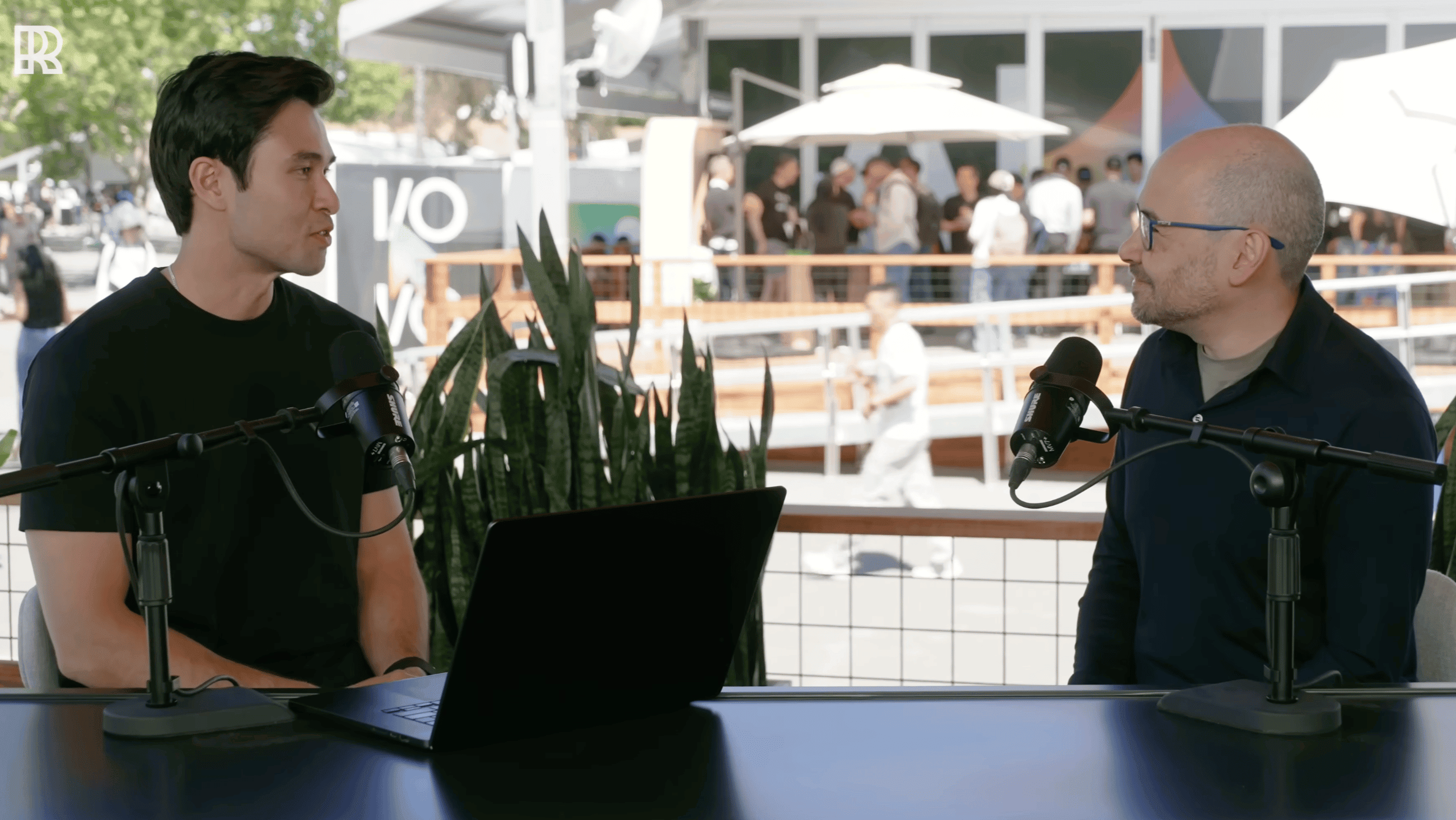
The Google DeepMind CEO sat down with us for an exclusive interview last week. We talked about AGI (he says 2030, plus or minus a year), about which diseases get cured first (oncology and immunology are leading the pack), and about what he thinks everyone is missing in the current AI frenzy. We also talked about what comes after AGI, which is where the conversation got genuinely weird—in the best possible way.
Hassabis is not a hype artist. He’s a former chess prodigy, a neuroscientist, and a game designer. He built DeepMind because he wanted to understand intelligence, not because he wanted to ship features. That orientation matters. It means that when he talks about AGI, he’s not selling you something. He’s telling you what he genuinely believes is coming.
Here’s what he said.
The 2030 Timeline: Not a Prediction, a Plan
Let’s start with the headline. Hassabis said AGI is on track for 2030, plus or minus a year.
That’s actually a slight delay from some of his earlier, more optimistic comments. A few years ago, he’d sometimes say “late this decade.” Now he’s anchoring on 2030 with a one-year fudge factor. That’s not a retreat. It’s precision.
“The pieces are coming together,” he told us. “But a few things remain unsolved, and they’re not minor.”
He listed four gaps:
World physics. Current AI models don’t understand how the physical world works in an intuitive, causal way. They can describe that a ball thrown in the air will come down, but they don’t know it the way a child knows it after dropping a spoon fifty times. Bridging that gap requires moving from pattern recognition to something closer to a mental model of physics.
Memory. Today’s models have context windows that measure in the hundreds of thousands of tokens. That sounds like a lot. It’s not. A real conversation, a real project, a real relationship with a user requires memory that persists across sessions, across days, across contexts. Hassabis said this is “embarrassingly unsolved” for how important it is.
Consistency. Ask the same model the same question twice, and you might get two different answers. That’s fine for a chatbot. It’s not fine for a system you’re trusting with medical diagnoses or scientific reasoning. AGI needs to be reliable in a way current systems are not.
Continual learning. Models today are frozen in time after training. They don’t learn from interactions. They don’t get better the more you use them. That’s a fundamental architectural limitation, and Hassabis said solving it requires rethinking how training and inference relate.
None of these are trivial. But none of them feel impossible either. That’s what makes the 2030 timeline credible. Hassabis isn’t saying “we need a breakthrough in quantum computing.” He’s saying “we need to solve four hard engineering problems.” That’s a different category of claim.
Drug Discovery: Oncology First, Immunology Second, Then Everything Else
The conversation shifted to something more tangible: medicine.
Hassabis has been talking about AI for drug discovery for years. AlphaFold changed the game for protein folding. But that was just the first inning. The next phase is using AI not just to predict structures but to design entirely new molecules, predict toxicity, and simulate clinical trials before they happen.
He was specific about which diseases are likely to get cured first.
“Oncology and immunology are the low-hanging fruit,” he said. “Not because they’re easy—they’re not. But because the biology is well-studied, the data is abundant, and the commercial incentives are aligned.”
Cancer, in other words, is the beachhead. The immune system is next. And then, once the engine is proven, it becomes a platform.
“Eventually, we want an engine that could help cure any disease,” he said. “That’s not science fiction. That’s just scaling what we already know how to do.”
The timeline on drug discovery has “hardened,” he said, meaning that what once felt like a 20-year project now feels like a 10-year project. Maybe less.
But he was careful not to overpromise. “Cure” is a strong word. Many diseases are manageable, not curable. And even with perfect drug design, you still need clinical trials, regulatory approval, manufacturing, distribution. The AI part is speeding up. The rest of the system is not.
What Everyone Is Missing (According to Hassabis)
I asked him the standard question: what is the most underrated or unnoticed trend in AI right now?
His answer surprised me. He didn’t talk about architecture or scaling or safety.
“It’s the gap between what students are doing and what the adults are doing,” he said. “I can’t wait to see what students will build with advanced AI. They don’t have the baggage. They don’t know what’s supposed to be impossible. They’re just going to make things.”
This is not a man worried about the younger generation. He’s excited.
He argued that as AI handles more of the technical, mechanical, and routine aspects of work, three human skills become more valuable, not less:
Taste. The ability to recognize what’s good, what’s true, what’s beautiful. AI can generate a thousand variations. A human needs to pick the right one.
Original thinking. Not recombination of existing ideas, but genuinely new frames. Hassabis said this is the rarest human skill, and AI is not close to replicating it.
Emotional connection. The thing that makes art art, that makes a teacher effective, that makes a leader inspiring. AI can simulate empathy. It cannot feel it. And people can tell the difference.
“The kids growing up with advanced AI in their hands,” he said, “they’re going to be the first generation that doesn’t have to spend their twenties learning syntax. They can spend their twenties learning taste. That’s enormous.”
After AGI: Understanding Reality
This is where the interview took a turn.
I asked Hassabis what he’d do after AGI. Not after the company is sold or after he retires. After the technology he’s been chasing for twenty years finally exists.
He didn’t hesitate.
“I’d turn to understanding the nature of reality using AI,” he said. “And study more philosophical topics. What it means to be human. Whether there are fundamental limits to what we can know. Whether physics is truly the bottom layer or whether there’s something underneath.”
This is the same man who, as a teenager, programmed a chess computer. Who taught himself neuroscience in his twenties because he thought it would help him build AI. Who has spent his entire adult life asking: what is intelligence, and how do we reproduce it?
Of course he wants to use AGI to ask even bigger questions. That’s not a pivot. That’s the same arc, extended.
He mentioned simulation theory—the idea that our reality might be a computation—and immediately waved it away as “overhyped but not impossible.” He mentioned consciousness, and said he suspects it’s an emergent property of complex information processing, but that proving that is harder than believing it. He mentioned free will, and laughed.
“These are not idle questions,” he said. “Once you have AGI, you have a tool that can help you explore them systematically. Not just speculate.”
The Question Nobody Is Asking Enough
Near the end of the interview, I asked him what he wished journalists would ask more often.
He thought for a long time. Longer than most interviewees do. When he answered, it wasn’t about AGI timelines or safety protocols or competitive dynamics.
“I wish people would ask more about the transition,” he said. “Not just ‘when will AGI arrive?’ but ‘how will we adapt?’”
He pointed out that the kids growing up now will have AI tutors, AI collaborators, AI friends. They will not remember a world before AI was competent. That’s fine for them. But what about everyone else?
“The adults—the people reading this interview, the people running companies, the people writing laws—they have to adapt too. And they have to do it faster than they’ve ever adapted to anything.”
He’s right. The Industrial Revolution took a century to play out across society. The internet took about twenty years. The AI revolution is moving at a pace that leaves no time for generational handoff. The same people who learned to use email in the 1990s are now being asked to understand transformer architectures and reinforcement learning from human feedback.
Some will. Many won’t. And the gap between the adapted and the left-behind might become one of the defining fault lines of the 2030s.
Hassabis doesn’t have a solution to this. He’s not a sociologist. But he’s aware of the problem, and he thinks it’s not getting enough attention.
The Optimism (and It’s Real)
I’ve read the profiles. I know Hassabis is often portrayed as a cold rationalist, a chess grandmaster who treats the world as a puzzle to be solved. And there’s truth to that.
But sitting across from him, I saw something else. He is genuinely, almost naively optimistic about what AI will do for humanity.
Not in a PR-trained way. Not in a “we’re making the world better” platitude way. In a specific, grounded, “here is the mechanism” way.
He believes that AGI will accelerate science so dramatically that a decade from now, we will look back at today’s research pace the way we look back at pre-antibiotic medicine. He believes that personalized AI tutors will democratize education more than any policy has. He believes that AI will help us govern ourselves better, not by replacing politicians but by giving citizens tools to understand complex policies and their consequences.
He also believes these things are not guaranteed. They require work. They require the right incentives. They require adults to adapt.
But the possibility is real. And that possibility is what gets him out of bed.
The One Thing to Take With You
Before we left, I asked Hassabis for a final thought. Something he wished everyone reading this would remember.
He said: “AGI is coming. It will be powerful. But it will not be magic. It will be a tool—the most powerful tool ever built, but still a tool. What matters is what we choose to do with it. And that choice is still ours.”
It’s a nice sentiment. It’s also true. The algorithms don’t vote. The models don’t march. The AGI, when it arrives, will not have preferences or values beyond what we give it. The danger is not that AI will decide to harm us. The danger is that we will use it to harm each other, or that we will hand it decisions we should make ourselves.
Hassabis knows this. That’s why he’s not just building the technology. He’s also, in his quiet, methodical way, trying to build the guardrails.
2030 is not far away. The kids who are ten years old today will be entering college when AGI arrives. The executives who are fifty today will be approaching retirement. The scientists who are thirty today will be in their prime.
We are not passive passengers on this ride. We are the ones building the tracks.
Hassabis is building his piece. The question is whether the rest of us will build ours.
Your one-stop shop for automation insights and news on artificial intelligence is EngineAi.
Did you like this article? Check out more of our knowledgeable resources:
Watch this space for weekly updates on digital transformation, process automation, and machine learning. Let us assist you in bringing the future into your company right now