The Creator's Co-Pilot: How YouTube's AI Revolution is Redefining Video Production
The landscape of content creation has always been defined by a simple tension: the gap between vision and execution. For years, creators have balanced artistic ambition with technical constraints—editing timelines, language barriers, and the relentless demand for fresh content. At its recent "Made on YouTube" event, YouTube didn't just announce updates; it unveiled a comprehensive strategy to collapse that gap entirely. With more than 30 new creator tools powered by advanced artificial intelligence, the platform is effectively handing millions of creators a professional-grade production studio, accessible through nothing more than a text prompt. From auto-dubbing that speaks 20 languages to Veo 3 Fast generating video from scratch, YouTube is accelerating the future of video, ensuring that the only limit on creativity is imagination itself.
At the forefront of this revolution is Google's Veo 3 Fast model, now available for free to Shorts producers. This generative video model represents a quantum leap in accessibility: creators can now produce 480p films with corresponding audio directly from text prompts. Imagine a travel vlogger describing a sunset over Santorini, or an educator visualizing a historical event, and having AI generate the accompanying footage in seconds. While the resolution is modest, the implications are profound. Veo 3 Fast democratizes high-concept visual storytelling, allowing creators to prototype ideas, fill content gaps, or enhance narratives without a camera crew, a budget, or even a location. It is not about replacing human creativity; it is about amplifying it, turning abstract concepts into tangible assets at the speed of thought.
But generating video is only one piece of the puzzle. YouTube's new auto-dubbing feature, enhanced with sophisticated lip-sync technology, tackles one of the most persistent barriers to global reach: language. Traditionally, expanding a channel to international audiences required expensive voice actors, studio time, and painstaking manual synchronization. Now, YouTube's AI can automatically translate a creator's voice into 20 languages while animating the speaker's mouth to match the translated audio.
The result is a video that feels native to viewers in Tokyo, São Paulo, or Berlin, preserving the creator's original tone and charisma. This isn't just a convenience tool; it is a growth engine, transforming every upload into a potential global hit and unlocking monetization opportunities across borders that were previously out of reach.
For creators managing long-form content, the challenge of repurposing material for Shorts has often meant hours of manual editing. YouTube's AI now automates this workflow by intelligently identifying the most engaging moments of a long video and converting them into vertical, platform-optimized Shorts. This feature is a game-changer for podcasters, educators, and interview-based channels, allowing them to maximize the value of every minute of footage. The AI doesn't just chop clips; it understands narrative structure, humor, and emotional peaks, ensuring that the resulting Shorts capture the essence of the original content. This seamless integration between formats encourages a virtuous cycle: long-form content fuels Shorts discovery, which in turn drives viewers back to the full video.
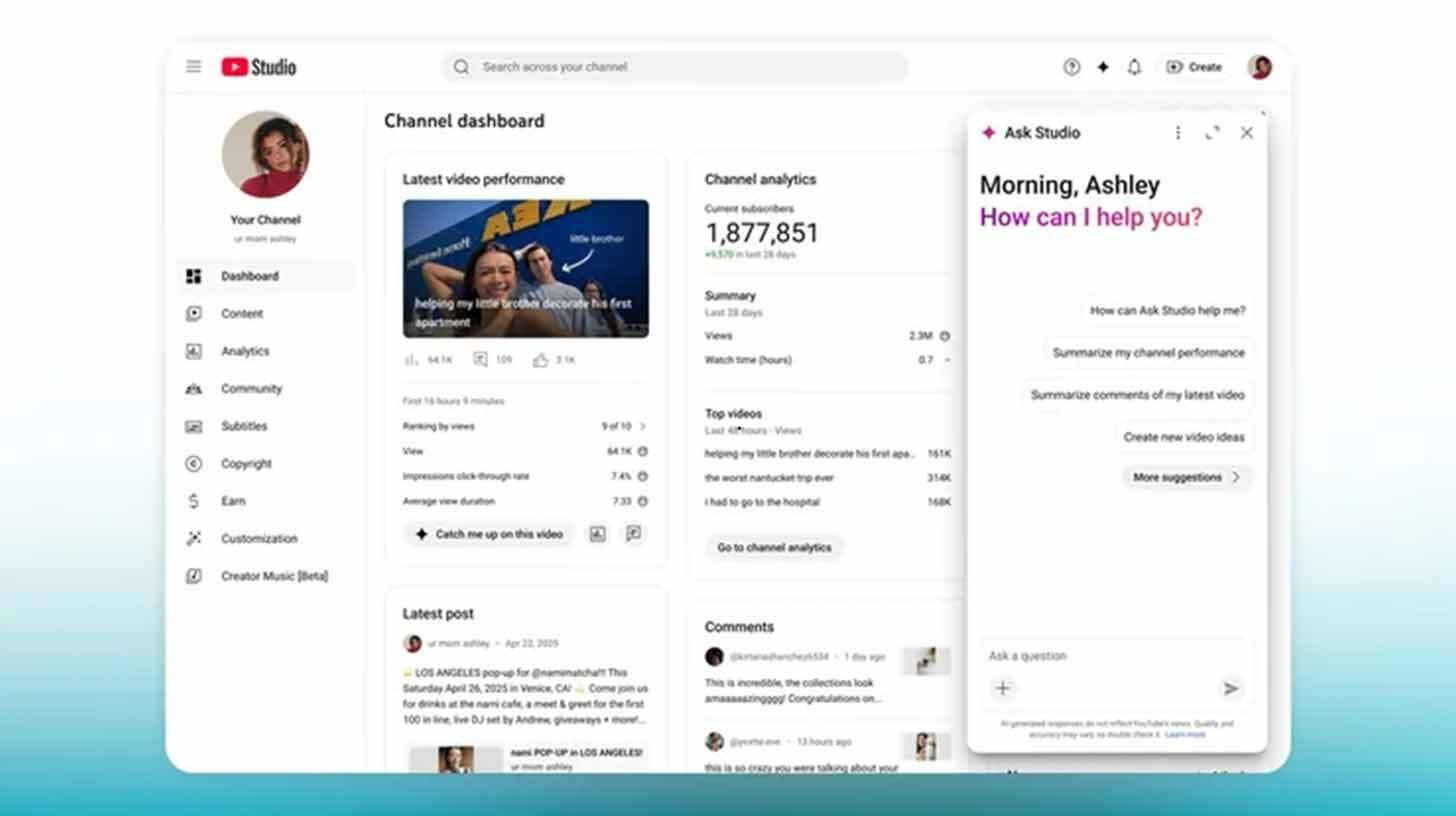
The intelligence behind these tools extends to analytics and strategy with Ask Studio, a new chatbot designed to be every creator's data-savvy producer. Instead of navigating complex dashboards, creators can simply ask questions like "Why did my last video underperform?" or "What topics should I cover next?" and receive actionable, data-driven recommendations. Ask Studio synthesizes YouTube's vast analytics into conversational insights, helping creators optimize titles, thumbnails, and posting schedules with the precision of a seasoned channel manager. This democratization of strategic intelligence levels the playing field, giving independent creators the same analytical firepower that once belonged only to large media networks.
Perhaps the most transformative tool for everyday production is YouTube's AI-powered editing suite. This feature takes raw, unprocessed video and transforms it into a polished first draft by automatically incorporating voiceovers, music, and transitions. For new creators intimidated by the technical learning curve of editing software, this is an invitation to start creating immediately. For veterans, it is a time-saving assistant that handles repetitive tasks, freeing them to focus on storytelling and creative direction. The AI doesn't just apply filters; it understands pacing, mood, and narrative flow, making editorial suggestions that enhance rather than homogenize content. It is a co-pilot that learns your style and helps you execute it more efficiently.
The speed at which YouTube is deploying these capabilities is no accident. It is a direct reflection of its parent company, Google, which remains at the forefront of both image and video model research. The integration of Veo, advanced speech synthesis, and natural language processing into a single creator platform creates a synergistic ecosystem where each tool enhances the others. This vertical integration—from foundational AI research to user-facing features—ensures that YouTube can iterate rapidly, testing and refining tools with real creators at scale. For the millions of developers and artists building on YouTube, this means a steady pipeline of improvements that keep the platform at the cutting edge.
Yet, this AI-driven future is not without its complexities. As tools become more powerful, questions of authenticity, copyright, and creative ownership come to the fore. YouTube has emphasized that these features are designed to augment human creators, not replace them, and has built in safeguards to prevent misuse. The auto-dubbing feature, for example, requires creator approval before a translated version is published. Veo 3 Fast outputs are watermarked to indicate AI generation. These guardrails reflect a thoughtful approach to innovation—one that seeks to empower without endangering.
The broader impact of these tools extends beyond individual creators to the entire media ecosystem. As production becomes faster, cheaper, and more accessible, we can expect an explosion of diverse voices and niche content that was previously economically unviable. A teacher in rural India can now produce professionally edited, multilingual lessons. A small business can create compelling video ads without a marketing agency. The barrier to entry for high-quality video is lowering, and with it, the potential for new forms of storytelling, education, and commerce.
For YouTube itself, this investment in creator tools is a strategic imperative. In a competitive landscape where platforms like TikTok, Instagram, and emerging AI-native apps vie for attention, empowering creators is the surest path to retention and growth. By providing the most advanced, integrated suite of AI tools available, YouTube is not just keeping creators on its platform; it is making them more successful, more productive, and more loyal.
The message from the "Made on YouTube" event is clear: the future of video is collaborative, intelligent, and boundless. AI is not the end of human creativity; it is the beginning of a new chapter where technology handles the technical, so creators can focus on the magical. With Veo 3 Fast, auto-dubbing, intelligent editing, and Ask Studio, YouTube is giving its community the keys to that future. The tools are here. The platform is ready. Now, it is time to create.
Your one-stop shop for automation insights and news on artificial intelligence is EngineAi.
Did you like this article? Check out more of our knowledgeable resources:
Watch this space for weekly updates on digital transformation, process automation, and machine learning. Let us assist you in bringing the future into your company right now