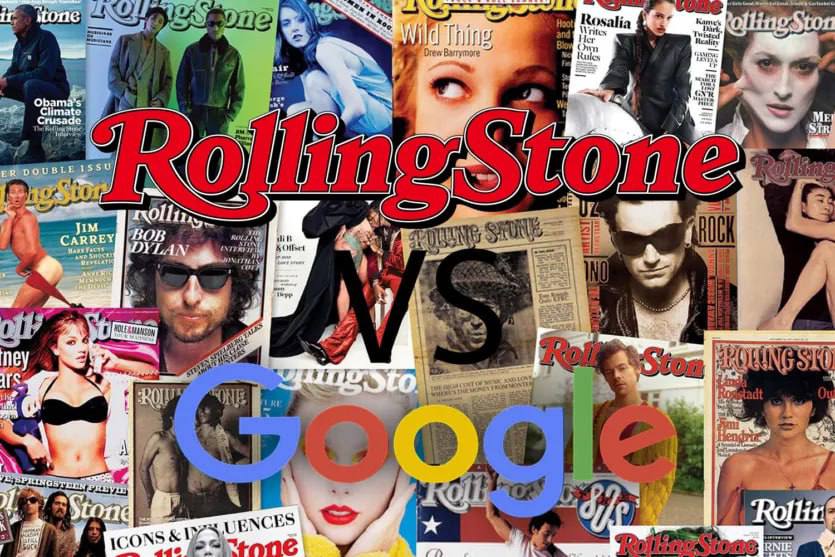
The Click That Broke the Internet: How Penske Media's Lawsuit Against Google Could Redefine the Future of Journalism
For decades, an implicit bargain powered the digital media economy: publishers created content, Google indexed it, users clicked through, and revenue flowed back to newsrooms via ads and subscriptions. It was imperfect, often unequal, but it functioned. Now, that bargain is shattering. Penske Media Corporation—the powerhouse behind Rolling Stone, Billboard, Variety, and other iconic titles—has filed a landmark lawsuit against Google, accusing the tech giant of stealing articles to fuel its AI Overviews. The accusation is stark: by summarizing content directly on the search results page, Google is severing the vital link between discovery and monetization, starving publishers of the clicks, ad impressions, and subscriptions that keep journalism alive. This isn't just a legal dispute; it is a referendum on the future of information itself.
The mechanics of the complaint cut to the core of the modern web. Google's AI Overviews—those concise, AI-generated summaries that appear at the top of search results—draw heavily from publisher content to answer user queries instantly. For users, this is convenient: get the answer without clicking through. For publishers, it is existential: if the answer is already on the page, why visit the source? Penske argues that this dynamic has created a "value extraction" model, where Google leverages its monopoly power in search to appropriate the creative labor of journalists without fair compensation. The lawsuit alleges that publishers face an impossible choice: allow their content to be used for AI training and summarization, or risk being demoted or excluded from search results altogether—a fate tantamount to "digital death" in an era where Google handles over 90% of global search queries.
The monopoly argument is central to Penske's case. Under U.S. antitrust law, dominant firms have a heightened responsibility not to abuse their market position. Penske contends that Google has done exactly that: using its control over search distribution to force publishers into a take-it-or-leave-it arrangement regarding AI usage. This is not mere negotiation; it is coercion, the lawsuit claims. If a publisher opts out of AI scraping, Google's algorithms may deprioritize their content, reducing visibility and traffic. If they opt in, they watch as their work is repackaged and presented without attribution or revenue share. For journalism already grappling with declining ad revenue and subscription fatigue, this dynamic accelerates a crisis that threatens investigative reporting, local news, and cultural criticism—the very content that enriches public discourse.
Google's defense, anticipated but not yet fully articulated in court, will likely rest on familiar pillars: fair use, innovation, and user benefit. The company has long argued that indexing and summarizing content falls under fair use doctrine, enabling search functionality that helps users discover information. AI Overviews, from this perspective, are an evolution of that mission—providing faster, more accurate answers while still linking to sources. Google may also contend that publishers benefit from the exposure AI Overviews provide, driving brand awareness even when direct clicks decline. Yet, these arguments ring hollow to publishers who see their traffic and revenue plummet as AI summaries replace engagement. The crux of the dispute is not whether AI can summarize, but whether it can do so commercially without compensating the creators whose work makes the summary possible.
The stakes extend far beyond Penske and Google. This case could set the rules for the entire content ecosystem. If publishers prevail, we may see the emergence of mandatory revenue-sharing frameworks, where search engines and AI platforms pay licensing fees for the content they use to train models or generate answers. This could create a sustainable funding stream for journalism, akin to the performance rights organizations that compensate musicians when their songs are played publicly. If Google prevails, the precedent could cement a future where AI platforms freely repurpose creative work, accelerating the shift from publisher-owned distribution to platform-controlled aggregation. In that world, journalism becomes a cost center for tech companies rather than a valued partner—a dynamic that could erode the diversity and independence of news sources.
The timing of the lawsuit is no accident. It arrives as the AI industry grapples with mounting legal challenges over training data, copyright, and compensation. From The New York Times' lawsuit against OpenAI to the Authors Guild's actions against multiple AI firms, creators are pushing back against what they see as uncompensated appropriation. Penske's case adds a critical dimension: it focuses not just on training, but on deployment—how AI outputs directly compete with the source material in the marketplace. This distinction matters. Even if training on copyrighted content is deemed fair use, using that training to generate substitute products may cross a legal line. Courts will need to navigate this nuance, balancing innovation incentives with creator rights.
For readers, the implications are equally profound. A healthy information ecosystem depends on robust, independent journalism. If AI summarization undermines the economic model that supports reporting, the quality and diversity of news could suffer. Users might gain short-term convenience but lose long-term access to the investigative work, expert analysis, and cultural commentary that inform democratic societies. The question is not whether AI can summarize news, but whether it should do so in a way that sustains the institutions that produce it.
Looking ahead, the resolution of this case could catalyze broader industry shifts. We may see the rise of new licensing platforms that streamline content compensation for AI use, similar to how stock photo agencies operate. Publishers might band together to negotiate collective agreements, leveraging their combined content as a bargaining chip. Regulators could intervene with legislation mandating transparency and fairness in AI-content relationships. Each of these paths offers a potential middle ground between unfettered extraction and restrictive protectionism.
Yet, any solution must acknowledge the realities of technological change. AI summarization is not going away; it is becoming a user expectation. The challenge is to design systems that honor both innovation and creation. This might involve granular attribution, where AI outputs clearly cite and link to sources; micro-payments, where each summary generates a small fee for the publisher; or hybrid models, where users can choose between free AI summaries and premium, in-depth publisher content. The goal is not to halt progress, but to align it with the values of a free and vibrant press.
For now, the courtroom becomes the arena where these tensions will be tested. Penske Media's lawsuit is more than a legal filing; it is a statement of principle. It declares that content has value, that creation deserves compensation, and that monopoly power must be checked. Google's response will reveal whether it sees publishers as partners or inputs, collaborators or commodities.
The outcome will shape not just two companies, but the future of how we access knowledge. Will the internet remain a place where discovery leads to engagement, and engagement sustains creation? Or will it become a landscape of summarized snippets, where the sources of information fade into the background, unsupported and unseen?
The click that once connected readers to writers is now the point of fracture. Healing that break requires more than legal rulings; it requires a renewed commitment to the ecosystem that makes journalism possible. Penske vs. Google is not just a lawsuit. It is a choice about the kind of information world we want to live in. The answer will echo far beyond the courtroom, in every newsroom, every search query, and every story yet to be told.
Your one-stop shop for automation insights and news on artificial intelligence is EngineAi.
Did you like this article? Check out more of our knowledgeable resources:
Watch this space for weekly updates on digital transformation, process automation, and machine learning. Let us assist you in bringing the future into your company right now