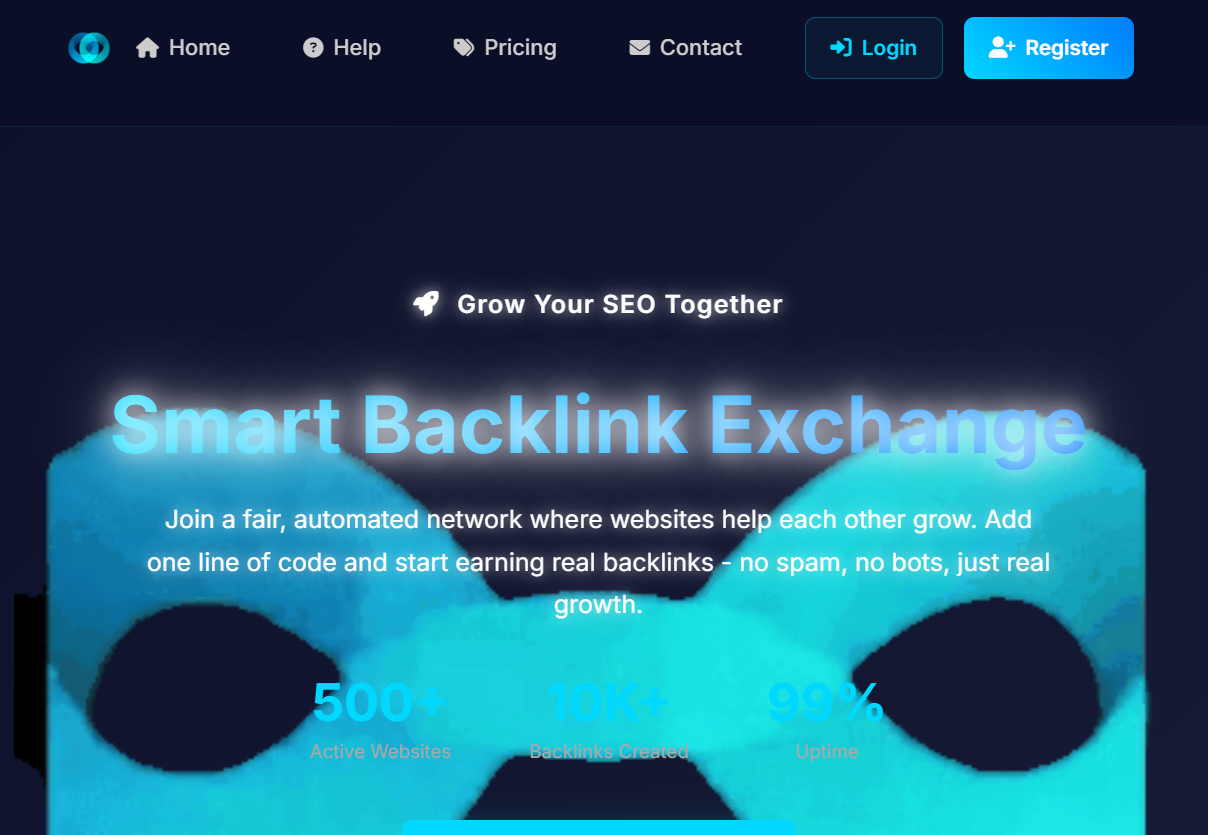
LinkCircle.eu Strategic Visibility in the European Digital – EngineAI

LinkCircle.eu Strategic Visibility in the European Digital

LinkCircle.eu Strategic Visibility in the European Digital

LinkCircle.eu: Where Authentic Content Meets Strategic Visibility in the European Digital Ecosystem


In an age where the internet is increasingly flooded with AI-generated noise, automated link farms, and content created solely for algorithms, a quiet revolution is taking place. LinkCircle.eu isn't just another SEO tool or backlink marketplace; it is a curated editorial network built on a radical premise: real knowledge, shared by real people, still holds the power to transform businesses. For website owners, marketers, and professionals tired of chasing hollow metrics, LinkCircle.eu offers something refreshingly rare—a platform where authenticity isn't a buzzword, but the foundation.

The digital marketing landscape has long been dominated by a transactional mindset: exchange links, game algorithms, and prioritize quantity over quality. 


LinkCircle.eu flips this script entirely. This is not a backlink exchange. It is a curated editorial network where verified website owners publish original, helpful content that offers genuine value to readers. Every article is written by a human expert, reviewed for quality and relevance, and designed to inform rather than manipulate. In a world of clickbait and keyword stuffing, LinkCircle.eu stands as a sanctuary for substance.


The platform's verification process is its first line of defense against the noise. Before a single word is published, LinkCircle.eu verifies your website to ensure you are a real publisher with valuable content to share. This isn't about gatekeeping; it's about quality control. By maintaining a community of 200+ verified websites, the platform creates a trusted environment where every contribution carries weight. When you read an article on LinkCircle.eu, you know it comes from someone who actually operates in the field, not a content mill churning out generic advice. This commitment to authenticity builds a network effect where credibility compounds, benefiting every participant.


The workflow is elegantly simple, designed to remove friction without sacrificing standards. First, you write an article—sharing your expertise, case studies, or industry insights in your own words. No templates forcing your voice into a box, no restrictive guidelines stifling creativity. Next, you get verified through a straightforward process that confirms your identity as a legitimate publisher. Finally, your article reaches a wider audience, appearing in the public LinkCircle blog where professionals worldwide can discover your insights. It is a transparent, three-step process that respects your time while amplifying your reach.


But what truly sets LinkCircle.eu apart is its European DNA. As a platform rooted in Europe, it operates with a deep understanding of GDPR compliance, data privacy, and the unique regulatory landscape that governs digital business on the continent. This isn't just a legal advantage; it's a trust signal. For businesses operating in or targeting European markets, publishing on LinkCircle.eu means your content is hosted and distributed within a framework that prioritizes user privacy and data protection. In an era where consumers are increasingly wary of how their information is used, this alignment with European values is a powerful differentiator.


The content library itself is a testament to the platform's vision. From deep dives into self-hosted AI stacks like LocalAI, to practical guides on email marketing deliverability, to niche insights about veterinary-grade pet care calculators, the articles span industries and expertise levels. Each piece is crafted to educate, not just to rank. This focus on utility creates a virtuous cycle: valuable content attracts engaged readers, engaged readers build authority for the publisher, and that authority translates into meaningful business outcomes—whether that's leads, partnerships, or brand recognition. It is SEO that works because it serves people first.


For businesses, the strategic advantages are multifaceted. Publishing on LinkCircle.eu isn't about gaming search algorithms; it's about building genuine thought leadership. When your article appears alongside other verified experts, your brand borrows credibility from the entire network. The platform's clean, professional design ensures your content is presented in its best light, free from intrusive ads or competing distractions. And because every contributor is a verified website owner, the audience you reach is inherently qualified—other professionals actively seeking insights to solve real problems.


The pricing model reflects LinkCircle.eu's commitment to accessibility. The platform is free to join, allowing anyone with valuable knowledge to start sharing immediately. For frequent contributors who want expanded publishing opportunities, premium plans are available—but the core value proposition remains open. This approach lowers the barrier to entry while maintaining quality through verification, not paywalls. It is a model that rewards contribution, not just capital.


Looking ahead, LinkCircle.eu is positioned at the intersection of several powerful trends: the growing demand for authentic content, the increasing importance of E-E-A-T (Experience, Expertise, Authoritativeness, Trustworthiness) in search rankings, and the shift toward privacy-first digital ecosystems. As search engines become smarter at detecting low-value content, platforms that prioritize human expertise will only grow more valuable. LinkCircle.eu isn't just adapting to this future; it is helping to define it.


The invitation is clear: if you have knowledge worth sharing, a perspective worth hearing, or expertise that could help others grow, LinkCircle.eu provides the stage. This isn't about shouting into the void of social media or paying for placement in sponsored content. It is about joining a community that values substance over spectacle, where your words can find the audience that needs them most.


In the end, LinkCircle.eu represents a return to the original promise of the internet: connection through knowledge. It proves that in a world of automation, the human touch remains the ultimate competitive advantage. So, if you are ready to move beyond transactional SEO and build lasting authority through authentic content, the circle is waiting. Your expertise has value. Your voice matters. And now, there is a platform designed to ensure both are heard. Join the network where content isn't just published—it is purposeful. The future of digital visibility isn't about tricks or shortcuts. It is about trust, earned one genuine article at a time.


Your one-stop shop for automation insights and news on artificial intelligence is EngineAi.

Did you like this article? Check out more of our knowledgeable resources:

• 📰 In-depth analysis and up-to-date AI news


• 🤝 Visit to learn about our goal and knowledgeable staff


• 📬 Use this link to share your project or schedule a free consultation


Watch this space for weekly updates on digital transformation, process automation, and machine learning. Let us assist you in bringing the future into your company right now

← Back to all articles

Explore More AI Resources

📚 AI Glossary

🏆 Best AI Tools

⚡ AI Comparisons

📘 AI Guides

What is Artificial Intelligence?

Artificial intelligence represents one of the most significant technological advances in human history, fundamentally changing how we interact with computers and digital systems. At its core, AI enables machines to perform tasks that historically required human intelligence, including visual perception, speech recognition, decision-making, and language translation. The field has evolved rapidly from narrow AI systems designed for specific tasks to increasingly sophisticated models capable of generalized reasoning.

Machine learning, a subset of AI, allows systems to learn and improve from experience without being explicitly programmed. Deep learning, in turn, uses neural networks with many layers to process complex data and recognize intricate patterns. These technologies power everything from the recommendation engines that suggest your next movie to the autonomous vehicles that may soon drive our roads. Understanding the fundamentals of AI helps business leaders, developers, and consumers alike navigate an increasingly AI-powered world.

The impact of AI extends across every industry and sector of the economy. Healthcare organizations use AI for diagnostic imaging analysis and drug discovery. Financial institutions deploy AI for fraud detection and risk assessment. Manufacturers implement AI for predictive maintenance and quality control. Retailers leverage AI for inventory management and personalized marketing. These applications demonstrate how AI creates value by automating routine tasks, extracting insights from vast data sets, and enabling new capabilities that were previously impossible.

Applications of AI Across Industries

The practical applications of AI technology span an extraordinarily wide range, touching virtually every aspect of modern life. In healthcare, AI systems analyze medical images to detect cancers earlier and more accurately than human radiologists in some studies. AI-powered drug discovery platforms can simulate molecular interactions and predict which compounds might treat diseases, potentially accelerating the development of new medications by years. Surgical robots assisted by AI enable minimally invasive procedures with greater precision than traditional techniques.

In finance, AI algorithms process millions of transactions per second to identify fraudulent activity in real time. Trading systems use AI to analyze market conditions and execute trades at speeds and scales impossible for human traders. Credit scoring models leverage AI to evaluate borrower risk more accurately, expanding access to credit for underserved populations while maintaining lender profitability. Insurance companies use AI for claims processing and fraud detection, reducing costs and improving customer satisfaction.

Manufacturing and logistics companies use AI for predictive maintenance, identifying when machines are likely to fail before breakdowns occur, reducing downtime and repair costs. Supply chain optimization algorithms powered by AI consider thousands of variables to minimize inventory costs while ensuring product availability. Autonomous vehicles and drones promise to revolutionize transportation and delivery, with AI systems processing sensor data in real time to navigate safely through complex environments.

Getting Started with AI

Beginning your journey with AI does not require advanced degrees or massive technical expertise. Modern AI tools and platforms have made the technology increasingly accessible to users across skill levels. Start by exploring the fundamentals through resources like our comprehensive AI Glossary which explains key terms and concepts in accessible language. Build familiarity with common AI applications by experimenting with tools you already use, many of which incorporate AI features without requiring explicit AI expertise.

For organizations looking to adopt AI, the key is starting with clear problem identification. Successful AI initiatives begin by identifying specific business challenges where AI might add value, rather than implementing AI for its own sake. Common early applications include customer service chatbots, document processing automation, and data analysis tools. These provide measurable value while allowing teams to build AI capabilities and familiarity progressively.

Our AI Tools Directory provides comprehensive information on hundreds of AI-powered applications across categories including natural language processing, computer vision, predictive analytics, and process automation. Browse the directory to discover tools that match your specific needs, and read our detailed reviews and comparisons to inform your selection decisions. The rankings are based on extensive hands-on testing and evaluation by our expert team.

AI Resources and Learning

Staying current with AI developments requires ongoing learning and engagement with the field. Our AI Guides provide in-depth tutorials and explainers on topics from beginner fundamentals to advanced implementation techniques. Whether you are looking to understand how large language models work, learn best practices for prompt engineering, or implement AI automation in your organization, our guides offer practical, actionable guidance based on real-world experience.

The AI landscape evolves rapidly, with new models, tools, and techniques emerging continuously. Our editorial team monitors these developments to bring you timely coverage of significant advances and their practical implications. We provide context and analysis that helps you understand which developments genuinely matter versus passing hype. Subscribe to our newsletter for weekly summaries of the most important AI news and developments.

For those considering AI implementation, our comparisons section offers detailed evaluations of competing tools and approaches, helping you make informed decisions about which technologies suit your needs. Our rankings provide curated recommendations across all major AI categories, from best overall tools to specialized solutions for specific use cases. Each recommendation includes rationale and methodology so you understand exactly why we recommend what we recommend.

Explore Our AI Resources

From beginner guides to advanced tutorials, from tool comparisons to rankings, we provide the comprehensive AI resources you need to succeed.

Browse AI Tools AI Guides Best Rankings Comparisons AI Glossary

AI Technology and Industry Overview

The artificial intelligence industry has experienced remarkable growth and innovation in recent years, with new breakthroughs and capabilities emerging at an unprecedented pace. Large language models have revolutionized natural language processing, enabling applications from conversational AI to automated content generation. Computer vision systems can now recognize objects and scenes with accuracy rivaling or exceeding human performance in many domains. These advances have created new possibilities for businesses across every sector, from automating routine tasks to enabling entirely new products and services that were previously impossible.

Understanding the AI landscape requires familiarity with key concepts and terminology. Machine learning provides the foundation for most modern AI systems, enabling computers to learn patterns from data rather than following explicit programming. Deep learning uses neural networks with many layers to handle complex tasks like image recognition, speech processing, and language understanding. Large language models represent a particularly powerful class of deep learning systems trained on vast text corpora to understand and generate human language with remarkable fluency.

The practical applications of AI technology span virtually every industry and domain. In healthcare, AI assists with diagnostics, drug discovery, and personalized treatment recommendations. In finance, AI powers fraud detection, algorithmic trading, and risk assessment. In manufacturing, AI enables predictive maintenance and quality control. In retail, AI drives personalized recommendations and inventory optimization. These applications demonstrate how AI creates value by automating routine tasks, extracting insights from data, and enabling new capabilities.

Implementing AI in Your Organization

Successfully implementing AI requires more than just deploying technology. Organizations must develop clear strategies for identifying appropriate use cases, building data infrastructure, developing internal expertise, and managing change. The most successful AI implementations start with well-defined problems where AI can demonstrate clear value, then expand progressively as capabilities and confidence grow. This approach allows teams to build expertise gradually while generating measurable returns that justify continued investment in AI capabilities.

Building an AI-ready organization requires attention to data quality, infrastructure, and talent. AI systems depend on data, and organizations must have processes for collecting, cleaning, and maintaining high-quality data to train and operate effective AI models. Infrastructure considerations include computing resources, data storage, and integration with existing systems. Talent requirements range from specialized ML engineers and data scientists to product managers and business leaders who can identify AI opportunities and translate them into business requirements.

Change management represents a critical but often overlooked component of AI implementation. Employees may view AI as a threat to their jobs, requiring careful communication about how AI will augment rather than replace human workers. Successful organizations invest in training programs that help employees work effectively alongside AI systems, developing new skills for leveraging AI tools in their daily work. This human-centered approach to AI adoption leads to better outcomes than treating AI as a purely technical implementation.

Evaluating AI Tools and Vendors

The AI tools market has exploded with options ranging from general-purpose platforms to specialized solutions for specific industries and use cases. Evaluating these options requires understanding your specific requirements, use cases, and constraints. General-purpose AI platforms offer flexibility but may require more customization to achieve optimal results for specific applications. Specialized solutions may offer turnkey functionality but could create vendor lock-in or limitations for future needs.

Our comprehensive AI Tools Directory provides detailed information on hundreds of AI tools and platforms. We evaluate each tool across dimensions including capability, ease of use, pricing, and support. Our rankings provide curated recommendations based on extensive testing and analysis. We also offer detailed comparisons that evaluate how competing tools stack up against each other across real-world use cases.

When evaluating AI vendors, consider factors beyond just technical capability. Data privacy and security policies determine how your data will be handled and stored. Pricing models vary significantly, from per-user subscriptions to consumption-based billing. Support and documentation quality affects how quickly your team can become productive with new tools. Integration capabilities determine how easily AI tools fit into existing workflows and systems.

AI Best Practices and Ethics

Responsible AI development and deployment requires attention to ethics, fairness, and potential societal impacts. AI systems can inadvertently perpetuate or amplify biases present in training data, leading to unfair outcomes for certain groups. Organizations must implement processes for auditing AI systems for bias and taking corrective action when problems are identified. Transparency about how AI systems make decisions helps build trust and enables accountability.

Data privacy represents another critical consideration for AI implementations. AI systems often require large amounts of data for training and operation, raising questions about what data is collected, how it is stored, and who has access. Organizations must implement appropriate data governance practices and ensure compliance with relevant regulations like GDPR and CCPA. When selecting AI vendors, carefully review their data handling practices and privacy policies.

Environmental considerations are increasingly important for AI deployments. Training large models can consume significant energy, raising sustainability concerns. Organizations should evaluate the environmental impact of their AI systems and consider strategies for minimizing energy consumption, such as using more efficient model architectures or leveraging cloud providers with strong sustainability commitments. These considerations should be part of comprehensive AI governance frameworks.

Explore Our AI Resources

From tool directories to best practices, from comparisons to tutorials, we provide comprehensive AI resources.

Browse AI Tools AI Guides Best Rankings Comparisons AI Glossary