The Silent Checkout: How Google's Agent Payments Protocol is Building the Financial Rails for the AI Economy
We are standing at the precipice of a new digital era, one where the interface between human desire and commercial transaction is no longer a screen, but a conversation. For decades, e-commerce has relied on the "add to cart" button—a static, manual process requiring constant human supervision. But as artificial intelligence evolves from a passive tool into an active agent, the way we pay for things must evolve with it. Enter the Agent Payments Protocol (AP2), a groundbreaking open architecture recently unveiled by Google. Backed by a coalition of more than 60 tech and financial behemoths, AP2 is not just a new payment method; it is the foundational infrastructure for a future where AI agents can safely, securely, and autonomously shop on your behalf.
The premise of the autonomous agent economy is thrilling but fraught with friction. If you ask your AI to "book a last-minute trip to Tokyo under $2,000," you are essentially handing it your wallet. In the past, this level of access would have been a security nightmare, a "responsibility gap" where the line between user intent and algorithmic error was dangerously blurred. AP2 is designed to close that gap. It introduces a new layer of digital trust based on "mandates"—safe, cryptographically signed digital contracts that define exactly what an AI is allowed to do with your funds. It transforms the vague instruction "buy this" into a precise, auditable, and revocable agreement.
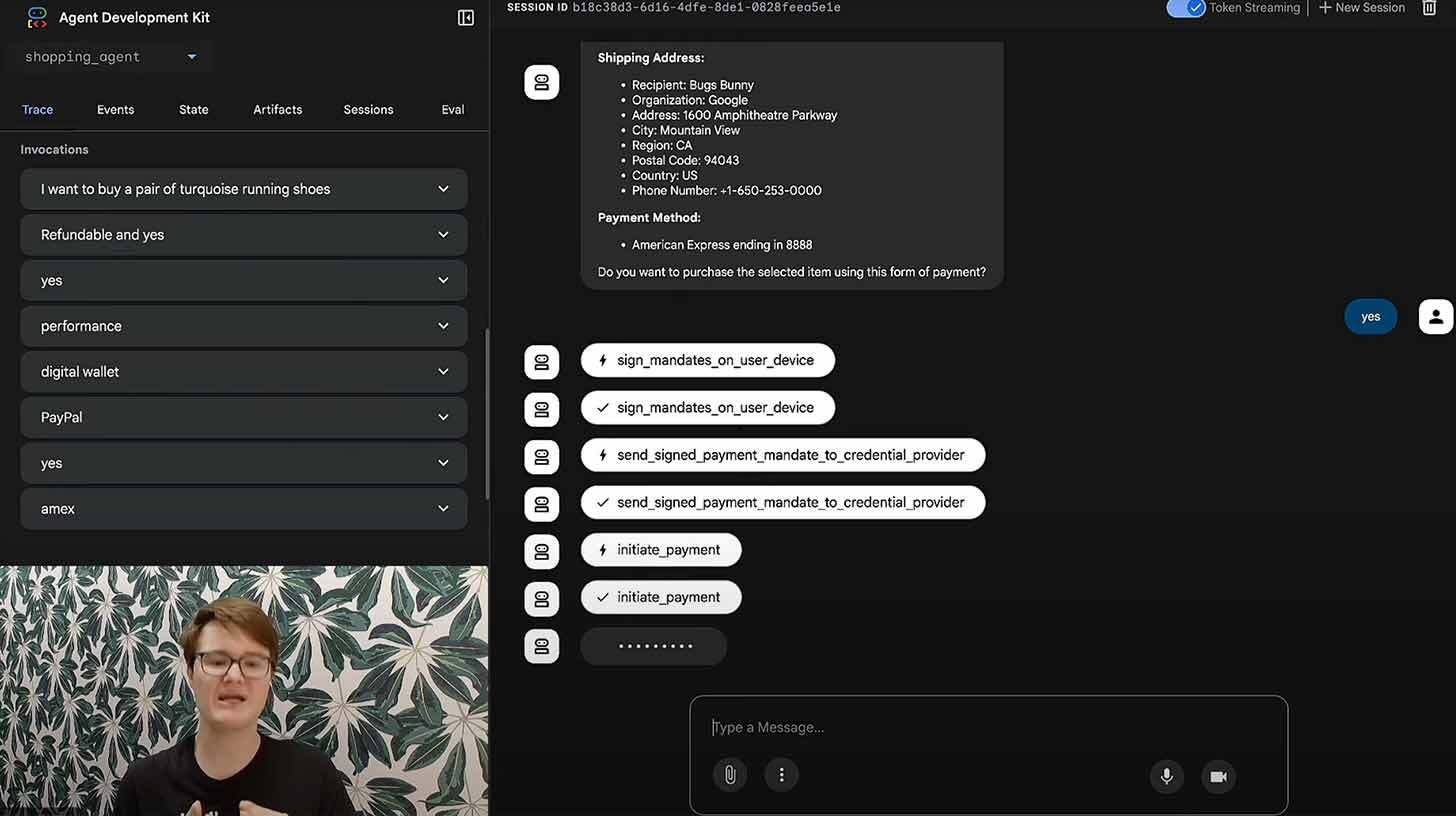
The mechanics of this system are elegantly designed to balance autonomy with control. Before an agent can complete a transaction, it must operate within the boundaries of specific mandates. First, there is the "Intent Mandate," which authorizes the agent to conduct a search or negotiate a deal within set parameters—essentially giving the AI permission to browse and plan. Then, to finalize the purchase, the user must sign a "Cart Mandate." This two-step verification ensures that while the AI can do the heavy lifting of research and comparison, the final commitment of funds remains a deliberate, human-approved action. It is a "human-in-the-loop" safeguard built directly into the protocol, ensuring that convenience never comes at the cost of consent.
What makes AP2 particularly potent is its agnostic approach to money itself. The framework is designed to work across the entire spectrum of modern finance. It integrates with traditional payment giants like American Express, Mastercard, and PayPal, ensuring that your existing credit cards and bank transfers work seamlessly. Simultaneously, it embraces the future of digital assets by working with cryptocurrency leaders like Coinbase to support stablecoins and blockchain-based settlements. This universality is critical. For an AI agent to be truly useful, it cannot be restricted to a single payment rail; it must be able to navigate the global financial system, choosing the most efficient method for the task at hand, whether that's a instant stablecoin settlement or a traditional credit card points redemption.
The backing behind this initiative reads like a who's who of the global economy. With support from Salesforce, Intuit, and dozens of other major players, AP2 is positioning itself not as a walled garden, but as an open standard. By making the technical specifications publicly available on GitHub, Google is inviting developers worldwide to build upon this foundation. This open-source approach is a strategic masterstroke. It prevents any single company from monopolizing the agent economy and encourages rapid innovation. If the internet thrived on open protocols like HTTP and SMTP, the agent economy will thrive on open protocols like AP2.
Why does this matter now? Because we are rapidly approaching the moment when AI agents transition from novelties to necessities. Imagine a future where your personal AI monitors your pantry and automatically reorders groceries when supplies run low, or negotiates a better rate on your internet bill by chatting with customer service bots. These scenarios are not science fiction; they are imminent possibilities. However, they cannot happen at scale without safe, reliable payment rails. AP2 provides the "plumbing" for this future, ensuring that when an AI spends money, it does so with the same security, fraud protection, and recourse that consumers expect from traditional banking.
Furthermore, this protocol addresses the critical issue of liability. In a world of autonomous transactions, determining who is responsible for a mistaken purchase—the user, the developer, or the AI model—is a legal minefield. By formalizing the authorization process through mandates, AP2 creates a clear audit trail. If an agent deviates from its mandate, the protocol provides the data needed to resolve disputes. This clarity is essential for enterprise adoption; businesses will not deploy autonomous purchasing agents without a framework that protects them from rogue algorithms or unauthorized spending.
The implications for the consumer experience are profound. We are moving toward a world of "invisible commerce," where the friction of checkout disappears. The AI handles the logistics, the price comparisons, and the transaction execution, while the user simply approves the outcome. This frees up cognitive bandwidth for more creative and strategic pursuits. But this convenience relies entirely on trust. If users fear that their AI might overspend or fall victim to a phishing scam, they will never enable autonomous purchasing. AP2 is the trust layer that makes the magic possible.
As we look toward the horizon, the launch of the Agent Payments Protocol signals a maturation of the AI industry. It is no longer enough to build models that can write poetry or generate code; the next frontier is building models that can act in the real world. Google and its partners are laying the groundwork for that reality. By solving the payments puzzle now, they are removing one of the last major barriers to the widespread adoption of AI agents.
The future of shopping won't be about scrolling through endless product pages. It will be about setting your intent, defining your budget, and letting your digital proxy handle the rest. With the Agent Payments Protocol, that future just got a whole lot closer. The rails are laid, the partners are on board, and the code is open. The only thing left to do is give the word.
Your one-stop shop for automation insights and news on artificial intelligence is EngineAi.
Did you like this article? Check out more of our knowledgeable resources:
Watch this space for weekly updates on digital transformation, process automation, and machine learning. Let us assist you in bringing the future into your company right now