The Browser, Reborn: How Google's Gemini Integration is Turning Chrome into an AI Co-Pilot
For over a decade, the web browser has been a passive window—a tool for navigation, not intelligence. You type a query, click a link, read a page, and repeat. The cognitive labor of synthesizing information, comparing options, and executing tasks has always fallen on you. Now, Google is redefining that relationship. With the rollout of Gemini integration in Chrome for all desktop users in the United States, the browser is no longer just a portal to the internet; it is an active participant in your workflow.
Through embedded AI Mode, multi-tab context awareness, and a glimpse of agentic capabilities on the horizon, Chrome is evolving from a tool you use into a partner that thinks. This isn't just a feature update; it is the largest step yet toward a widely used AI-powered browsing future.
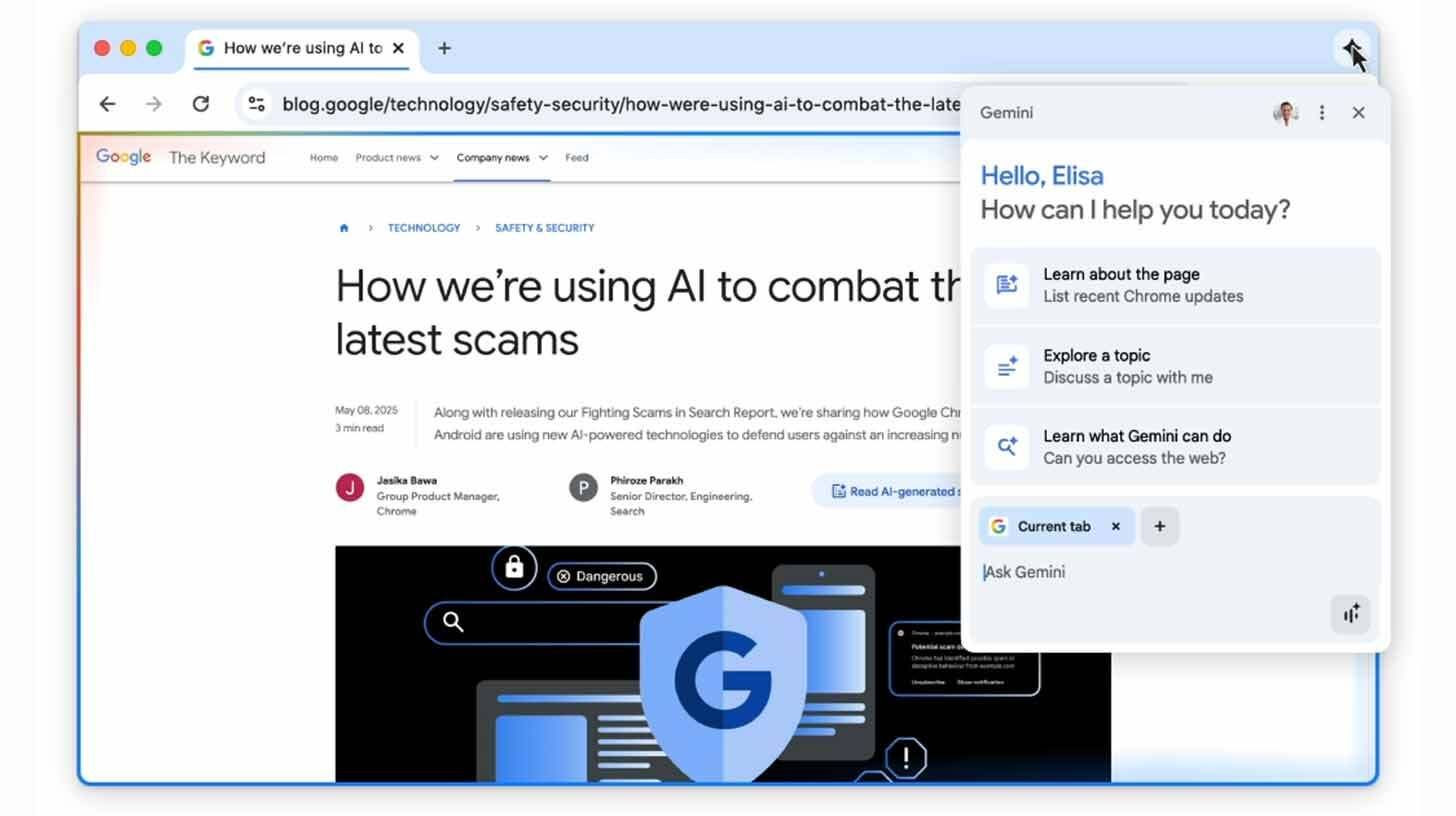
The centerpiece of this transformation is native Gemini access, now available through a dedicated button in the Chrome interface. This integration allows users to examine data and content across multiple tabs without the tedious back-and-forth of manual navigation. Imagine researching a complex purchase: one tab shows product reviews, another displays price comparisons, and a third hosts a forum discussion. Instead of juggling windows and mentally synthesizing insights, you can ask Gemini to "compare the top three options based on durability and value, then summarize the consensus from user forums." The AI reads across your open tabs, extracts relevant information, and delivers a cohesive answer—right in the browser. This is contextual intelligence at scale, turning the fragmented act of browsing into a unified, conversational experience.
Later this month, the integration deepens with the arrival of AI Mode in Chrome's address bar. This is a subtle but profound shift: the omnibox, long reserved for URLs and search queries, becomes a conversational interface. Users will be able to ask multi-part inquiries with follow-ups right where they currently search and navigate.
"Find me a flight to Paris under $800, then check hotel availability near the Eiffel Tower for those dates, and add both to my calendar." Each step can be refined through natural dialogue, with the AI maintaining context across the exchange. This eliminates the friction of switching between search engines, travel sites, and productivity apps. The browser becomes a command center, where intent is translated into action without the overhead of manual coordination.
But Google's vision extends beyond reactive assistance. The company has offered a sneak peek at future agentic features—AI capabilities that manage multi-step tasks autonomously. Imagine asking Chrome to "schedule a dentist appointment for next Tuesday afternoon, then order groceries for delivery on Wednesday." The AI would handle the entire workflow: checking your calendar, browsing available time slots, confirming the booking, then navigating to your preferred grocery service, populating your cart based on past purchases, and completing the checkout. This is not science fiction; it is the logical endpoint of embedding intelligence into the browsing experience. By granting AI agency to act on your behalf, Chrome could transform from a tool for finding information into a platform for getting things done.
The strategic implications of this integration are significant. While rivals have rushed to create new AI-native browsers from the ground up—Arc, Brave with Leo, Microsoft Edge with Copilot—Google's approach is different: it is upgrading the browser billions already use. Chrome's market share, estimated at over 60% globally, means that Gemini's capabilities will reach a massive audience overnight. There is no need for users to adopt a new platform, migrate bookmarks, or relearn workflows. The AI assistant sidebar is poised to become as ubiquitous as the URL box, not through disruption, but through evolution. This is a masterclass in distribution: by embedding intelligence into an existing habit, Google lowers the barrier to AI adoption and accelerates the normalization of conversational computing.
Moreover, this integration leverages Google's unique advantages: deep understanding of web infrastructure, vast indexing of online content, and sophisticated language models trained on diverse queries. Gemini in Chrome isn't just a chatbot glued to a browser; it is a context-aware system that understands the structure of the web, the semantics of pages, and the intent behind user behavior. This allows for more accurate, relevant, and actionable assistance than a generic AI could provide. When you ask Gemini to "summarize the key arguments in this debate," it can parse the page's structure, identify opposing viewpoints, and extract evidence—not just regurgitate text. This contextual fluency is what separates a clever feature from a transformative tool.
Yet, the integration of advanced AI into browsing raises important considerations. Privacy is paramount: when an AI reads across your tabs, it gains insight into your interests, research, and potentially sensitive activities. Google has emphasized that Gemini interactions are subject to existing privacy controls, with options to disable history saving and limit data usage. Transparency about what the AI sees, how it uses that information, and who can access it will be critical to maintaining user trust.
Additionally, there is a risk of over-reliance: as the browser becomes more capable, users may delegate critical decisions to AI without sufficient scrutiny. The goal should be augmentation, not automation—empowering users to make better-informed choices, not outsourcing judgment entirely.
The broader trend is clear: the browser is becoming the primary interface for AI interaction. As models grow more capable, the value of a standalone chatbot diminishes relative to an AI embedded in the tools we use every day. Chrome's integration signals a shift from "AI as destination" to "AI as layer"—intelligence woven into the fabric of digital life. This has implications beyond convenience: it could reshape how we learn, work, and make decisions. When research, analysis, and execution are streamlined through conversational AI, the barrier to complex tasks lowers, potentially democratizing access to expertise and accelerating innovation.
For developers and businesses, this integration opens new possibilities. Websites optimized for AI consumption—structured data, clear semantics, accessible APIs—may rank higher in Gemini's contextual understanding. Brands that provide rich, machine-readable content could benefit from more accurate summarization and recommendation. Conversely, sites that rely on obfuscation or manipulative design may struggle to be interpreted correctly by AI assistants. The rise of AI-powered browsing could incentivize a more transparent, user-friendly web—a positive externality of this technological shift.
Looking ahead, the roadmap for Chrome's AI features suggests an ambitious trajectory. Agentic capabilities, if executed responsibly, could turn the browser into a personal executive assistant, managing logistics, coordinating tasks, and anticipating needs. The key will be balancing autonomy with control: giving AI enough agency to be useful, while preserving user oversight and the ability to intervene. Google's phased rollout—starting with summarization, then conversational search, then agentic tasks—reflects a cautious, iterative approach that prioritizes learning and adaptation.
The message to the industry is unmistakable: the future of browsing is conversational, contextual, and intelligent. Google's integration of Gemini into Chrome is not just a competitive move; it is a statement about where the web is headed. As AI becomes more embedded in our digital tools, the distinction between "using the internet" and "collaborating with intelligence" will blur. The browser that once brought us the world now brings the world's intelligence to us.
For users, the invitation is simple: explore, experiment, and engage. The dedicated Gemini button is a doorway to a new way of interacting with information. Ask complex questions, delegate tedious tasks, and let AI handle the synthesis while you focus on strategy and creativity. The browser is no longer just a window—it is a partner. And with Chrome's massive reach, that partnership is now available to millions.
The age of passive browsing is ending. In its place rises a vision of active collaboration, where AI amplifies human curiosity, accelerates discovery, and simplifies execution. Google's Gemini integration is more than a feature; it is a blueprint for that future. The question is no longer whether AI will transform how we use the web, but how quickly we will adapt to a world where intelligence is always at hand.
The browser has been reborn. The future is conversational. And it is already here.
Your one-stop shop for automation insights and news on artificial intelligence is EngineAi.
Did you like this article? Check out more of our knowledgeable resources:
Watch this space for weekly updates on digital transformation, process automation, and machine learning. Let us assist you in bringing the future into your company right now