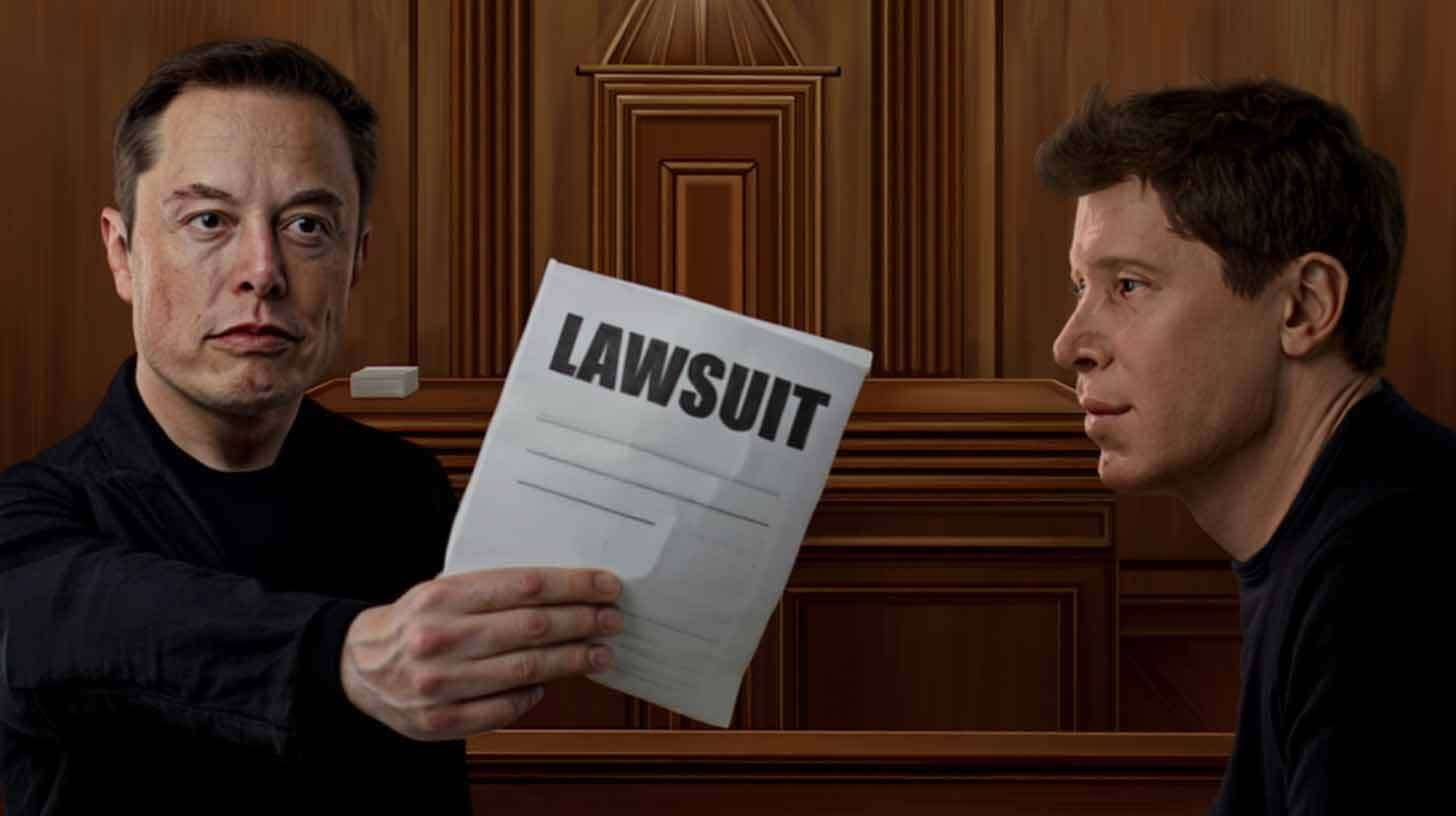
The Talent Wars Turn Legal: How xAI's Lawsuit Against OpenAI Exposes the Fragile Boundaries of AI Innovation
In the high-stakes race for artificial intelligence supremacy, talent has become the ultimate currency. The engineers, researchers, and strategists who can push models forward are worth their weight in compute—and in the frenzied competition between labs, the line between aggressive recruitment and intellectual property theft has never been thinner. Now, that tension has erupted into open legal warfare. xAI, Elon Musk's AI venture, has filed a new lawsuit alleging that OpenAI systematically poached personnel to steal trade secrets, naming eight former workers and accusing them of copying source code to personal devices before defecting. This isn't just another corporate dispute; it is a stark revelation of the shadow economy that underpins the AI boom—where proprietary innovations can change hands with a résumé, and the most valuable assets walk out the door every day.
The specifics of the complaint are detailed and damning. According to court documents, xAI alleges that OpenAI orchestrated a coordinated recruitment operation targeting key employees with access to sensitive infrastructure and algorithms. Two developers are accused of downloading xAI's codebase while using the encrypted messaging app Signal to communicate with the same OpenAI recruiter—a detail that suggests premeditation rather than opportunism. Perhaps most striking is the allegation involving a senior finance officer who, despite being explicitly warned about the confidentiality of xAI's data center architecture—described internally as the company's "secret sauce"—reportedly disregarded legal guidance and shared privileged information. These are not vague accusations of cultural poaching; they are specific claims of systematic extraction, framed as a threat to xAI's competitive survival.
OpenAI's response has been swift and dismissive. The company has characterized the lawsuit as "the latest chapter in Musk's ongoing harassment," referencing a broader pattern of legal and rhetorical attacks that have included challenges to OpenAI's corporate restructuring, its nonprofit mission, and even antitrust concerns. From OpenAI's perspective, this case is less about trade secrets and more about competitive intimidation—a tactic designed to chill legitimate talent mobility and distract from substantive debates about AI governance. The counter-narrative is equally compelling: in a field defined by rapid innovation, employees have the right to pursue new opportunities, and ideas, once learned, cannot be unlearned. Where does legitimate career advancement end and misappropriation begin?
The broader context makes this case particularly volatile. This summer has witnessed an unprecedented wave of "lab hopping" in AI, as researchers and engineers move between OpenAI, Google DeepMind, Anthropic, Meta, and emerging startups like xAI. Salaries have skyrocketed, equity packages have become astronomical, and the demand for specialized expertise has outstripped supply. In this environment, the temptation to accelerate progress by hiring entire teams—along with their institutional knowledge—is immense. But when that knowledge includes proprietary architectures, training methodologies, or infrastructure designs, the ethical and legal stakes escalate. xAI's lawsuit forces a question the industry has largely avoided: in a field where human capital is the primary vector of innovation, how do you protect intellectual property without stifling the mobility that fuels progress?
The technical nature of the alleged theft adds another layer of complexity. Unlike traditional trade secret cases involving physical documents or customer lists, AI trade secrets often reside in code, model weights, and infrastructure configurations—digital assets that can be copied with a few commands. The accusation that developers used Signal to coordinate downloads suggests an awareness of wrongdoing, but it also highlights the ease with which sensitive information can be exfiltrated in a remote-first, cloud-native development environment. For companies building AI systems that require billions of dollars in investment, this vulnerability is existential. A single leak could undermine years of R&D, erode competitive advantage, and distort the trajectory of an entire field.
Yet, the defense of employee mobility is equally principled. The AI field has long thrived on the cross-pollination of ideas: researchers move between academia and industry, startups spin out of larger labs, and collaborations span organizational boundaries. This fluidity has accelerated progress, allowing breakthroughs in one lab to inspire advances in another. If every job change becomes a potential lawsuit, the field risks calcifying into siloed fiefdoms where innovation slows and talent stagnates. Moreover, many of the skills and insights that make an engineer valuable—problem-solving approaches, debugging intuition, architectural instincts—are inherently personal and cannot be neatly separated from "trade secrets." Drawing a legal boundary around knowledge that is both learned and lived is notoriously difficult.
The case also underscores the growing militarization of AI competition. As the technology becomes more central to economic and strategic power, the stakes of leadership rise accordingly. Companies are not just competing for market share; they are competing for the future of intelligence itself. In this context, legal action becomes another front in the war—a way to slow competitors, protect advantages, and signal resolve to investors and talent alike. xAI's lawsuit may be as much about deterrence as damages: a warning to other labs that poaching will be met with aggressive litigation. OpenAI's dismissal may be equally strategic: a refusal to legitimize what it sees as frivolous claims that could set dangerous precedents for employee rights.
For the broader industry, the implications are profound. If xAI prevails, we may see a wave of similar lawsuits, with companies deploying non-compete agreements, enhanced monitoring, and restrictive data access policies to protect their assets. This could raise barriers to entry for smaller players and concentrate talent within a few well-defended fortresses. If OpenAI prevails, the precedent could reinforce employee mobility but leave companies more vulnerable to knowledge leakage, potentially chilling investment in long-term R&D. Either outcome reshapes the incentives that drive AI development.
There is also a human dimension often overlooked in these disputes. The engineers and researchers at the center of this case are not pawns; they are professionals navigating complex career decisions in a hyper-competitive market. Many likely believe they are acting ethically, bringing their skills to new challenges without intending to misappropriate secrets. The legal system is ill-equipped to adjudicate the nuances of intent, context, and proportionality in such cases. A ruling that is too broad could punish innocent mobility; one that is too narrow could enable bad actors. Striking the right balance requires not just legal precision, but a deep understanding of how innovation actually happens in AI.
Looking ahead, the resolution of this case could influence how the industry approaches talent strategy and IP protection. Companies may invest more in cultural retention—creating environments where top talent wants to stay—rather than relying solely on legal safeguards. They may develop clearer internal protocols for knowledge transfer and exit interviews, reducing ambiguity about what can and cannot be taken. And they may advocate for industry-wide standards that balance protection with mobility, recognizing that the health of the field depends on both.
For policymakers, the case highlights the need for updated frameworks that address the unique challenges of AI intellectual property. Traditional trade secret law was designed for an era of physical assets and localized development. In a world of distributed teams, cloud infrastructure, and model weights that can fit on a USB drive, new approaches may be necessary. This could include safe harbors for certain types of employee mobility, clearer definitions of what constitutes a protectable AI trade secret, or even sector-specific regulations that acknowledge the field's rapid evolution.
The drama of Elon Musk versus OpenAI makes for compelling headlines, but the substance of this case touches something deeper: the tension between competition and collaboration that defines technological progress. AI is too important, too powerful, and too transformative to be governed solely by courtroom battles. The industry needs norms, not just laws; trust, not just litigation; and a shared commitment to advancing the field without sacrificing the principles that make innovation possible.
As the lawsuit unfolds, one thing is certain: the talent wars are no longer fought only with offers and equity. They are fought in courtrooms, in code repositories, and in the quiet decisions of engineers who carry the future of AI in their minds—and sometimes, allegedly, on their personal devices. The outcome will shape not just two companies, but the trajectory of an entire field.
The ultimate gift for drama enthusiasts, perhaps. But for everyone else, a sobering reminder: in the race to build intelligence, the rules of the race matter as much as the speed of the runners. The question is no longer who can hire the best talent, but how we ensure that talent serves progress, not just power. The answer will be written in the months ahead—one deposition, one ruling, one career move at a time.
Your one-stop shop for automation insights and news on artificial intelligence is EngineAi.
Did you like this article? Check out more of our knowledgeable resources:
Watch this space for weekly updates on digital transformation, process automation, and machine learning. Let us assist you in bringing the future into your company right now