Alibaba releases Qwen3 models, flooding the market – EngineAI

Alibaba releases Qwen3 models, flooding the market

Alibaba releases Qwen3 models, flooding the market

The Floodgates Open: How Alibaba's Qwen3 Suite is Reshaping the Global AI Race


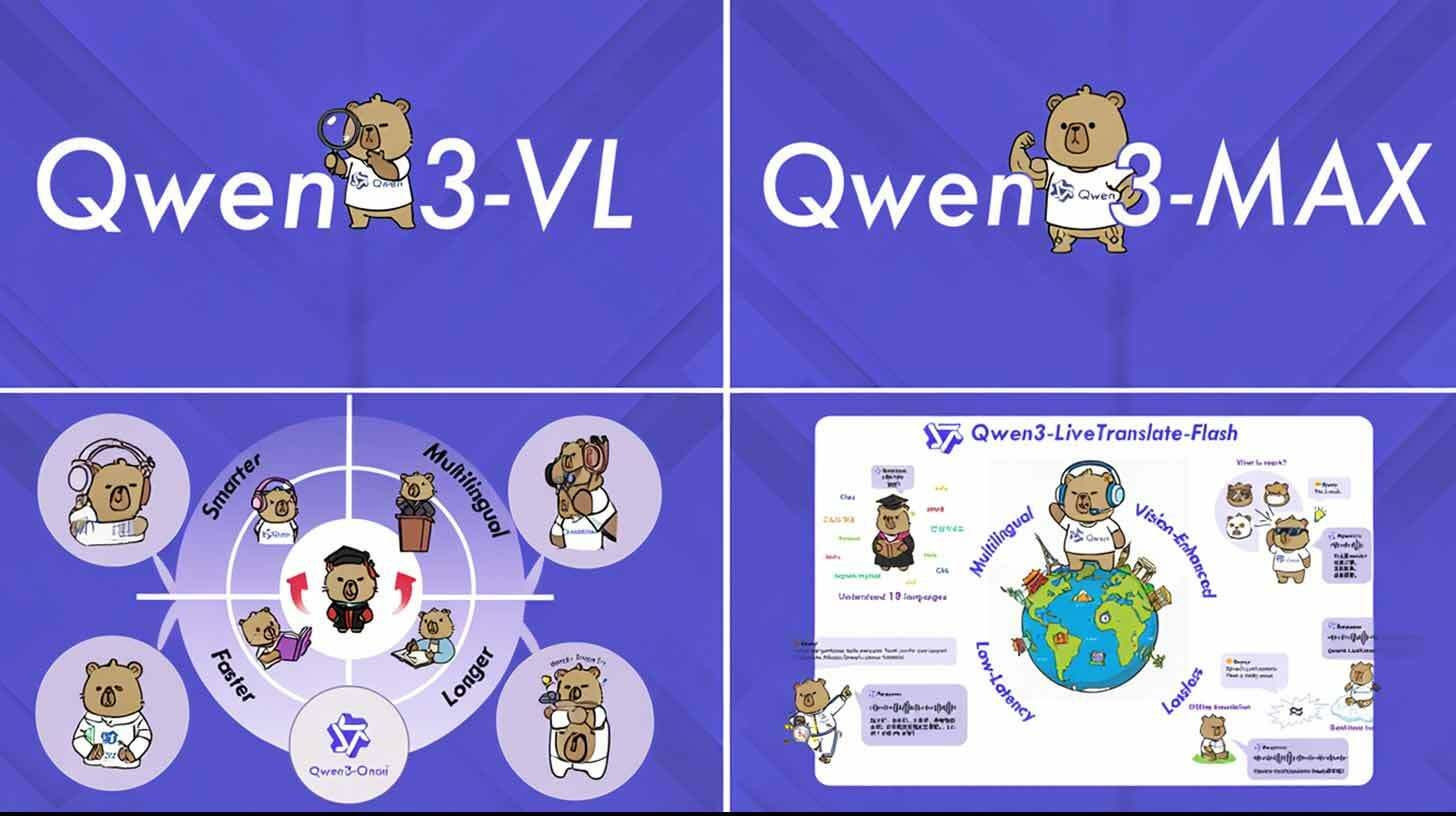
In the high-stakes competition for artificial intelligence supremacy, timing is strategy. While Western labs like OpenAI, Anthropic, and Google have cultivated an aura of deliberate, measured releases—each announcement a carefully staged event—Chinese tech giants are playing a different game. This week, Alibaba unveiled six new Qwen3 models spanning text, vision, audio, and safety, flooding the market with near-frontier capabilities at a pace that feels less like a product launch and more like a strategic offensive. At the center of this arsenal is Qwen-Max, a 1-trillion-parameter model that signals a bold claim: Chinese AI is no longer catching up—it is competing at the edge. For an industry conditioned to expect scarcity, this abundance is disorienting. For the global AI landscape, it is transformative.


The flagship of the Qwen3 suite, Qwen-Max, represents a significant leap in capability. With near-frontier performance in coding and agentic tasks, it is designed for complex, multi-step workflows that require planning, tool use, and contextual reasoning. While its "Heavy" variant scores flawlessly on numerical reasoning benchmarks—a testament to its precision in mathematical and logical domains—Max is optimized for versatility. It can orchestrate autonomous agents, debug intricate codebases, and navigate ambiguous instructions with a fluency that rivals the best Western models. This is not just a model; it is a platform for building the next generation of AI applications, from enterprise automation to scientific discovery.


But Qwen-Max is only one piece of a broader ecosystem. Qwen-Omni extends the suite's reach into multimodal intelligence, offering speech interpretation in 19 languages and generation in 10. More impressively, it can analyze text, graphics, audio, and video in a unified framework, enabling use cases like real-time multilingual video summarization, cross-modal search, and accessible content creation. For global enterprises, this means deploying a single model that understands and generates content across languages and media—a significant reduction in complexity and cost.


On the visual front, Qwen-VL has earned distinction as the best non-reasoning, open-source visual model, outperforming leading closed models on multiple benchmarks. This is a strategic win for the open-source community: by releasing a high-performance vision model under permissive terms, Alibaba is empowering researchers and developers worldwide to build upon its foundation. The implications are profound. Open-source models accelerate innovation by lowering barriers to entry, fostering collaboration, and preventing vendor lock-in. Qwen-VL's performance suggests that openness and excellence are not mutually exclusive—a message that could reshape how the industry thinks about model distribution.


Safety and specialization round out the suite. Alibaba introduced Guard models for content moderation, designed to detect and mitigate harmful outputs across languages and contexts. Improved Coder variations offer enhanced performance for software development tasks, while LiveTranslate-Flash enables real-time interpretation with low latency—critical for live events, customer support, and cross-border collaboration. Together, these models form a comprehensive toolkit: not just a collection of capabilities, but an integrated stack for building responsible, multilingual, multimodal AI applications.


The pace of this release is as significant as the capabilities themselves. Western AI development has been characterized by long development cycles, extensive safety reviews, and carefully orchestrated announcements. Alibaba's approach is the opposite: rapid iteration, broad specialization, and market saturation. This "flood the zone" strategy serves multiple purposes. It pressures competitors to accelerate their own roadmaps, captures developer mindshare by offering diverse tools for diverse needs, and demonstrates technological parity—or superiority—in key domains. For Alibaba, this is not just about models; it is about market positioning in a global race where perception can be as important as performance.


The claim that Qwen3 represents the closest a Chinese lab has come to the frontier since DeepSeek's R1 is noteworthy. It acknowledges the progress of peers while asserting leadership. More importantly, it signals confidence: Chinese AI research is no longer defined by imitation, but by innovation. The Qwen3 suite reflects a maturation of capabilities—from raw performance to practical utility, from single-modality to cross-modal understanding, from research prototypes to production-ready tools. This is the hallmark of an ecosystem that has moved beyond experimentation to execution.


For developers and enterprises, the implications are immediate. The availability of high-performance, specialized models at scale lowers the barrier to deploying advanced AI. A startup can now access coding assistance, vision analysis, and multilingual support without negotiating with multiple vendors or waiting for Western APIs to expand coverage. An enterprise can build a customer service bot that understands voice, image, and text in dozens of languages, with built-in safety moderation—all from a single provider. This consolidation of capability simplifies architecture, reduces integration overhead, and accelerates time-to-value.


Yet, the rapid proliferation of models also raises questions about sustainability and focus. In the rush to release, are corners being cut on safety evaluation, bias auditing, or long-term maintenance? How do users navigate a landscape where new models appear weekly, each with incremental improvements? Alibaba's strategy assumes that abundance creates opportunity—that developers will gravitate toward the tools that best serve their needs, and that competition will drive quality upward. This is a bet on market dynamics over centralized curation, and it reflects a broader philosophical divergence between Eastern and Western approaches to AI development.


The geopolitical dimension cannot be ignored. As AI becomes a cornerstone of economic and strategic power, the divergence in release strategies reflects deeper differences in governance, innovation culture, and risk tolerance. Western labs, operating under intense regulatory scrutiny and public scrutiny, prioritize caution and transparency. Chinese labs, facing different incentives and constraints, prioritize speed and scale. Neither approach is inherently superior; both carry trade-offs. The global AI community will benefit from observing both, learning from their successes and failures, and adapting best practices across borders.


Looking ahead, the Qwen3 suite hints at a future where AI capabilities are modular, interoperable, and accessible. Instead of monolithic models that attempt to do everything, we may see ecosystems of specialized models that collaborate to solve complex problems. Alibaba's multi-model strategy is a blueprint for that future: text, vision, audio, and safety as composable components, orchestrated by developers to meet specific needs. This modularity could accelerate innovation by allowing teams to mix and match the best tools for each task, rather than being locked into a single vendor's stack.


For the broader industry, Alibaba's announcement is a wake-up call. The AI race is not a sprint with a single finish line; it is a marathon with multiple checkpoints, and momentum can shift quickly. Companies that assume their lead is secure risk being overtaken by competitors who iterate faster, specialize deeper, and distribute more broadly. The lesson is not to copy Alibaba's strategy, but to recognize that agility, specialization, and openness are becoming competitive advantages.


The age of AI scarcity is ending. In its place rises a world of abundance—where powerful models are accessible, diverse, and rapidly evolving. Alibaba's Qwen3 suite is both a symptom and a catalyst of this shift. It demonstrates that frontier capabilities are no longer the exclusive domain of a few Western labs, and that innovation can flourish in multiple ecosystems simultaneously.


For developers, the message is empowering: the tools you need are available now. For enterprises, it is strategic: diversifying your AI stack could future-proof your investments. For the global community, it is a reminder: the future of AI will be shaped not by a single vision, but by many.

The floodgates have opened. The question is no longer who leads, but how we navigate the deluge—together.


Your one-stop shop for automation insights and news on artificial intelligence is EngineAi.

Did you like this article? Check out more of our knowledgeable resources:

• 📰 In-depth analysis and up-to-date AI news


• 🤝 Visit to learn about our goal and knowledgeable staff


• 📬 Use this link to share your project or schedule a free consultation


Watch this space for weekly updates on digital transformation, process automation, and machine learning. Let us assist you in bringing the future into your company right now

← Back to all articles

Explore More AI Resources

📚 AI Glossary

🏆 Best AI Tools

⚡ AI Comparisons

📘 AI Guides

What is Artificial Intelligence?

Artificial intelligence represents one of the most significant technological advances in human history, fundamentally changing how we interact with computers and digital systems. At its core, AI enables machines to perform tasks that historically required human intelligence, including visual perception, speech recognition, decision-making, and language translation. The field has evolved rapidly from narrow AI systems designed for specific tasks to increasingly sophisticated models capable of generalized reasoning.

Machine learning, a subset of AI, allows systems to learn and improve from experience without being explicitly programmed. Deep learning, in turn, uses neural networks with many layers to process complex data and recognize intricate patterns. These technologies power everything from the recommendation engines that suggest your next movie to the autonomous vehicles that may soon drive our roads. Understanding the fundamentals of AI helps business leaders, developers, and consumers alike navigate an increasingly AI-powered world.

The impact of AI extends across every industry and sector of the economy. Healthcare organizations use AI for diagnostic imaging analysis and drug discovery. Financial institutions deploy AI for fraud detection and risk assessment. Manufacturers implement AI for predictive maintenance and quality control. Retailers leverage AI for inventory management and personalized marketing. These applications demonstrate how AI creates value by automating routine tasks, extracting insights from vast data sets, and enabling new capabilities that were previously impossible.

Applications of AI Across Industries

The practical applications of AI technology span an extraordinarily wide range, touching virtually every aspect of modern life. In healthcare, AI systems analyze medical images to detect cancers earlier and more accurately than human radiologists in some studies. AI-powered drug discovery platforms can simulate molecular interactions and predict which compounds might treat diseases, potentially accelerating the development of new medications by years. Surgical robots assisted by AI enable minimally invasive procedures with greater precision than traditional techniques.

In finance, AI algorithms process millions of transactions per second to identify fraudulent activity in real time. Trading systems use AI to analyze market conditions and execute trades at speeds and scales impossible for human traders. Credit scoring models leverage AI to evaluate borrower risk more accurately, expanding access to credit for underserved populations while maintaining lender profitability. Insurance companies use AI for claims processing and fraud detection, reducing costs and improving customer satisfaction.

Manufacturing and logistics companies use AI for predictive maintenance, identifying when machines are likely to fail before breakdowns occur, reducing downtime and repair costs. Supply chain optimization algorithms powered by AI consider thousands of variables to minimize inventory costs while ensuring product availability. Autonomous vehicles and drones promise to revolutionize transportation and delivery, with AI systems processing sensor data in real time to navigate safely through complex environments.

Getting Started with AI

Beginning your journey with AI does not require advanced degrees or massive technical expertise. Modern AI tools and platforms have made the technology increasingly accessible to users across skill levels. Start by exploring the fundamentals through resources like our comprehensive AI Glossary which explains key terms and concepts in accessible language. Build familiarity with common AI applications by experimenting with tools you already use, many of which incorporate AI features without requiring explicit AI expertise.

For organizations looking to adopt AI, the key is starting with clear problem identification. Successful AI initiatives begin by identifying specific business challenges where AI might add value, rather than implementing AI for its own sake. Common early applications include customer service chatbots, document processing automation, and data analysis tools. These provide measurable value while allowing teams to build AI capabilities and familiarity progressively.

Our AI Tools Directory provides comprehensive information on hundreds of AI-powered applications across categories including natural language processing, computer vision, predictive analytics, and process automation. Browse the directory to discover tools that match your specific needs, and read our detailed reviews and comparisons to inform your selection decisions. The rankings are based on extensive hands-on testing and evaluation by our expert team.

AI Resources and Learning

Staying current with AI developments requires ongoing learning and engagement with the field. Our AI Guides provide in-depth tutorials and explainers on topics from beginner fundamentals to advanced implementation techniques. Whether you are looking to understand how large language models work, learn best practices for prompt engineering, or implement AI automation in your organization, our guides offer practical, actionable guidance based on real-world experience.

The AI landscape evolves rapidly, with new models, tools, and techniques emerging continuously. Our editorial team monitors these developments to bring you timely coverage of significant advances and their practical implications. We provide context and analysis that helps you understand which developments genuinely matter versus passing hype. Subscribe to our newsletter for weekly summaries of the most important AI news and developments.

For those considering AI implementation, our comparisons section offers detailed evaluations of competing tools and approaches, helping you make informed decisions about which technologies suit your needs. Our rankings provide curated recommendations across all major AI categories, from best overall tools to specialized solutions for specific use cases. Each recommendation includes rationale and methodology so you understand exactly why we recommend what we recommend.

Explore Our AI Resources

From beginner guides to advanced tutorials, from tool comparisons to rankings, we provide the comprehensive AI resources you need to succeed.

Browse AI Tools AI Guides Best Rankings Comparisons AI Glossary

AI Technology and Industry Overview

The artificial intelligence industry has experienced remarkable growth and innovation in recent years, with new breakthroughs and capabilities emerging at an unprecedented pace. Large language models have revolutionized natural language processing, enabling applications from conversational AI to automated content generation. Computer vision systems can now recognize objects and scenes with accuracy rivaling or exceeding human performance in many domains. These advances have created new possibilities for businesses across every sector, from automating routine tasks to enabling entirely new products and services that were previously impossible.

Understanding the AI landscape requires familiarity with key concepts and terminology. Machine learning provides the foundation for most modern AI systems, enabling computers to learn patterns from data rather than following explicit programming. Deep learning uses neural networks with many layers to handle complex tasks like image recognition, speech processing, and language understanding. Large language models represent a particularly powerful class of deep learning systems trained on vast text corpora to understand and generate human language with remarkable fluency.

The practical applications of AI technology span virtually every industry and domain. In healthcare, AI assists with diagnostics, drug discovery, and personalized treatment recommendations. In finance, AI powers fraud detection, algorithmic trading, and risk assessment. In manufacturing, AI enables predictive maintenance and quality control. In retail, AI drives personalized recommendations and inventory optimization. These applications demonstrate how AI creates value by automating routine tasks, extracting insights from data, and enabling new capabilities.

Implementing AI in Your Organization

Successfully implementing AI requires more than just deploying technology. Organizations must develop clear strategies for identifying appropriate use cases, building data infrastructure, developing internal expertise, and managing change. The most successful AI implementations start with well-defined problems where AI can demonstrate clear value, then expand progressively as capabilities and confidence grow. This approach allows teams to build expertise gradually while generating measurable returns that justify continued investment in AI capabilities.

Building an AI-ready organization requires attention to data quality, infrastructure, and talent. AI systems depend on data, and organizations must have processes for collecting, cleaning, and maintaining high-quality data to train and operate effective AI models. Infrastructure considerations include computing resources, data storage, and integration with existing systems. Talent requirements range from specialized ML engineers and data scientists to product managers and business leaders who can identify AI opportunities and translate them into business requirements.

Change management represents a critical but often overlooked component of AI implementation. Employees may view AI as a threat to their jobs, requiring careful communication about how AI will augment rather than replace human workers. Successful organizations invest in training programs that help employees work effectively alongside AI systems, developing new skills for leveraging AI tools in their daily work. This human-centered approach to AI adoption leads to better outcomes than treating AI as a purely technical implementation.

Evaluating AI Tools and Vendors

The AI tools market has exploded with options ranging from general-purpose platforms to specialized solutions for specific industries and use cases. Evaluating these options requires understanding your specific requirements, use cases, and constraints. General-purpose AI platforms offer flexibility but may require more customization to achieve optimal results for specific applications. Specialized solutions may offer turnkey functionality but could create vendor lock-in or limitations for future needs.

Our comprehensive AI Tools Directory provides detailed information on hundreds of AI tools and platforms. We evaluate each tool across dimensions including capability, ease of use, pricing, and support. Our rankings provide curated recommendations based on extensive testing and analysis. We also offer detailed comparisons that evaluate how competing tools stack up against each other across real-world use cases.

When evaluating AI vendors, consider factors beyond just technical capability. Data privacy and security policies determine how your data will be handled and stored. Pricing models vary significantly, from per-user subscriptions to consumption-based billing. Support and documentation quality affects how quickly your team can become productive with new tools. Integration capabilities determine how easily AI tools fit into existing workflows and systems.

AI Best Practices and Ethics

Responsible AI development and deployment requires attention to ethics, fairness, and potential societal impacts. AI systems can inadvertently perpetuate or amplify biases present in training data, leading to unfair outcomes for certain groups. Organizations must implement processes for auditing AI systems for bias and taking corrective action when problems are identified. Transparency about how AI systems make decisions helps build trust and enables accountability.

Data privacy represents another critical consideration for AI implementations. AI systems often require large amounts of data for training and operation, raising questions about what data is collected, how it is stored, and who has access. Organizations must implement appropriate data governance practices and ensure compliance with relevant regulations like GDPR and CCPA. When selecting AI vendors, carefully review their data handling practices and privacy policies.

Environmental considerations are increasingly important for AI deployments. Training large models can consume significant energy, raising sustainability concerns. Organizations should evaluate the environmental impact of their AI systems and consider strategies for minimizing energy consumption, such as using more efficient model architectures or leveraging cloud providers with strong sustainability commitments. These considerations should be part of comprehensive AI governance frameworks.

Explore Our AI Resources

From tool directories to best practices, from comparisons to tutorials, we provide comprehensive AI resources.

Browse AI Tools AI Guides Best Rankings Comparisons AI Glossary